

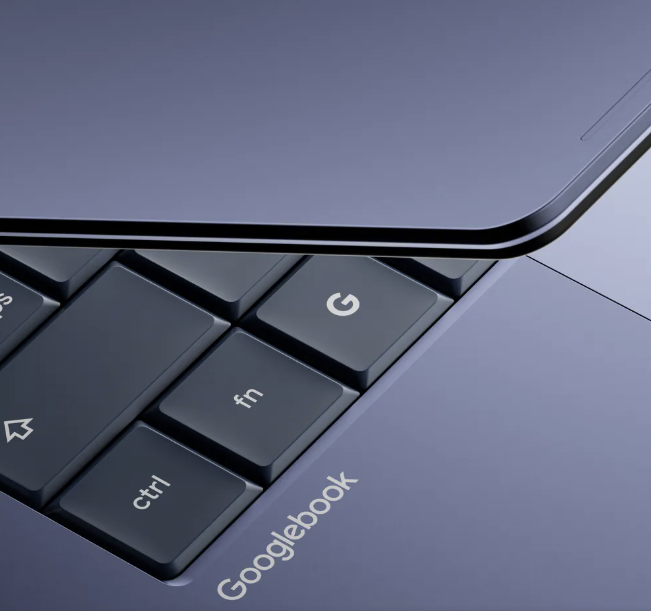
Googlebook introduces a seamless bridge between laptop and Android phone, allowing users to run mobile apps and access phone files directly from the device. A mysterious new exterior feature called the Glowbar promises both function and beauty, though Google has yet to detail its exact purpose. Gemini AI takes center stage with custom widget creation and a context-aware Magic Pointer that can blend images with a simple hover.
In a surprising twist ahead of its anticipated “Android Show: I/O Edition,” newly leaked information suggests Google is shifting focus from smartphone software to an entirely new laptop platform designed to succeed the Chromebook. Dubbed the Googlebook, this Android-powered device is rumored to debut alongside a major design overhaul expected for Android 17, but the hardware itself may steal the spotlight.
Unlike traditional Chromebooks that rely heavily on web-based workflows, Googlebook aims to erase the friction between laptop and mobile computing by letting users run Android apps natively on the laptop or even access apps installed on their Android phone directly through the machine. File access extends both ways, meaning documents, photos, and downloads from your phone appear instantly on the Googlebook interface.
The devices will arrive in a range of shapes and sizes from established PC manufacturers including Acer, Asus, Dell, HP, and Lenovo, with Google once again outsourcing production rather than building its own hardware. Each Googlebook will feature a distinctive external element called the Glowbar, which appears to be an LED strip embedded along the bottom of the top lid.
While Google has only teased that it is “both functional and beautiful,” analysts believe it may be a hardware extension of the glowing animation already used by Gemini and the now-retired Google Assistant, reacting to voice commands or system states with color and motion patterns.
Artificial intelligence is deeply woven into the experience through Gemini. Users can generate custom widgets simply by asking, pulling real-time data from connected Google apps like Calendar and Gmail. One leaked example shows a widget combining calendar events, hotel reservations, flight tickets, and a cover photo into a single glanceable card. For those planning a family reunion in Berlin, Gemini can organize flight details, restaurant bookings, hotel information, and even a countdown timer into one personalized desktop dashboard.
Another feature called the Magic Pointer acts as a context-aware cursor that understands what it hovers over. By placing the pointer on an image and issuing a voice command, users can ask Gemini to blend two pictures together without opening a separate editing tool. Casting apps from phone to laptop also appears prominently in the leaked imagery, reinforcing the platform’s focus on continuous workflows across devices.
The name Googlebook itself signals a departure from the browser-centric identity of Chromebooks, leaning instead into a hybrid environment where Android’s app ecosystem meets laptop productivity. With Google teasing the Android Show for the past week, expectations were high for Android 17 revelations, but the Googlebook leak suggests the company is ready to redefine what a laptop can do when AI, mobile apps, and desktop hardware converge.
