

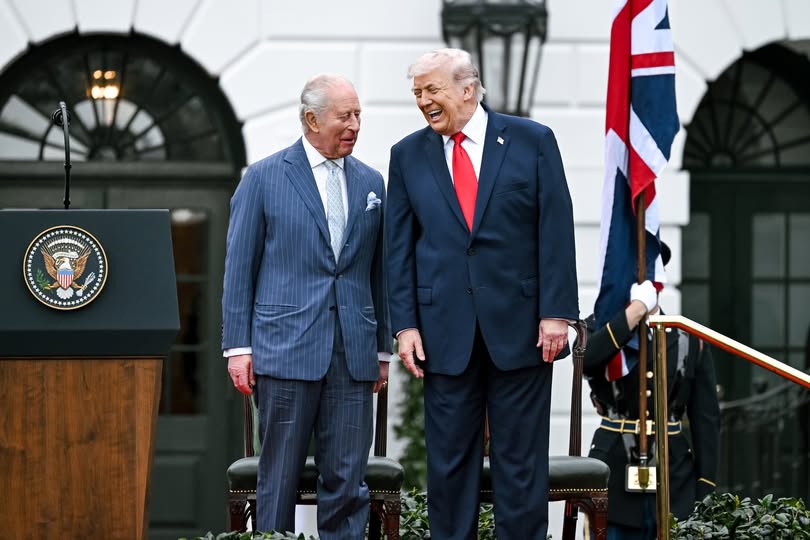
The Washington morning presented itself in a manner impeccably suited to British sensibilities—a soft, drizzling pewter sky hanging low over the South Lawn. It was, as President Donald Trump observed with a diplomat’s instinct for turning atmosphere into allegory, a “beautiful British day.” Thus, under a canopy of grey that blurred the rigid architecture of the White House into something almost impressionistic, the Second Trump Administration enacted the highest ceremonial theatre of state: the official welcome for Their Majesties King Charles III and Queen Camilla.
On the South Lawn of the White House, The King and Queen have received a formal ceremonial welcome to the United States.
Hosted by The President and the First Lady, Their Majesties watched a spectacular military display and flyover. pic.twitter.com/qGFBqzMtz8
— The Royal Family (@RoyalFamily) April 28, 2026
This was not merely a photo-call for the pages of history, though it will certainly be etched there. It was a calculated choreography of fraternity, a deliberate flex of pageantry designed to still the tremors of a volatile political moment. The visual vernacular was unambiguous: a twenty-one-gun salute shattered the damp air, the “President’s Own” Marine Band rendered the anthems of two nations separated by a common language but tethered by a bloody, glorious, and often fractious genealogy, and the U.S. Army Herald Trumpets announced the sovereign’s arrival with a resonance that predates the republic itself. Here, in the heart of the American experiment—coinciding with the Semiquincentennial of its defiant break from the Crown—the descendants of that rupture stood shoulder to shoulder.
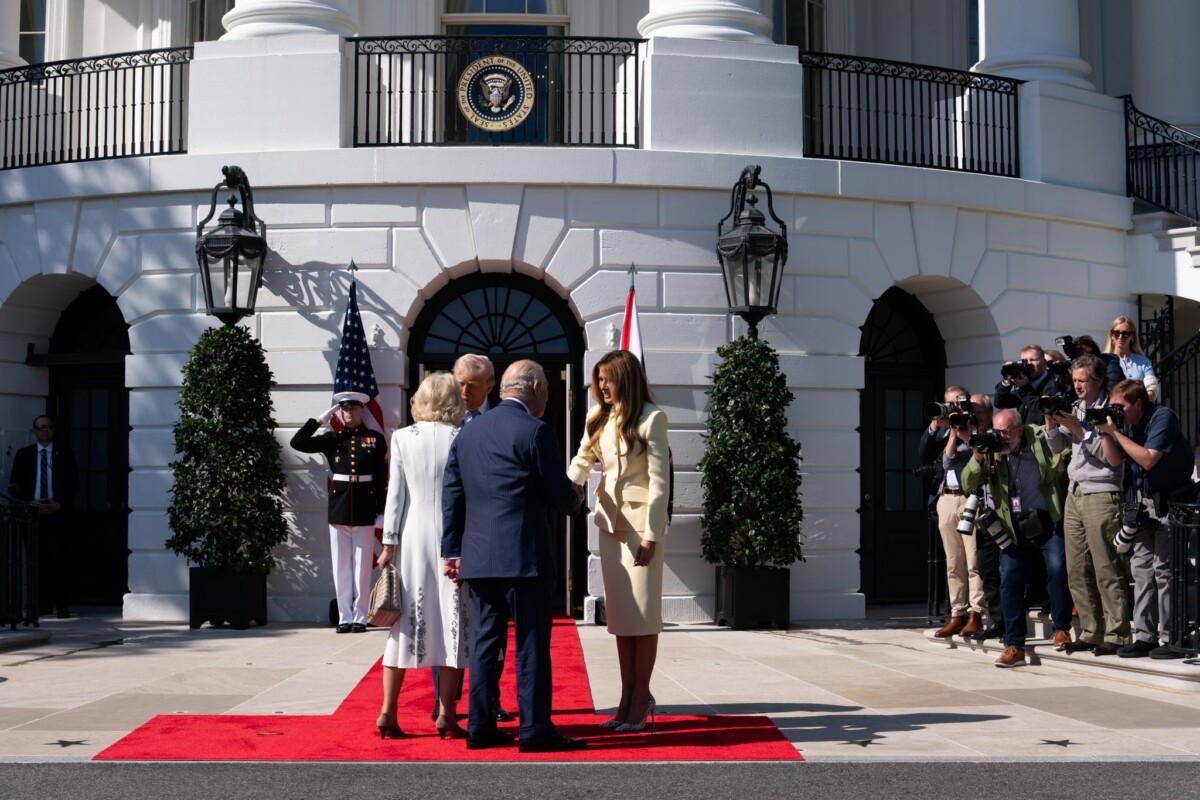
The inherent paradox of a British monarch celebrating the two hundred and fiftieth anniversary of American independence did not go unregistered. President Trump, a figure who perpetually oscillates between demolishing norms and curating traditions, chose to lean toward the romantic.
— Office of the First Lady (@FirstLadyOffice) April 28, 2026
In a quip that found its way from the manicured lawns to the digital ether via his own Truth Social platform, the President mused about taking up residence in Buckingham Palace—a jest rooted in the esoteric revelation that the populist billionaire and the anointed King share a distant lineage as fifteenth cousins through the Earl of Lennox. The remark, delightfully impertinent yet oddly intimate, underscored the layered nature of this relationship: it is a bond where the deeply personal and the massively geopolitical constantly intermingle.
Observers of form, however, might have found their gaze drawn past the handshakes to the silent diplomacy of the First Ladies. Melania Trump and Queen Camilla presented a study in monochromatic unity, both swathed in off-white ensembles that seemed to repel the dullness of the morning. Mrs. Trump, reprising her signature wide-brimmed aesthetic with an Eric Javits hat that shielded famously enigmatic eyes, moved alongside a Queen Consort adorned with the historic Cullinan V Brooch. If the men’s dialogue promised tough talk behind closed doors in the Oval Office, the ladies’ parallel schedule—a meticulously planned educational initiative integrating artificial intelligence with historical scholarship for American students—signaled a different register of soft power. Such scenes are rarely accidental; they are the fabric of a state visit, weaving threads of culture and continuity that are meant to hold long after the policy papers yellow.
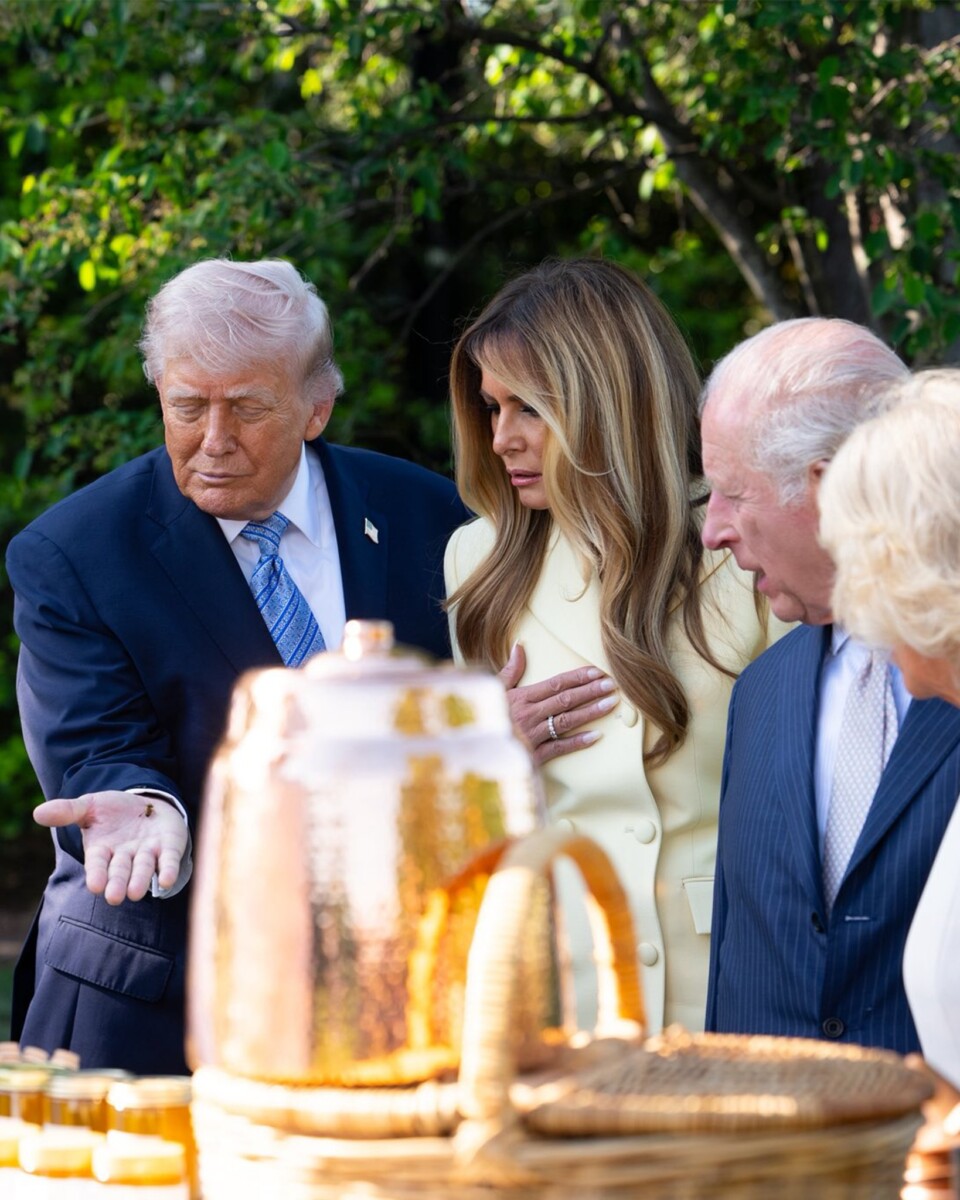
Yet, beyond the sheen of gift exchanges in the Blue Room and the inspection of the troops, the air was charged with a distinct mission. The King’s visit, arriving amidst tectonic shifts in the global order and reported strains in the “Special Relationship,” carries the weight of metaphor. In addressing the U.S. Congress—only the second British monarch to do so, following his mother Elizabeth II in the final decade of the twentieth century—Charles III was set to deliver an oration that speaks to “reconciliation and renewal,” a rhetorical appeal to the shared democratic DNA that refuses mutation even under stress. The unspoken subtext was palpable: when monarchs address lawmakers in a republic, they are not merely delivering a speech; they are summoning a shared history to stabilize an uncertain present.
The diarist of such moments must note the delicate, almost impossible assignment bestowed upon a constitutional sovereign: to advocate for the interests of a government without appearing to be directed by it, to charm without demanding, and to elevate the transactional drone of politics into the rarefied realm of legacy. As the mist lifted on the South Lawn and the principals retreated to the intimate gravity of the West Wing, the archive of the future was being written not in treaties alone, but in toasts, in gestures, and in the silent language of a shared glance between a King and a President who know they are actors on the grandest stage of all.
