Post a Free Blog

Submit A Press Release

At CWEB, we are always looking to expand our network of strategic investors and partners. If you're interested in exploring investment opportunities or discussing potential partnerships and serious inquiries. Contact: jacque@cweb.com

Generic selectors
Exact matches only
Search in title
Search in content
Post Type Selectors
Filter by Categories
Action
Animation
Anime
ATP Tour (ATP)
Auto Racing
Baseball
Basketball
Boxing
Breaking News
Business
Business
Business Newsletter
Call of Duty (CALLOFDUTY)
Canadian Football League (CFL)
Car
Celebrity
Champions Tour (CHAMP)
Comedy
CONCACAF
Counter Strike Global Offensive (CSGO)
Crime
Dark Comedy
Defense of the Ancients (DOTA)
Documentary and Foreign
Drama
eSports
European Tour (EPGA)
Fashion
FIFA
FIFA Women’s World Cup (WWC)
FIFA World Cup (FIFA)
Fighting
Football
Formula 1 (F1)
Fortnite
Golf
Health
Hockey
Horror
IndyCar Series (INDY)
International Friendly (FRIENDLY)
Kids & Family
League of Legends (LOL)
LPGA
Madden
Major League Baseball (MLB)
Mixed Martial Arts (MMA)
MLS
Movie and Music
Movie Trailers
Music
Mystery
NASCAR Cup Series (NAS)
National Basketball Association (NBA)
National Football League (NFL)
National Hockey League (NHL)
National Women's Soccer (NWSL)
NBA Development League (NBAGL)
NBA2K
NCAA Baseball (NCAABBL)
NCAA Basketball (NCAAB)
NCAA Football (NCAAF)
NCAA Hockey (NCAAH)
Olympic Mens (OLYHKYM)
Other
Other Sports
Overwatch
PGA
Politics
Premier League (PREM)
Romance
Sci-Fi
Science
Soccer
Sports
Sports
Technology
Tennis
Thriller
Truck Series (TRUCK)
True Crime
Ultimate Fighting Championship (UFC)
US
Valorant
Western
Women’s National Basketball Association (WNBA)
Women’s NCAA Basketball (WNCAAB)
World
World Cup Qualifier (WORLDCUP)
WTA Tour (WTA)
Xfinity (XFT)
XFL
0
Home Blog Page 13556

Why there are so many unsheltered homeless people on the West Coast

0

homeless

Why there are so many unsheltered homeless people on the West Coast – CWEB.com

Margot Kushel, University of California, San Francisco

One-quarter of homeless people in the U.S. live in California, despite Californians making up only 12 percent of the population.

Not only is homelessness more common on the West Coast but it is also more visible, because a higher proportion of homeless people are unsheltered. In the U.S., 24 percent of homeless people sleep outside, in vehicles or somewhere else not meant for human habitation. But that varies greatly from place to place: In California, 68 percent of homeless people are unsheltered, compared to just 5 percent in New York.

Visitors to the West Coast may be shocked to find the tents that line cities from San Diego to Seattle. Like a modern-day “Grapes of Wrath,” the tents are a stark reminder of the suffering of the thousands living outside, homeless.

What’s to blame for such high numbers of unsheltered homeless on the West Coast? The reason isn’t drug use, mental health problems or weather. Rather, it is due to the extreme shortage of affordable housing.

Life unsheltered

As a physician and researcher who provides medical care for people experiencing homelessness, I have seen firsthand how devastating homelessness is to health.

Being unsheltered is terrifying, humiliating and isolating. People living without shelter lack access to toileting facilities, sinks and showers. They have no way to store or prepare food and no protection from the elements. Hunger is common.

Sleeping in makeshift beds or on the ground, they get little sleep. They must contend with having their possessions stolen. They face frequent forced moves, which disrupt relationships and make it difficult for family, friends or service providers to find them.

People who are unsheltered are at high risk of physical and sexual abuse. If they struggle with substance use disorders, their use of drugs and alcohol occurs in public, leaving them open to arrest. There are no places to refrigerate or store medicines, no place to receive mailed appointment reminders or a visit from a visiting nurse, no place to dress a wound or plug in medical equipment like oxygen. Without access to hygiene facilities, they are at high risk for communicable diseases like hepatitis A.

Unaffordable housing

Some assume that homelessness is so common on the West Coast because people move here when they become homeless, but data do not support this. Most people experience homelessness close to where they lost their housing. My team’s research in Oakland found that 81 percent of older adults who are homeless became homeless in the Bay Area. Only 10 percent had lost their housing outside of California.

Instead, the high rate of homelessness can be attributed to the lack of affordable housing in these regions. The West Coast suffers from rising costs of rental housing, stagnant incomes for low-wage workers and a decline in federal support for affordable housing. For example, California has gained 900,000 renter households since 2005, but lost US$1.7 billion in state and federal funding for affordable housing.

Extremely low-income households — defined as those with income less than 30 percent of the area median income — are at the highest risk of homelessness. Nationally, there are only 35 units available for every 100 extremely low-income households.

In the West, these shortages are more severe: Nevada has 15 units available for every 100 extremely low-income households; California has 21.

In 2017, for the first time in 13 years, Los Angeles opened its wait list for housing choice vouchers. These vouchers allow households to pay 30 percent of their income in rent, with the rest paid by the government. There were 600,000 applicants for just 20,000 spots on the list, highlighting the enormous unmet need.

Who pays for homeless services

Why are people on the West Coast so much more likely to be unsheltered than homeless people in other parts of the country? It reflects differing government priorities .

New York City, where there is a legal right to shelter, spends approximately $17,000 per homeless person per year on homeless services. Massachusetts spends approximately $14,000 per year. Los Angeles, by contrast, spends approximately $5,000.

[youtube https://www.youtube.com/watch?v=9TXBP1t2rUc&w=560&h=315]

With enormous numbers of people living outside, West Coast cities are scrambling for solutions. Some cities, like Seattle, have created sanctioned homeless encampments, bringing hygiene facilities and other services. However, the U.S. Interagency Council on Homeless cautions that this approach is costly and doesn’t provide a solution to homelessness.

Other cities are following San Francisco’s example and creating navigation centers, homeless shelters with added services. Unlike typical shelters, these centers allow people to come in groups, bring pets and belongings and stay all day.

Many areas have passed tax increases to fund new housing and services. These efforts show modest success but continue to struggle against the unfavorable housing conditions that lead people to become homeless in the first place.

So where can we go from here? There are solutions to homelessness, but, in my view, these will not succeed without solving the affordable housing crisis that is the underlying cause of homelessness.

For people who are chronically homeless and have disabling conditions, permanent supportive housing is highly effective. This type of subsidized housing offers supportive services, without the requirement that people be sober or engaged in medical care. Studies show that expanding permanent supportive housing has reduced the number of people experiencing homelessness in many parts of the country.

The ConversationThe success of permanent supportive housing has been overshadowed by increases in people becoming newly homeless due to the lack of affordable housing. In my view, preventing and ending homelessness will require a commitment to creating housing that is affordable to all.

Margot Kushel, Professor of Medicine, University of California, San Francisco

This article was originally published on The Conversation.

How a masculine culture that favors sexual conquests gave us today’s ‘incels’

0

womandiscrimination

How a masculine culture that favors sexual conquests gave us today’s ‘incels’ – CWEB.com

File 20180604 175418 qpqo4t.jpg?ixlib=rb 1.1
Students march on the campus of the University of California, Santa Barbara to honor the six victims of a mass killing after a young man went on a rampage after being bitter over sexual rejection.
AP Photo/Jae C. Hong, File

Ross Haenfler, Grinnell College

After the recent shooting at the Santa Fe, Texas, high school, the mother of one of the victims claimed that the perpetrator had specifically killed her daughter because she refused his repeated advances, embarrassing him in front of his classmates. A month prior, a young man, accused of driving a van into a crowded sidewalk that killed ten people in Toronto, posted a message on Facebook minutes before the attack, that celebrated another misogynist killer and said: “The Incel Rebellion has already begun!”

These and other mass killings suggest an ongoing pattern of heterosexual, mostly white men perpetrating extreme violence, in part, as retaliation against women.

To some people it might appear that these are only a collection of disturbed, fringe individuals. However, as a scholar who studies masculinity and deviant subcultures, I see incels as part of a larger misogynist culture.

Masculinity and sexual conquest

Incels, short for “involuntary celibates,” are a small, predominately online community of heterosexual men who have not had sexual or romantic relationships with women for a long time. Incels join larger existing groups of men with anti-feminist or misogynist tendencies such as Men Going Their Own Way, who reject women and some conservative men’s rights activists, as well as male supremacists.

Such groups gather in the “manosphere,” the network of blogs, subreddits and other online forums, in which such men bluntly express their anger against feminists while claiming they are the real victims.

Incels blame women for their sexual troubles, vilifying them as shallow and ruthless, while simultaneously expressing jealousy and contempt for high-status, sexually successful men. They share their frustrations in Reddit forums, revealing extremely misogynist views and in some cases advocating violence against women. Their grievances reflect the shame of their sexual “failures,” as, for them, sexual success remains central to real manhood.

The popular 2005 film “The 40-Year-Old Virgin” nicely illustrates the importance of sexual success, or even conquest, to achieving manhood, as a group of friends attempts to rectify the protagonist’s failure while simultaneously mocking him and bragging about their own exploits. “Getting laid” is a rite of passage and failure indicates a failed masculinity.

Cloaked in the anonymity of online forums, incels’ frustrations become misplaced anger at women. Ironically, while they chafe under what they perceive as women’s judgment and rejection, they actually compare themselves to other men, anticipating men’s judgment. In other words, incels seek to prove themselves to other men, or to the unrealistic standards created by men, then blame women for a problem of men’s own making. Women become threats, cast as callous temptresses for withholding sex from, in their perception, deserving men.

Entitlement

Societal expectations of manhood could, at times, lead to tragic outcomes.
AP Photo/Elaine Thompson

If heterosexual sex is a cultural standard signifying real manhood for a subset of men, then women must be sexually available. When unable to achieve societal expectations, some lash out in misogynist or violent ways. Sociologists Rachel Kalish and Michael Kimmel call this “aggrieved entitlement,” a “dramatic loss” of what some men believe to be their privilege, that results in a backlash.

Noting that a disproportionate number of mass shooters are white, heterosexual and middle class, sociologist Eric Madfis demonstrates how entitlement fused with downward mobility and disappointing life events provoke a “hypermasculine,” response of increased aggression and in some case violent retribution.

According to scholar of masculinity Michael Schwalbe, masculinity and maleness are, fundamentally, about domination and maintaining power.

Given this, incels represent a broader misogynist backlash to women’s, people of color’s and LGBTQI people’s increasing visibility and representation in formerly all-male spheres such as business, politics, sports and the military.

Despite the incremental, if limited, gains won by women’s and LGBTQI movements, misogyny and violence against women remain entrenched across social life. Of course not all men accept this; some actively fight against sexism and violence against women. Yet killings such as those in Toronto and Santa Fe, and the misogynist cultural background behind them, remind many women that their value ultimately lies not in their intelligence and ideas, but in their bodies and sexual availability.

Fringe men or mainstream misogyny?

Dismissing incels and other misogynist groups as disturbed, fringe individuals obscures the larger hateful cultural context that continues in the wake of women’s, immigrants’, LGBTQI’s and people of color’s demands for full personhood.

While most incels will not perpetrate a mass shooting, the toxic collision of aggrieved entitlement and the easy availability of guns suggests that without significant changes in masculinity, the tragedies will continue.

The ConversationThe incel “rebellion” is hardly rebellious. It signals a retreat to classic forms of male domination.

Ross Haenfler, Associate Professor, Grinnell College

This article was originally published on The Conversation.

[youtube https://www.youtube.com/watch?v=9TXBP1t2rUc&w=560&h=315]

Restaurants not only feed us, they shape our food preferences

0

restaurant-691397_960_720 (1)

Restaurants not only feed us, they shape our food preferences – CWEB.com

File 20180528 80640 9hit8s.jpg?ixlib=rb 1.1
Canadians are spending more of their money on restaurants. In turn, restaurants have an impact on what we eat at home.
(Shutterstock)

Michael von Massow, University of Guelph; Alfons Weersink, University of Guelph, and Bruce Gregory McAdams, University of Guelph

Restaurants are playing an increasingly important role in the food culture of North Americans.

In the United States, food prepared outside the home represents more than 50 per cent of the food dollar, or more than US$800 billion a year.

Canadians spend $80 billion annually in restaurants, spending almost 30 per cent of their food dollars in restaurants. They also buy a lot of prepared food for consumption at home.

But the rate of growth in restaurant spending is greater than it is for stores. This spending has an impact on the food market in a variety of ways. Most importantly, however, restaurants are changing how we think about food and what we choose to eat.

Restaurants make choices for consumers. They choose menu items and they decide how to prepare those items.

Grocery stores want to give consumers as much choice and variety as possible, but this causes issues for restaurants.

In a grocery store, for example, there may be many choices of eggs (white, brown, different sizes, organic, high Omega-3, free-run, free-range and cage-free), breakfast sausages (beef, pork, turkey, enhanced-animal welfare, reduced antibiotic use, low sodium, mild or spicy) and English muffins (regular, whole wheat, multigrain, gluten-free and low sodium).

Egg McMuffins are a popular McDonald’s item but, except for sausage or bacon, customers don’t get as much choice as they do at sit-down restaurants.
(Shutterstock)

By comparison, in most restaurants you only have one or two options for a breakfast sandwich – likely with or without the sausage. Not only do restaurants make the choices for us, they communicate the value of those choices and can raise awareness of issues.

Nonetheless, it was quick-service restaurants like McDonald’s and Tim Hortons that drove animal welfare discussions with respect to layer hens and eggs. This may, to a degree, have been driven by activist pressure, but was not due to consumer demands.

Fast-food restaurants have helped affect change

Large restaurant chains drive significant volumes of business. Their demands can drive changes in how food is produced by creating the critical mass of demand to justify those changes.

Restaurants also have a better opportunity to communicate their choices to consumers than retailers do. In a full-service restaurant, the server can describe important attributes of the dishes on offer; furthermore, a limited menu provides the opportunity to highlight those special qualities.

Chain restaurants, particularly fast-food outlets, advertise and differentiate on those attributes and raise them in the consciousness of Canadians (for example, A&W and its commitment to antibiotic-free meats). Through this communication, restaurants are not only attracting new customers, they’re having an impact on the choices people make when they grocery shop too.

Canadians are spending an ever-increasing portion of their food dollars in restaurants.
(Shutterstock)

Like food retail, restaurants are low-margin businesses. Rising costs in food, labour and rent are forcing restaurants to look for cost savings in different areas. This has driven a shift, first to lesser cuts of meat (the biggest expense for most restaurants) and smaller portions, and now often to alternate sources of protein.

This helps to drive changing perceptions of plant-based proteins and even insect proteins.


Read more:
Less meat, more bugs in our dietary future


The lines between food retail and restaurants are increasingly being blurred, which extends the influence of the “restaurant experience.”

Food kits gaining popularity

Retailers and online services are increasingly offering meal kits that come completely portioned and ready to prepare. These allow consumers to have the comfort and convenience of eating at home while also enjoying a more sophisticated meal experience.

These kits usually come with premium attributes (for example, ingredients with enhanced welfare and sustainable production attributes) that also increase awareness. Some food retailers are even opening restaurants (often termed grocerants) to offer more options for customers.

Restaurant food delivery is also becoming more common. Uber Eats, Skip the Dishes and other services offer delivery from a much broader range of choices than the traditional pizza and Chinese food.

This has not been without its hiccups. Some food doesn’t travel well, and using a third-party delivery service eliminates the restaurant’s control over quality and, therefore, the complete consumer experience.

Retail food delivery or order pickup is also becoming more common. We heard a lot about Amazon’s entry into the market and the acquisition of Whole Foods but there are other well-established players around, and new ones entering the market too.

[youtube https://www.youtube.com/watch?v=9TXBP1t2rUc&w=560&h=315]

Grocery delivery is difficult, particularly in the early days as routing and timing are complicated. This has lead more companies to follow the “click-and-collect” model where consumers order online and pick up their groceries at the store themselves. This also allows consumers to buy some of the fresh produce separately.

The desire for variety and convenience is increasing the role that restaurants are playing in our food experience. More importantly, though, restaurants are also playing an increasing role in how we think about food.

The ConversationRestaurants, in fact, matter more than ever.

Michael von Massow, Associate Professor, Food Economics, University of Guelph; Alfons Weersink, Professor, Dept of Food, Agricultural and Resource Economics, University of Guelph, and Bruce Gregory McAdams, Professor in Hospitality, Food and Tourism, University of Guelph

This article was originally published on The Conversation.

AT&T Buys Time Warner

0

silver-background-3 (15)

AT&T Buys Time Warner – CWEB.com

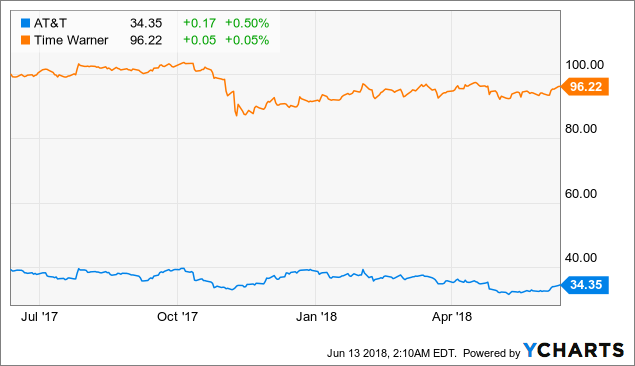
Today Judge Richard Leon has found for AT&T (NYSE:T) in the telecom giant’s landmark trial over an $80 Billion plus buyout of Time Warner (NYSE:TWX), allowing the blockbuster deal to proceed without remedies.

The decision also signals a likely green light for more and faster media consolidation, most notably potential competing bids for the media assets of Fox (FOX,  FOXA) from Disney (NYSE:DIS) and Comcast (NASDAQ:CMCSA), and bids for European broadcaster Sky (OTCQX:SKYAY) from some permutation of Disney, Fox and Comcast.

AT&T had previously indicated that with the lengthy time involved in the deal, it was prepared to close quickly if it got a clear go-ahead in this case, so we expect to hear details very quickly.

Judge Leon has also said he would deny a stay on the deal if requested by the Justice Dept., meaning that even if DOJ appeals, the companies are free to close. That could discourage an appeal entirely.

Analysts expect today’s decision to clear the way for Disney or Comcast to buy 21st Century Fox.

AT&T applauded the court’s decision and said it expected to close the merger before the June 21 contractual deadline.

[youtube https://www.youtube.com/watch?v=9TXBP1t2rUc&w=560&h=315]

Shares of other media and telecom companies also rose, including T-Mobile US Inc, Sprint Corp, CBS Corp, Dish Network Corp, Discovery Inc and Viacom Inc.

Read Full Article and Videos  CWEB.com – Trending News, Blog, Shopping

Chart
T  data by  YCharts


Mexico City’s new airport is an environmental disaster but it could become a huge national park

0

mexicoairport

Mexico City’s new airport is an environmental disaster but it could become a huge national park – CWEB.com

File 20180610 191962 9kv9qn.jpg?ixlib=rb 1.1
Mexico City’s new Norman Foster-designed airport, seen here in a computer rendering, is visually striking but environmentally problematic.
Presidencia de la República Mexicana CC-by-2.0, CC BY

Gabriel Diaz Montemayor, University of Texas at Austin

Mexico City long ago outgrew the two-terminal Benito Juárez International Airport, which is notorious for delays, overcrowding and canceled flights.

Construction is now underway on a striking new international airport east of this metropolis of 20 million. When it opens in late 2020, the LEED-certified new airport — whose terminal building was designed by renowned British architect Norman Foster in collaboration with the well-known Mexican architect Fernando Romero — is expected to eventually serve 125 million passengers. That’s more than Chicago O’Hare and Los Angeles’ LAX.

Mexico’s new airport sits in a federal reserve.
Yavidaxiu/The Conversation, CC BY

But after three years of construction and US$1.3 billion, costs are ballooning and corruption allegations have dogged both the funding and contracting process.

Environmentalists are also concerned. The new airport is located on a semi-dry lake bed that provides water for Mexico City and prevents flooding. It also hosts migrating flocks and is home to rare native species like the Mexican duck and Kentish plover.

According to the federal government’s environmental impact assessment, 12 threatened species and 1 endangered species live in the area.

The airport project is now so divisive that Andrés Manuel López Obrador, the populist front-runner in the country’s 2018 presidential campaign, has suggested scrapping it entirely.

An environmental disaster

I’m an expert in landscape architecture who studies the ecological adaption of urban environments. I think there’s a way to save Mexico’s new airport and make it better in the process: create a nature reserve around it.

Five hundred years ago, lakes covered roughly 20 percent of the Valle de Mexico, a 3,500-square-mile valley in the country’s south-central region. Slowly, over centuries, local residents — first the Aztecs, then the Spanish colonizers and then the Mexican government — built cities, irrigation systems and plumbing systems that sucked the region dry.

By the mid-20th century, the lakes had been almost entirely drained. In 1971, President Luís Echeverría decreed the area a federal reserve, citing the region’s critical ecological role for Mexico City. The smattering of small lakes and reforested land there now catch and store runoff rainwater and prevent dust storms.

The new airport will occupy 17 square miles of the 46-square-mile former Lake Texcoco. To ensure effective water management for Mexico City, the airport master plan proposes creating new permanent water bodies to offset the lakes lost to the airport and cleaning up and restoring nine rivers east of the airport. It also proposes planting some 250,000 trees.

The government’s environmental assessment determined that the impacts of the new airport, while significant, are acceptable because Lake Texcoco is already “an altered ecosystem that lost the majority of its original environmental importance due to desiccation and urban expansion.” Today, the report continues, “it is now only a desolate and abandoned area.”

Environmentalists loudly disagree.

Make Mexico’s airport great again

I see this environmental controversy as an opportunity to give Mexico City something way more transformative than a shiny new airport.

Nobody can entirely turn back the clock on Lake Texcoco. But the 27 square miles of lake bed not occupied by the airport could be regenerated, its original habitat partially revitalized and environmental functions recovered in a process known as restoration ecology.

I envision a huge natural park consisting of sports fields, forests, green glades and a diverse array of water bodies — both permanent and seasonal — punctuated by bike paths, walking trails and access roads.

The airport will come equipped with new ground transportation to Mexico City, making the park easily accessible to residents. Extensions from the surrounding neighborhood streets and highways could connect people in poor neighborhoods abutting the airport — dense concrete jungles like Ecatepec, Ciudad Nezahualcoyotl and Chimalhuacan — to green space for the first time.

The nine rivers that empty into Lake Texcoco from the east could be turned into greenways to connect people from further out in Mexico State to what would become the area’s largest public park.

Space could also be reserved for cultural attractions such as museums, open and accessible to passengers in transit.

New master plan

This idea is not as crazy as it sounds.

As early as 1998, Mexican architects Alberto Kalach and the late Teodoro González de León proposed rehabilitating the lakes of the Valley of Mexico. Their book, “The City and its Lakes,” even envisaged a revenue-generating island airport as part of this environmentally revitalized Lake Texcoco.

Under President Felipe Calderon, Mexico’s National Water Commission also proposed building an ecological park in Lake Texcoco, which was to include an island museum and restore long-degraded nearby agricultural land. But the project never gained traction.

Granted, turning a large, half-constructed airport into a national park would require an ambitious new master plan and a budget reallocation.

But in my opinion, evolution and change should be part of ambitious public designs. And this one is already expected to cost an additional $7.7 billion to complete anyway.

Toronto’s Downsview Park — a 291-acre former air force base turned green space — has transformed so much since its conception in 1995 that its declared mission is now to “constantly develop, change and mature to reflect the surrounding community with each generation.”

Local communities neighboring Mexico City’s new airport were not adequately consulted about their needs, environmental concerns and their current stakes in the Lake Texcoco area. A revamped park plan could be truly inclusive, designed to provide recreation and urban infrastructure — and maybe even permanent jobs — for these underserved populations.

Presidential race

Three of the four candidates in Mexico’s July 1 presidential election want to finish Mexico City’s new international airport. But López Obrador, who for months has had an unbeatable lead in the polls, is not so sure.

Early in his campaign, he said he would cancel it if elected. Instead, López Obrador suggested, a former air force base could become the new international terminal. It would be connected to Benito Juárez airport, 22 miles south, by train.

[youtube https://www.youtube.com/watch?v=9TXBP1t2rUc&w=560&h=315]

López Obrador has since said he would support completing construction of the new international airport if the remaining financing came from the private sector, not the Mexican government. Currently, some two-thirds of the project is funded by future airport taxes.

The ConversationLópez Obrador’s promise to review and likely upend the airport plan could open the door to its wholesale transformation, putting people and nature are at the core of a plan ostensibly designed for the public good.

Gabriel Diaz Montemayor, Assistant Professor of Landscape Architecture, University of Texas at Austin

This article was originally published on The Conversation.

When does hungry become hangry?

0

hangry-primary

When does hungry become hangry? – CWEB.com

File 20180610 191943 1o6rbti.jpg?ixlib=rb 1.1
You’re ready to blow your top — but how much is due to your internal hunger and how much to external annoyances?
perfectlab/Shutterstock.com

Jennifer MacCormack, University of North Carolina — Chapel Hill

Have you ever been grumpy, only to realize that you’re hungry?

Feeling hangry has become a meme, even used in ads. But how does it work, psychologically?
Snickers

Many people feel more irritable, annoyed, or negative when hungry — an experience colloquially called being “hangry.” The idea that hunger affects our feelings and behaviors is widespread — from advertisements to memes and merchandise. But surprisingly little research investigates how feeling hungry transforms into feeling hangry.

Psychologists have traditionally thought of hunger and emotions as separate, with hunger and other physical states as basic drives with different physiological and neural underpinnings from emotions. But growing scientific evidence suggests that your physical states can shape your emotions and cognition in surprising ways.

Prior studies show that hunger itself can influence mood, likely because it activates many of the same bodily systems, like the autonomic nervous system and hormones, that are involved in emotion. For example, when you’re hungry, your body releases a host of hormones including cortisol and adrenaline, often associated with stress. The result is that hunger, especially at greater intensity, can make you feel more tense, unpleasant and primed for action — due to how these hormones make you feel.

But is feeling hangry just these hunger-induced feelings or is there more to it? This question inspired the studies that psychologist Kristen Lindquist and I conducted at UNC-Chapel Hill. We wanted to know whether hunger-induced feelings can transform how people experience their emotions and the world around them.

Negative situations set the scene for hanger

An idea in psychology known as affect-as-information theory holds that your mood can temporarily shape how you see the world. In this way, when you’re hungry, you may view things in a more negative light than when you’re not hungry. But here’s the twist.

People are most likely to be guided by their feelings when they’re not paying attention to them. This suggests that people may become hangry when they aren’t actively focused on their internal feelings, but instead wrapped up in the world around them, such as that terrible driver or that customer’s rude comment.

To test whether hungry people are more likely to become hangry in negative situations when they aren’t focused on their feelings, we designed three different studies. In the first two, run online with U.S. adults, we asked people — some hungry, some full — to look at negative, positive and neutral emotional images. Then they saw an ambiguous figure: a Chinese character or pictograph they’d never seen before. We asked participants whether they thought the pictograph meant something pleasant or unpleasant.

Each trial consisted of either a randomly selected negative, positive or neutral emotional image, meant to serve as emotional context, followed by a randomly selected Chinese pictograph, meant to be ambiguous to English speakers. Participants then used their gut feelings to judge whether the ambiguous pictograph meant something unpleasant, pleasant, or neutral.
Jennifer MacCormack, CC BY-ND

Hungry people who saw negative images thought the pictographs meant something more unpleasant. However, hungry people’s ratings after positive or neutral emotional pictures were no different than the not-hungry people.

[youtube https://www.youtube.com/watch?v=9TXBP1t2rUc&w=560&h=315]

This suggests that the hangry bias doesn’t occur when people experience positive or even neutral situations. Instead, hunger only becomes relevant when people confront negative stimuli or situations. But why would hunger only matter in negative situations?

Affect-as-information theory also suggests that people are more likely to use their feelings as information about the world around them when those feelings match the situation they’re in. Hunger likely only becomes relevant in negative situations because hunger itself produces unpleasant feelings — making it easier to mistake the cause of those feelings to be the negative things around you, rather than your hunger.

Tuning in to your feelings

In the final study, we recreated in the laboratory a frustrating situation to test how hunger and awareness — or lack thereof — might cause hanger.

We assigned two random groups of undergraduate students to fast for at least five hours or eat a full meal before coming to our lab. There we assigned them to write a story that was meant either to direct their attention to emotional information, or to not focus on emotions at all. Then everyone did a long, tedious computer task. At the end of the task, we secretly programmed the computer to “crash.” The researcher blamed the participant for the computer malfunction and told them they’d have to redo the task once it was fixed.

It turned out that hungry people who hadn’t focused on feelings beforehand exhibited more signs of being hangry. They reported feeling more stressed, hateful and other negative emotions and rated the researcher as being more “judgmental,” compared to full individuals and the hungry people who did write about emotions earlier.

These findings suggest that feeling hangry occurs when your hunger-induced negativity gets blamed on the external world around you. You think that person who cut you off on the road is the one who made you angry — not the fact that you’re ravenous. This seems to be a fairly unconscious process: People don’t even realize they’re making these attributions.

Our data suggest that paying attention to feelings may short circuit the hangry bias — and even help reduce hanger once you notice it.

The hungry/hangry connection is a reminder that bodies influence brains and vice versa.
Ana Blazic Pavlovic/Shutterstock.com

Although these studies provide a valuable glimpse into the ways that physical states, like hunger, can temporarily shape our feelings and behaviors, they are only a first step. For example, our studies only address hunger effects in healthy populations where individuals eat regularly. It would be interesting to look at how feeling hangry could change with long-term dieting or conditions like diabetes or eating disorders.

These studies alongside other emerging science suggest that our bodies can deeply shape how we think, feel and act — whether we realize it or not. We’re generally aware that emotions like feeling stressed can influence our health, but the reverse direction is also true. Our bodies and physical health have the power to shape our mental lives, coloring who we are and the way we experience the world around us.

Warding off hanger

Here are three pro tips to help keep your hunger from going full-blown hangry.

Healthy foods filled with slow-release nutrients keep you satiated and impervious to hanger.
Tetiana Bykovets on Unsplash, CC BY

First, it may seem obvious, but pay more attention to your hunger. People vary a lot in how sensitive they are to hunger and other bodily cues. Maybe you don’t notice you’re hungry until you’re already ravenous. Plan ahead — carry healthy snacks, eat a protein-filled breakfast or lunch to give you lasting energy — and set yourself reminders to eat regularly. These basic precautions help prevent you from becoming overly hungry in the first place.

But what if you’re already super hungry and can’t eat right away? Our findings suggest people are more likely to be biased by hunger in negative situations. Maybe you’re stuck in bad traffic or you have a stressful deadline. In these cases, try to make your environment more pleasant. Listen to an amusing podcast while you drive. Put on pleasant music while you work. Do something to inject positivity into your experience.

The ConversationMost importantly, your awareness can make all the difference. Yes, maybe you’re hungry and starting to feel road rage, overwhelmed with your task deadline, or wounded by your partner’s words. But amid the heat of those feelings, if you can, step back for a moment and notice your growling stomach. This could help you recognize that hunger is part of why you feel particularly upset. This awareness then gives you the power to still be you, even when you’re hungry.

Jennifer MacCormack, Ph.D. Student in Psychology and Neuroscience, University of North Carolina — Chapel Hill

This article was originally published on The Conversation.

Increased deaths and illnesses from inhaling airborne dust: An understudied impact of climate change

0

power-station-2781692_960_720

Increased deaths and illnesses from inhaling airborne dust: An understudied impact of climate change – CWEB.com

File 20180608 191971 1tlb4is.jpg?ixlib=rb 1.1
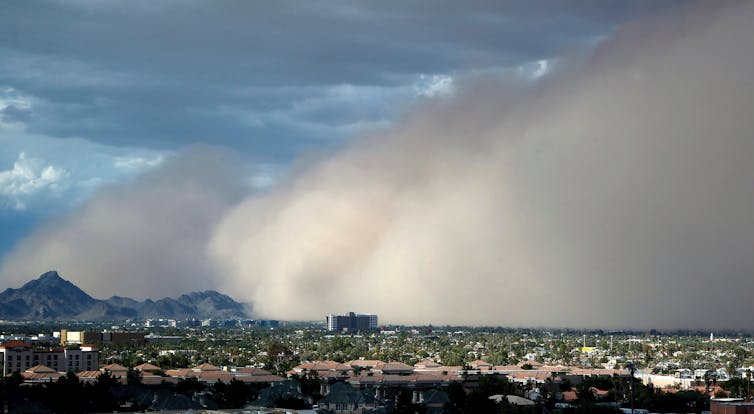
A large dust storm, or haboob, sweeps across downtown Phoenix on July 21, 2012.
AP Photo/Ross D. Franklin, File

Ploy Pattanun Achakulwisut, George Washington University; Loretta Mickley, Harvard University, and Susan Anenberg, George Washington University

The Dust Bowl in the 1930s was one of the worst environmental disasters of the 20th century. Intense dust storms relentlessly pounded the southern Great Plains of the United States, wreaking severe ecological damage, forcing 2.5 million people to leave the region and claiming unnumbered lives, mainly from “dust pneumonia.”

Research has shown that this disaster was fueled by a combination of severe droughts and over-cultivated lands. Today, climate change driven by human actions is enhancing the occurrence of droughts in multiple regions around the world.

As researchers working at the intersection of environmental health, air pollution and climate change, we wanted to know how increasing drought conditions and population growth in the U.S. Southwest could affect airborne dust levels and public health.

In a recently published study, we estimate that if the world stays on its current greenhouse gas emissions path, rising fine dust levels could increase premature deaths by 130 percent and triple hospitalizations due to fine dust exposure in this region.

Harmful effects of inhaling dust

If global greenhouse gas emissions are not sharply reduced, scientists project that the U.S. Southwest — already the nation’s hottest and driest region — will experience unprecedented multi-decade “mega-droughts” in the coming decades.

It is now well understood that short- and long-term exposures to airborne particles, including dust, pose major health risks. Effects range from increased hospital admissions to higher risk of premature death, primarily due to cardiovascular and respiratory disorders.

The ‘Black Sunday’ dust storm on April 14, 1935, was one of the most dramatic of hundreds of “black blizzards” that struck the Great Plains in the 1930s.

In our study, “dust” refers to soil-derived airborne particles generated by wind erosion or human activities, such as farming operations or travel on unpaved roads. Any soil particles smaller than 0.05 millimeters — roughly the width of a human hair — can be uplifted into the air. We focused on particles smaller than 0.0025 millimeters (2.5 microns), which are collectively known as “fine” particulate matter (PM). Particles this small stay in the air longer and cause the greatest harm to human health, since they can penetrate deep into the lungs.

Decades of epidemiological research have firmly established a link between exposure to fine PM and adverse health effects. Although more research is needed to differentiate between the potency and effects of various materials that make up fine PM, which also include emissions from fossil fuel combustion and other industrial sources, evidence suggests that dust is a significant contributor.

For example, silica, which makes up around 60 percent of windblown desert dust, is known to cause chronic lung inflammation, lung cancer and autoimmune diseases. Dust can also transport soil-borne pathogens and toxic contaminants over large areas. In the U.S. Southwest, dust episodes have been linked to outbreaks of valley fever and arsenic poisoning.

Fine particulates are much smaller than a human hair.
USEPA

Dust and droughts in the U.S. Southwest

The southwestern United States, much of which consists of deserts and drylands, has the nation’s highest levels of airborne dust. The first question we investigated was how drought conditions occurring in different hydrologic systems, such as surface soils, river discharge areas and groundwater storage, have been influencing levels of airborne fine dust in recent years.

By analyzing data collected between 2000-2015 at 35 monitoring sites in Arizona, Colorado, New Mexico and Utah, we found that year-to-year changes in fine dust levels observed at each monitoring site tended to occur in sync. This pattern suggests that there is one or more common cause of large-scale changes in fine dust levels.

Indeed, we found that these changes were significantly correlated with soil moisture conditions across southwestern North America. Years with higher-than-normal fine dust levels were also marked by drier-than-normal soil moisture in areas spanning the Chihuahuan, Mojave and Sonoran deserts, the southern Great Plains and the Colorado Plateau.

Studies have shown that dust emissions within these regions primarily come from desert areas, dry lake beds, previously burned areas and lands disturbed by agricultural activities and fossil fuel development. Our findings are consistent with previous field studies showing that soil moisture can control dust emissions by modulating vegetation cover and soil stability.

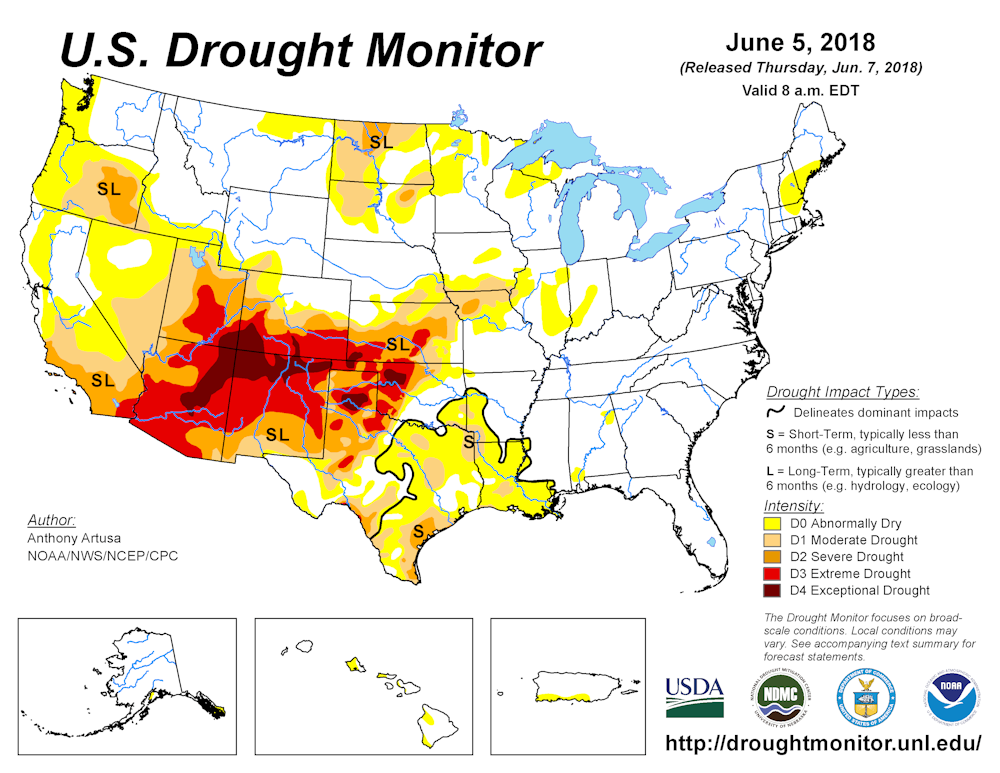
In early June 2018, drought affected 27 percent of the lower 48 states.
NIDIS

Airborne dust and health risks under future climate change

In our next step, we quantified potential future changes in fine dust levels and associated public health impacts under two different climate change scenarios used in the Fifth Assessment Report of the Intergovernmental Panel on Climate Change. The so-called “worst-case” scenario in the report is characterized by unabated, increasing greenhouse gas emissions over time. In the “best-case” scenario, dramatic cuts in emissions are required to hold global warming below two degrees Celsius.

First, we used projections of temperature and precipitation for the years 2076-2095 from an ensemble of 22 climate models in conjunction with our derived dust-soil moisture relationships to quantify future changes in dust due to changing drought conditions under the two climate scenarios. Since there is variation among climate model projections, using a large group of them allows us to gauge the robustness of the results.

We then estimated the resulting public health impacts by applying relationships drawn from studies that have quantified increases in risk of premature deaths and hospitalizations in representative U.S. populations due to exposure to fine PM. In these calculations, we also took into account projections of population growth for the Southwest and changing vulnerability to disease.

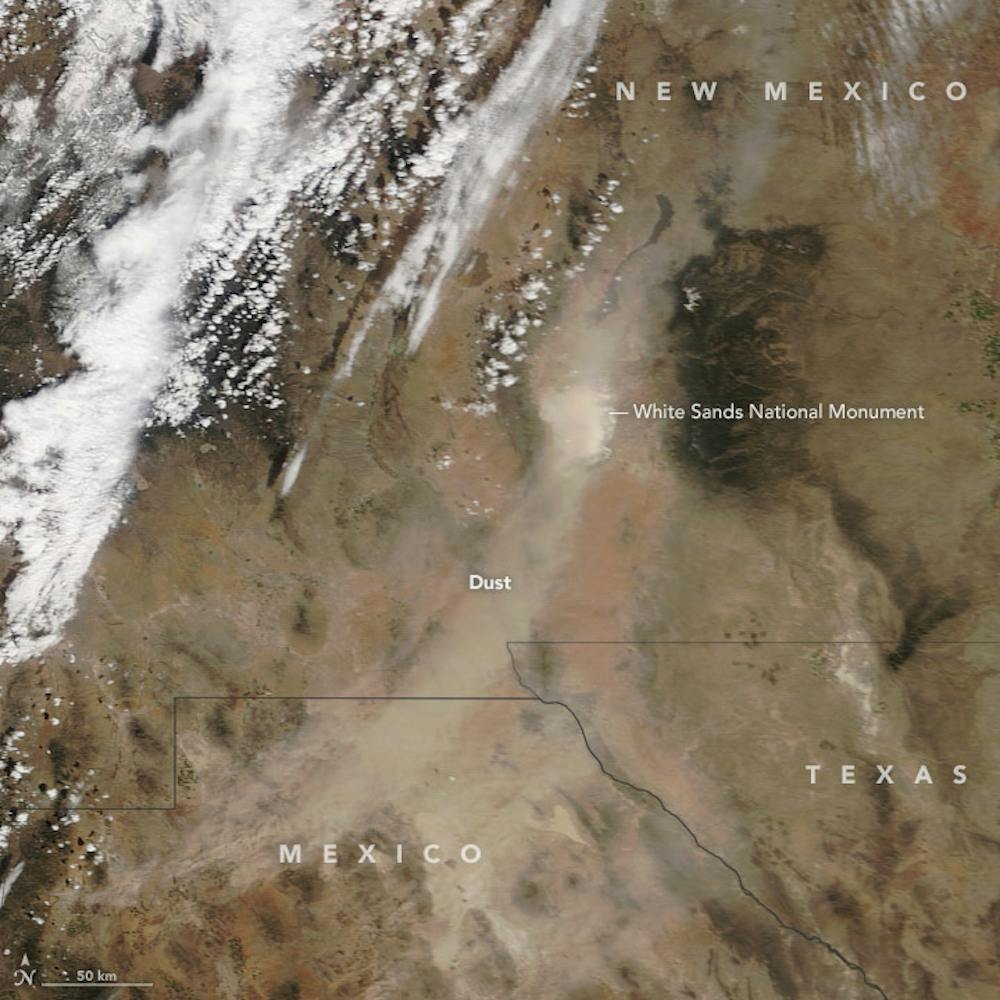
On March 31, 2017, thick plumes of dust stretched hundreds of kilometers from northern Mexico into Texas and New Mexico. The source appeared to mainly be farmland near the Mexican town of Janos.
NASA Earth Observatory

Under the worst-case scenario — the path we’re currently on — fine dust levels in the Southwest could increase by 30 percent by the end of this century compared to present-day values. This would result in a 130 percent increase in premature deaths and a 300 percent increase in hospital admissions attributable to fine dust exposure.

Even under the best-case climate mitigation scenario, we project that fine dust levels in the region could increase by 10 percent. This rise would increase premature deaths and hospital admissions due to fine dust exposure by 20 percent and 60 percent respectively, compared to present-day values.

It is worth noting here that we only looked at the isolated effect of future drought conditions. Changes in other factors, such as wind speed and human land use, may enhance or dampen our results.

Dust and droughts are a global threat

Other researchers have found results similar to our study in other parts of the world. For example, researchers have shown that the occurrence of dust storms in China and Saudi Arabia is modulated by rainfall or soil moisture in surrounding regions, which include remote deserts and drylands.

[youtube https://www.youtube.com/watch?v=9TXBP1t2rUc&w=560&h=315]

The ConversationToday, drylands compose 41 percent of the world’s total land area and are home to around 2.1 billion people. On the world’s current greenhouse gas emissions trajectory, droughts will intensify and drylands will expand in parts of South America, Africa, Australia and the Mediterranean. Our findings highlight the potential for climate change to worsen air quality problems in many populated arid regions around the world — one of the many threats posed by climate change to human health and well-being.

Ploy Pattanun Achakulwisut, Postdoctoral Scientist, George Washington University; Loretta Mickley, Senior Research Fellow in Chemistry-Climate Interactions, Harvard University, and Susan Anenberg, Associate Professor of Environmental and Occupational Health and Global Health, George Washington University

This article was originally published on The Conversation.

Why predicting suicide is a difficult and complex challenge

0

anthony

Why predicting suicide is a difficult and complex challenge – CWEB.com

File 20180608 191962 nluw9q.jpg?ixlib=rb 1.1
Anthony Bourdain, left, and Kate Spade, right.
The Conversation with images from PeabodyAwards/flickr, CC BY-SA

Joseph Franklin, Florida State University

Who is going to die by suicide? This terrible mystery of human behavior takes on particular poignance in the wake of suicides by high-profile and much-beloved celebrities Kate Spade and Anthony Bourdain. It is only natural that people want to know why such tragedies occur. Those closest to those who take their lives are often tormented, wondering if there is something they could have — or should have — known to prevent their loved one’s suicide.

As a scientist who has focused on this question for the past decade, I should have a pretty good idea of who is and isn’t going to die by suicide. But the sad truth is, I don’t. The sadder truth is, neither do any other suicide experts, psychiatrists or physicians. The sum of the research on suicide shows that it does not matter how long we’ve known someone or how much we know about them. In my research, my colleagues and I have shown that we can only predict who is going to die by suicide slightly more accurately than random guessing.

The need for answers

The fact that suicide is so hard to predict unfortunately took about 50 years for most scientists to appreciate. About the same time that this recognition became widespread a few years ago, a new hope emerged: a form of artificial intelligence called machine learning. As several research groups have demonstrated in recent years, machine learning may be able to predict who is going to attempt or die by suicide with up to 90 percent accuracy.

To understand why this is, and why we humans won’t ever be able to accurately predict suicide on our own, one needs to take a step back and understand a little more about the nature of human cognition, suicide and machine learning.

As humans, we love explanations that have two qualities. First, explanations should be simple, meaning that they involve one or a small number of things. For example, depression is a simple explanation for suicide.

Second, explanations should be determinate, meaning that there is one set explanation that accounts for all or most of something. For example, the idea that depression causes most suicides is a determinate explanation. This simple and determinate explanatory style is highly intuitive and very efficient. It’s great for helping us to survive, procreate, and get through our days.

But this style of thinking is terrible for helping us understand nature. This is because nature is not simple and determinate. In recent decades, scientists have come to recognize that nearly everything — from physics to biology to human behavior — is complex and indeterminate. In other words, a very large number of things combined in a complex way are needed to explain most things, and there’s no set recipe for most physical, biological or behavioral phenomena.

I know that this latter idea of indeterminacy is especially counterintuitive, so let me provide a straightforward example of it. The math equation X plus Y equals 1 is indeterminate. As humans, we instinctively try to find one solution to this equation (e.g., X equals 1, Y equals 0). But there is no set recipe for solving this equation; there are nearly infinite solutions to this equation. Importantly, however, this does not mean that “anything goes.” There are also near infinite values for X and Y that do not solve this equation. This indeterminate middle ground between “one solution” and “anything goes” is difficult for most humans to grasp, but it’s how much of nature works.

The sum of our scientific evidence indicates that, just like most other things in nature, the causes and predictors of suicide are complex and indeterminate. Hundreds, and maybe thousands, of things are relevant to suicide, but nothing predicts suicide much more accurately than random guessing. For example, depression is often considered to be an extremely important predictor of suicide. But about 2 percent of severely depressed people eventually die by suicide, which is only slightly higher than the 1.6 percent of people from the general United States population who eventually die by suicide. Such a pattern is consistent with complexity because it suggests that we must put a lot of factors together to account for suicide.

Empathy will always matter

So how should we put all of these factors together? One intuitive solution is to add many of these factors together. But even when summing hundreds of factors, this doesn’t work — prediction is still only slightly more accurate than random guessing.

A much better solution would be to somehow find an optimized combination of tens or even hundreds of factors. How can we do this? One promising answer is machine learning. In short, machine learning programs can process a large amount of data and learn an optimal combination of factors for a given task. For example, most existing machine learning studies have used data from electronic health records, spanning hundreds of factors related to mental health diagnoses, physical health problems, medications, demographics and hospital visit patterns. Results from several groups in recent years have shown that this approach can consistently predict future suicide attempts and death with 80-90 percent accuracy. Multiple groups are currently working on applying these algorithms to actual clinical practice.

One important thing to keep in mind is that there isn’t, and never will be, a single algorithm or recipe for suicide prediction. This is because suicide is indeterminate, much like the X plus Y equals 1 equation. There are likely near-infinite algorithms that could predict suicide with 80-90 percent accuracy, as a number of studies have shown. Research has already demonstrated that no particular factors are necessary for a good algorithm, and many different types of algorithms can produce accurate prediction. But again, this indeterminacy also means that there are near-infinite bad algorithms, too.

About 2 percent of severely depressed people die by suicide.
Fure/Shutterstock.com

All of this research shows that suicide is unfortunately too complex and indeterminate for humans to predict. Neither I nor anyone else can accurately predict who is going to die by suicide or truly explain why a particular person died by suicide (this includes the suicide decedents themselves). Machine learning can do a much better job of approximating the complexity of suicide, but even it falls far short. Although it can accurately predict who will eventually die by suicide, it cannot yet tell us when someone will die by suicide. This “when” dimension of prediction is critical, and we are likely still many years away from accounting for it.

[youtube https://www.youtube.com/watch?v=9TXBP1t2rUc&w=560&h=315]

In the meantime, what can we humans do? While we don’t have the ability to know whether someone is going to die by suicide or not, we do have the ability to be supportive and caring. If you believe that someone may be struggling, talk with them and let them know about resources such as the US National Suicide Prevention Lifeline (1-800-273-8255).

The ConversationIf this article has raised issues for you or if you’re concerned about someone you know, call Lifeline on 13 11 14.

Joseph Franklin, Assistant professor of Psychology, Florida State University

This article was originally published on The Conversation.

How Korean boy band BTS toppled Asian stereotypes — and took America by storm

0

btsloreakband

How Korean boy band BTS toppled Asian stereotypes — and took America by storm CWEB.com

Susanna Lim, University of Oregon

On May 27, the seven-member South Korean boy band BTS became the first K-pop act to top the Billboard 200 chart with their third album, “Love Yourself: Tear.”

A week earlier, BTS had won “top social artist” for the second year in a row at the 2018 Billboard Music Awards, beating out the likes of Justin Bieber and Ariana Grande. During the show, they performed their single “Fake Love” to the screams of adoring American fans, who seemed to have no trouble singing along to the song’s mostly Korean lyrics.

BTS performs ‘Fake Love’ at the 2018 Billboard Music Awards.

As someone who studies and teaches modern Korean culture, I’ve been following the ebb and flow of K-pop’s popularity in the U.S. with a mix of interest and skepticism. Like Euny Hong, author of “The Birth of Korean Cool” (2014), I, too, am more familiar with a time when Korea was simply “not cool” by Western standards.

For decades, Americans seemed to only think of Korea through the lens of the Korean War and diplomatic tensions with North Korea. Korean pop music barely registered.

But as I listened to “MIC Drop” and “Fake Love” on a local radio station during a recent trip to campus, it struck me that K-pop may have entered a new phase. The genre’s growing popularity says as much about the talent of groups like BTS as it does about the country’s expanding role in global affairs.

A ‘perfect’ aesthetic

K-pop is a particular style of South Korean popular music that’s distinguishable from other popular forms of Korean music, such as trot and sentimental ballads. Many trace its origins to the early 1990s, but the genre came into its own in the 2000s and 2010s, with acts such as BoA, Wonder Girls, Girls’ Generation, TVXQ, Big Bang and 2NE1 becoming hugely popular in Asia and beyond.

The “pop” part of K-pop seems easy enough; you’ll hear American pop musical influences — mostly dance pop, but also rap, hip-hop, R&B, jazz, techno and rock – in K-pop songs.

But what about the “K”? This is where the unique Korean flair plays a role: infectious melodies sung mostly in Korean, a few English words strategically placed in the sing-along refrain, and single-sex groups made up of seven to 15 members.

In my view, the biggest aspect of K-pop’s appeal is the group members’ relentless pursuit of perfection. Their performances involve perfectly synchronized choreography. They also tend to have a very specific look that reflects idealized Caucasian beauty standards: a small, chiseled face, large eyes, a straight nose, long legs and trendy outfits.

K-pop’s global ambition is another quality that distinguishes the genre from other Korean music. Exporting K-pop to the rest of the world is not only a goal of the Korean music industry, but also a government priority. For example, at the Pyongchang Winter Olympics, organizers prominently featured K-pop performers EXO and CL in the closing ceremony.

For decades, South Korea was a war-torn, poverty-stricken country. But beginning in the 1960s and 1970s, under the rule of dictator Park Chung-hee, the country embarked on an ambitious program of economic development, and, in less than a half century, the nation transformed into one of the world’s leading economic powers.

For many young Koreans, K-pop stars represent their ideal image of themselves; for Korean leaders, they symbolize the promising future of their country.

A unique appeal

And yet, until recently, most Americans could probably name only one or two K-pop groups.

Many got their first taste of K-pop following Psy’s 2012 global hit “Gangnam Style.” The song, an ironic paean to the glitzy superficiality of Gangnam, a wealthy area of Seoul, racked up 1 billion YouTube views by the end of 2012.

But some wouldn’t consider Psy and his hit single a true reflection of K-pop.

In “Gangnam Style,” Westerners were exposed to a cartoonish parody of K-pop, a tongue-in-cheek performance that gives off vibes of orientalism and exoticism. Audiences, especially in the West, liked it not because they viewed Psy as an artist, but simply because “Gangnam” was entertainingly weird.

Psy performs during a concert in Seoul, South Korea, in 2014.
AP Photo/Lee Jin-man

BTS’ breakthrough shows that in just six years, K-pop — and Americans’ view of K-pop — have come a long way.

What did BTS do differently? Through social media, BTS members have been able to counter some of the stigmas about Asians that in the past may have hindered K-pop’s popularity in the U.S.

Research has shown that Westerners tend to stereotypically view Asians as a vague, collective mass that robotically imitates the West. They assign them the negative qualities of capitalism — materialism and cutthroat competitiveness — while downplaying Asians’ self-assertion and individuality, which are qualities valued by Western societies.

But unlike other K-pop groups, BTS have done more than perfect their choreography and looks. They also put their personalities on full display.

Via social media, they’ve been able to connect with and cultivate a community of utterly devoted fans. On Twitter — in English and in Korean — group members give fans a window into their lives, express themselves, and talk about issues important to teens, from mental health to body image.

As one of my students told me, “Fans feel like they see the ‘real’ members and their personalities.”

Korea’s new global identity

Make no mistake, BTS is a product of Korea. Its members are driven by the same work ethic that drive millions of Korean youth to hit the books in “hagwon,” the country’s notorious “cram schools.”

But the group does seem to represent a new, more comfortable negotiation of Korean and global identities that has emerged in recent years.

In 1997, Korea experienced a financial crisis. The country was on the brink of economic collapse, and massive shutdowns and layoffs ensued. The crisis, known in Korea as the “IMF crisis” due to the tough bailout package that the International Monetary Fund forced Korea to accept, devastated many families.

But it also led to a program of intense economic and cultural globalization
that opened the doors to foreign investment, made South Korea the most wired country in the world, and exposed Koreans to global culture and media.

In contrast to Korean-Americans or the Gangnam-born Psy, all seven members hail from regional cities like Busan and Gwangju. Born from 1992 to 1997, they’re part of the generation that grew up in South Korea during the post-IMF reforms that exposed them to American culture and the English language from the moment they learned to walk and talk.

Late last year, during BTS’ appearance on “The Ellen DeGeneres Show,” host Ellen compared the pandemonium that greeted them at LAX to Beatlemania.

[youtube https://www.youtube.com/watch?v=9TXBP1t2rUc&w=560&h=315]

But in the U.S., BTS faces two barriers the British band never had to worry about: race and language. American popular culture has a long history of excluding Asians, and there were hints of racism and xenophobia after BTS won their first Billboard award a year ago.

It might be too early to tell if BTS will be at the forefront of a “K-pop Invasion.” But it’s clear that they’ve been able to bridge some of the divides that have prevented K-pop from catching on in the U.S.

The ConversationWe saw it during the Billboard Music Awards when, during their speech, BTS thanked their fans — in English and in Korean.

Susanna Lim, Associate Professor, Korean and Russian studies, University of Oregon

This article was originally published on The Conversation.

Video gamers may soon be paid more than top pro athletes

0

gaming

Video gamers may soon be paid more than top pro athletes – CWEB.com

File 20180604 177088 1kuggti.jpg?ixlib=rb 1.1
The Finnish R6 eSports proleague team, winners of Rainbow Six Pro League Championship in Sao Paulo.
(Ubisoft)

Louis-Etienne Dubois, Ryerson University and Laurel Walzak, Ryerson University

Your interest in sports may have started out as a hobby when you were just a kid. You were better at it than others, and some even said you were gifted. Maybe you had a chance to develop into a professional athlete.

Colleges would soon line up to extend full scholarships. If you pushed hard enough, practised countless hours and kept a cool head, lucrative contracts and international fame awaited.

This fantasy plays out for many North American kids who dream of “making it to the big leagues.”

Whether they play hockey, football or basketball, even the most remote possibility of turning their love of the game into a respected career is worth sacrificing for.

Enter video games.

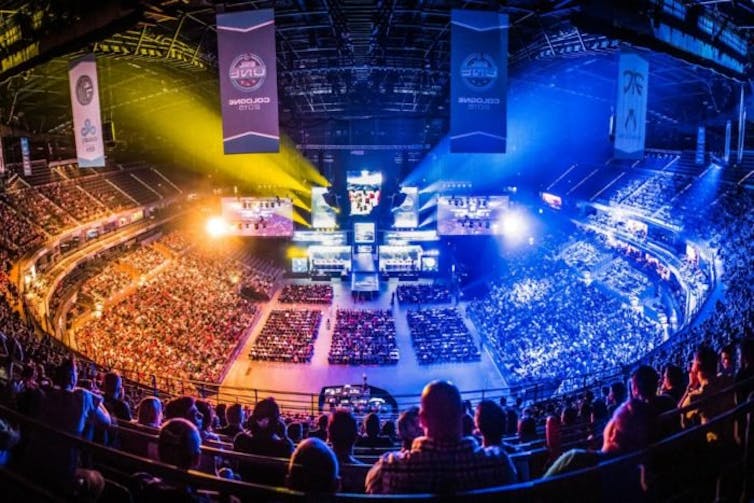
In less than a decade, the realm of professional sport has been taken by storm by the rise of eSports (short for electronic sports). These video game events now compete with – and in some cases outperform – traditional sports leagues for live viewership and advertising dollars.

For the top eSports players, this means sponsorship contracts, endorsements, prize money and yes, global stardom.

Games on TV still command high ad dollars

This week, dozens of professional video game players will descend on Toronto during NXNE, an annual music and arts festival, to compete in different games for prizes of up to US$1,000. Not a bad payday, perhaps, but still chump change in the eSports scene.

For example, Dota 2, a popular battle arena game published by Valve, recently handed out US$20 million to its top players during its finale.

What does this mean for traditional sports? And sports TV viewership?

The lasting broadcast success of sports leagues games can be explained by the fact that they are meant to be shared happenings and are best experienced live. As such, they have been resilient to disruptions within the media landscape and somewhat spared by the advent of on-demand streaming services such as Netflix and Amazon Prime.

The ability to capture a sizeable number of “eyeballs,” long enough and at a precise time, is the reason why professional sports leagues still command huge TV rights and advertising dollars.

In the past few years, the “Big Four” North American sports leagues have all struck new deals worth hundreds of millions of dollars.

Shifts in sports culture

Some leagues like Major League Baseball, and their once subsidiary Advanced Media division (MLBAM), have long embraced technological innovations to enhance audiences’ experience.

Meanwhile, media and telecommunication giants have been slower to catch on.

In 2016, John Skipper, then president of ESPN, referring to cable TV packages said: “We are still engaged in the most successful business model in the history of media, and see no reason to abandon it.”

This attitude, at the time, was not only symptomatic of a lag or inability to adopt technological innovations, but also raised concerns about the company’s future.

But the decline of the traditional linear broadcast, and the risk of losing relevancy in this digital, broadband and tech savvy media landscape is inevitable, and forces these media giants to question their traditional business models and to focus on online audiences.

Along with this shift, a new, popular and expansive trend for the new generation has emerged – eSports.

Whether eSports are actual sports or not is a whole other debate; however, the emergence of the global video game competition field demands attention and strategic investment.

Why eSports is doing so well

As a spectator sport, video games generate viewership at least on par with professional leagues.

Take, for instance, 2016’s League of Legends tournament that drew 36 million viewers, five million more than the NBA Finals, in front of a sellout crowd at the famous Bird Nest stadium in China.

eSports events regularly draw sellout crowds like major professional sports leagues.
(Ubisoft)

eSports mimic traditional sports leagues principles: Exciting content, likeable stars, catchy team names, slow motion highlights, intense competition and an uncertain outcome.

These video games attract audiences as they are no longer simply designed to be played, but increasingly to be visually pleasing for audiences.

Age-wise, compared to traditional sports that struggle to diversify their audience demographics, eSports have successfully attracted younger viewers.

The fan base is pretty young, with 61 per cent of fans falling in the 18-34 age range. Young men, in particular, are a desirable market for many advertisers.

eSports attracts advertisers

The economic outlook for video gaming sports is staggering. According to NewZoo, eSports “on its current trajectory is estimated to reach US$1.4 billion by 2020.” And a “more optimistic scenario places revenues at US$2.4 billion.”

Companies like Red Bull, Coca-Cola and Samsung, all usual suspects when it comes to advertising and young people, are flocking to eSports.

In recent years, eSports has made efforts to monetize across traditional revenue streams, such as merchandise sales, subscriptions plans, ticket sales and broadcast rights. It is, once again, taking a page straight out traditional sports leagues’ playbook.

So, what can established leagues and media giants do? Given the choice between fighting eSports or joining them, many appear to have chosen the latter. Recall ESPN resisting change in 2016. Then fast forward to their recent strategic investments in the digital platform BAMTech, once MLB Advanced Media, in order to launch ESPN streaming services.

As a result, Disney, the 100 per cent owner of ESPN, now has a say in League of Legends streaming because its publisher Riot Games had signed a seven-year US$350 million dollar broadcast deal with BAMTech.

FIFA just partnered with Electronic Arts on a online tournament that drew 20 million players and 30 million viewers. Also hoping to create platform synergies and to reach new audiences, Amazon acquired Twitch in 2014, the leading game streaming service.

These examples show that eSports are not just popular with gamers, but also among sports leagues and media giants. Both stand to learn from each other. No wonder Activision’s CEO said that he wanted to “become the ESPN of eSports.

This popularity also opens up more opportunities to compete on the professional level and earn huge endorsements, prize money and salaries just like LeBron James, Serena Williams, Danica Patrick or Sidney Crosby.

In fact, higher education eSports programs are already launching across the country and college scholarships are now commonplace, further acknowledging the economic viability and social acceptability of this phenomenon.

[youtube https://www.youtube.com/watch?v=9TXBP1t2rUc&w=560&h=315]

And with talks of introducing eSports in the Paris 2024 Olympic Games, Canada’s “Own the Podium” program may soon have to follow suit.

The ConversationIn any case, it turns out that our parents were wrong all along: You can stay glued to your console in the basement all day and still make it pro.

Louis-Etienne Dubois, Assistant Professor, School of Creative Industries, Ryerson University and Laurel Walzak, Assistant Professor, RTA School of Media, Ryerson University

This article was originally published on The Conversation.


Follow us on Facebook