Post a Free Blog

Submit A Press Release

At CWEB, we are always looking to expand our network of strategic investors and partners. If you're interested in exploring investment opportunities or discussing potential partnerships and serious inquiries. Contact: jacque@cweb.com

Generic selectors
Exact matches only
Search in title
Search in content
Post Type Selectors
Filter by Categories
Action
Animation
Anime
ATP Tour (ATP)
Auto Racing
Baseball
Basketball
Boxing
Breaking News
Business
Business
Business Newsletter
Call of Duty (CALLOFDUTY)
Canadian Football League (CFL)
Car
Celebrity
Champions Tour (CHAMP)
Comedy
CONCACAF
Counter Strike Global Offensive (CSGO)
Crime
Dark Comedy
Defense of the Ancients (DOTA)
Documentary and Foreign
Drama
eSports
European Tour (EPGA)
Fashion
FIFA
FIFA Women’s World Cup (WWC)
FIFA World Cup (FIFA)
Fighting
Football
Formula 1 (F1)
Fortnite
Golf
Health
Hockey
Horror
IndyCar Series (INDY)
International Friendly (FRIENDLY)
Kids & Family
League of Legends (LOL)
LPGA
Madden
Major League Baseball (MLB)
Mixed Martial Arts (MMA)
MLS
Movie and Music
Movie Trailers
Music
Mystery
NASCAR Cup Series (NAS)
National Basketball Association (NBA)
National Football League (NFL)
National Hockey League (NHL)
National Women's Soccer (NWSL)
NBA Development League (NBAGL)
NBA2K
NCAA Baseball (NCAABBL)
NCAA Basketball (NCAAB)
NCAA Football (NCAAF)
NCAA Hockey (NCAAH)
Olympic Mens (OLYHKYM)
Other
Other Sports
Overwatch
PGA
Politics
Premier League (PREM)
Romance
Sci-Fi
Science
Soccer
Sports
Sports
Technology
Tennis
Thriller
Truck Series (TRUCK)
True Crime
Ultimate Fighting Championship (UFC)
US
Valorant
Western
Women’s National Basketball Association (WNBA)
Women’s NCAA Basketball (WNCAAB)
World
World Cup Qualifier (WORLDCUP)
WTA Tour (WTA)
Xfinity (XFT)
XFL
0
Home Blog Page 13555

Why it’s time to curb widespread use of neonicotinoid pesticides
0

Why it’s time to curb widespread use of neonicotinoid pesticides

File 20180622 26561 b5vq9f.jpeg?ixlib=rb 1.1
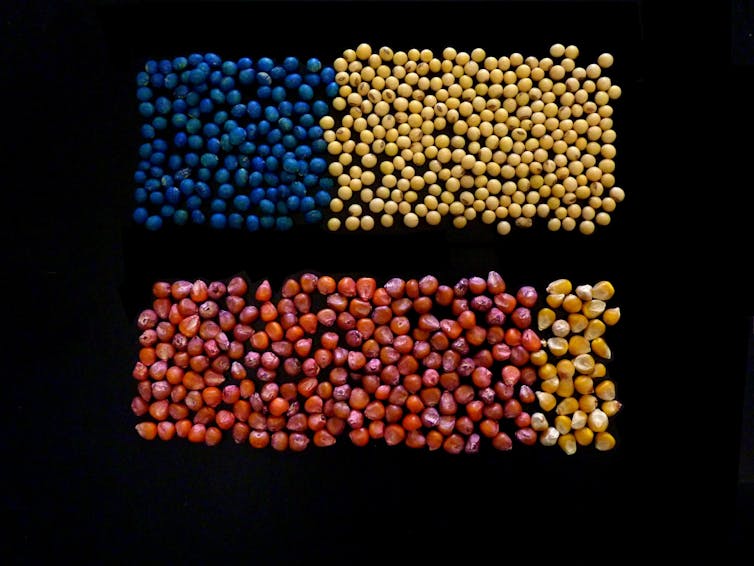
Soybean seeds treated with neonicotinoids (blue) and treated corn seeds (red) versus untreated seeds.
Ian Grettenberger/PennState University, CC BY-ND

John F. Tooker, Pennsylvania State University

Planting season for corn and soybeans across the U.S. corn belt is drawing to a close. As they plant, farmers are participating in what is likely to be one of the largest deployments of insecticides in United States history.

Almost every field corn seed planted this year in the United States — approximately 90 million acres’ worth — will be coated with neonicotinoid insecticides, the most widely used class of insecticides in the world. The same is true for seeds in about half of U.S. soybeans — roughly 45 million acres and nearly all cotton — about 14 million acres. In total, by my estimate, these insecticides will be used across at least 150 million acres of cropland, an area about the size the Texas.

Neonicotinoids are very good at killing insects. In many cases they require only parts per billion, equivalent to a few drops of insecticide in a swimming pool of water.

In recent years, concerns have been raised about the influence of neonicotinoids on bee populations. As an applied insect ecologist and extension specialist who works with farmers on pest control, I believe the focus on bees has obscured larger concerns. In my view, U.S. farmers are using these pesticides far more heavily than necessary, with potential negative impacts on ecosystems that are poorly understood.
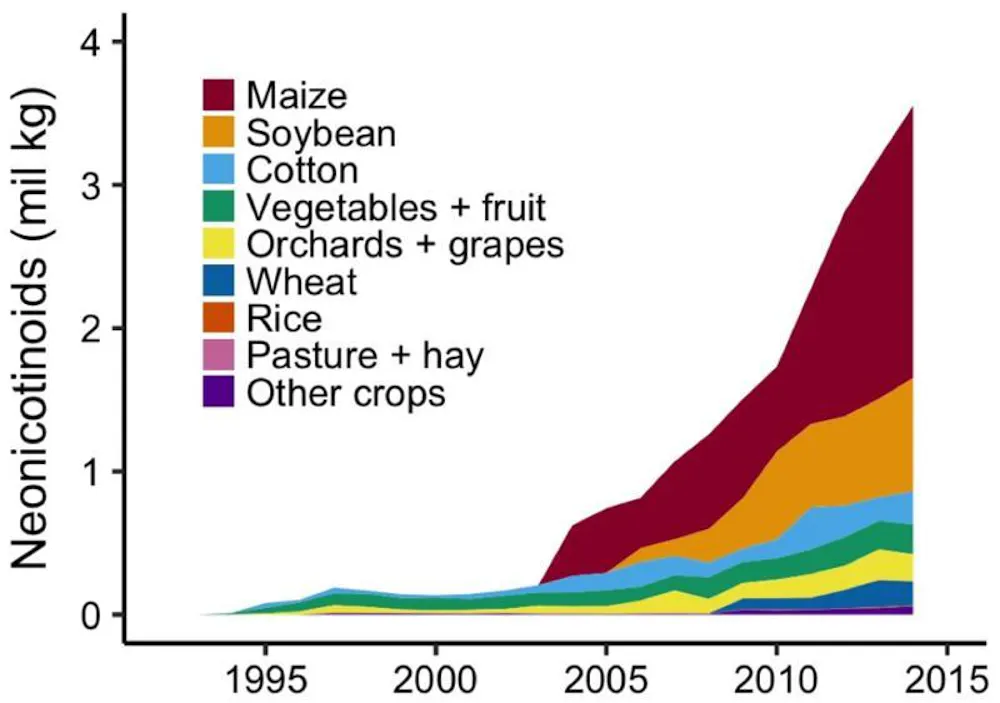
Neonicotinoid use by crop from 1992 to 2014. The y-axis represents mass of neonicotinoid active ingredient applied in millions of kg.
Tooker, Douglas, Krupke, 2017, doi:10.2134/ael2017.08.0026, CC BY-NC-ND

Pesticides on seeds

Most neonicotinoids in the United States are used to coat field crop seeds. Their role is to protect against a relatively small suite of secondary insect pests — that is, not the main pests that tend to cause yield loss. National companies or seed suppliers apply these coatings, so that when farmers buy seed, they just have to plant it.

The percentage of corn and soybean acreage planted with neonicotinoid seed coatings has increased dramatically since 2004. By 2011, over 90 percent of field corn and 40 percent of soybeans planted were treated with a neonicotinoid. Between 2011 and 2014, the area treated crept toward 100 percent for corn and 50 percent for soybeans. And the mass of neonicotinoids deployed in each crop doubled, indicating that seed suppliers applied about twice as much insecticide per seed. Unfortunately, many farmers are unaware of what is coated on their seeds, while others like the peace of mind that comes from an apparently better protected seed.

Unlike most insecticides, neonicotinoids are water soluble. This means that when a seedling grows from a treated seed, its roots can absorb some of the insecticide that coated the seed. This can protect the seedling for a limited time from insects. But only a small fraction of the insecticide applied to seeds is actually taken up by seedlings. For example, corn seedlings only take up about 2 percent, and it only persists in the plant for two to three weeks. The critical question is where the rest goes.

Clothianidin is a neonicotinoid used almost exclusively as a coating on seed corn. Maps from USGS.

Pervading the environment

Because neonicotinoids are water soluble, the leftover insecticide not taken up by plants can easily wash into nearby waterways. Neonicotinoids from seed coatings are now routinely found polluting streams and rivers around the country.

[youtube https://www.youtube.com/watch?v=9TXBP1t2rUc&w=560&h=315]

Here it is likely that they are poisoning and killing off some of the aquatic insects that are vital food sources for fishes, birds and other wildlife. In the Netherlands, neonicotinoids in surface waters have been associated with widespread declines in insectivorous bird populations — a sign that concentrations of these insecticides are having strong effects on food webs.

Neonicotinoids also can strongly influence pest and predator populations in crop fields. My lab’s research has revealed that use of coated seeds can indirectly reduce crop yield by poisoning insect predators that usually kill slugs, which are important crop pests in mid-Atlantic corn and soybeans fields.

More broadly, planting coated seeds generally decreases populations of insect predators in crop fields by 15 to 20 percent. These predatory insects can eat insect pests, such as black cutworm and armyworm, that can reduce yield. Crop fields with fewer resident predators are more vulnerable to pest infestations.

Slugs, shown here on a soybean plant, are unaffected by neonicotinoids, but can transmit the insecticides to beetles that are important slug predators.
Nick Sloff/Penn State University, CC BY-ND

An exaggerated need

Neonicotinoid advocates point to reports — often funded by industry — which argue that these products provide value to field crop agriculture and farmers. However, these sources typically assume that insecticides of some type are needed on every acre of corn and soybeans. Therefore, their value calculations rest on comparing neonicotinoid seed coatings to the cost of other available insecticides.

History shows that this assumption is clearly faulty. In the decade before neonicotinoid seed coatings entered the market, only about 35 percent of U.S. corn acres and 5 percent of soybean acres were treated with insecticides. In other words, pest populations did not cause economically significant harm very often.

Importantly, the pest complex attacking corn today is more or less the same as it was in the 1990s. This suggests that it is not necessary to treat hundreds of millions of acres of crops with neonicotinoid seed coatings.

Neonicotinoids can harm birds via multiple pathways, sometimes in very small quantities.

From overkill to moderation

Should the United States follow the European Union’s lead and pass a broad ban on neonicotinoids? In my view, action this drastic is not necessary. Neonicotinoids provide good value in controlling critical pest species, particularly in vegetable and fruit production. However, their use on field crops needs to be reined in.

In the Canadian province of Ontario, growers can only use neonicotinoid seed treatments on 20 percent of their acres. This seems like a good start, but does not accommodate farmers’ needs very well.

Integrated Pest Management (IPM), a control strategy based on using pesticides only when they are economically justified, offers valuable guidelines. It was introduced in the late 1950s in response to issues stemming from overuse of insecticides, including environmental damage and pest populations that had evolved resistance. Field-crop growers have a good history of using IPM, but current use of neonicotinoids ignores pest risk and conflicts with this approach.

To implement IPM in field crops with neonicotinoids, seed companies need to acknowledge that the current approach is overkill and poses serious environmental hazards. Extension entomologists will then need to provide growers with unbiased information on strengths and limitations of neonicotinoids, and help farmers identify crop acres that will benefit from their use. Finally, the agricultural industry needs to eliminate practices that encourage unnecessary use of seed coatings, such as bundling together various seed-based pest management products, and provide more uncoated seeds in their catalogs.

The ConversationThese steps could end the ongoing escalation of neonicotinoid use and change the goal from “wherever possible” to “just enough.”

John F. Tooker, Associate Professor of Entomology and Extension Specialist, Pennsylvania State University

This article was originally published on The Conversation.

How colleges must collaborate to lift up the communities just outside their door

0

college

How colleges must collaborate to lift up the communities just outside their door – CWEB.com

File 20180624 26567 1qqyevp.jpg?ixlib=rb 1.1
Contrasting cityscapes, similar challenges
from www.shutterstock.com

Nancy Cantor, Rutgers University Newark and Gordon Gee, West Virginia University

From the editors: Universities teach and research, but what impact do they — and should they — have on their local communities?

We asked the leaders of Rutgers University – Newark and West Virginia University to explain their take on this issue given the considerable challenges each of their surrounding communities face.

Nancy Cantor, Chancellor Rutgers University – Newark

The statistics are dramatic.

Nancy Cantor, chancellor of Rutgers University — Newark.
Rutgers University — Newark

Newark is a city with Fortune 500 companies and other corporate headquarters such as Audible, and yet only 18 percent of its residents hold one of the city’s approximately 140,000 jobs. Sixty percent of the jobs in Newark are held by whites from the suburbs. Newark has US$4 billion of capital investment pouring into its downtown, and yet the rate of home ownership for its residents is 21 percent, compared to the national average of 63 percent: Rates of eviction here are among the highest in the country.

[youtube https://www.youtube.com/watch?v=9TXBP1t2rUc&w=560&h=315]

Our university’s motto is that we are not just “in Newark but of Newark,” which is why this next data point hits home particularly hard. Despite having six institutions of higher education in or bordering the city, only 17 percent of Newark residents have post-secondary degrees.

What we as a university should do to change the map of access and opportunity is not a rhetorical question.

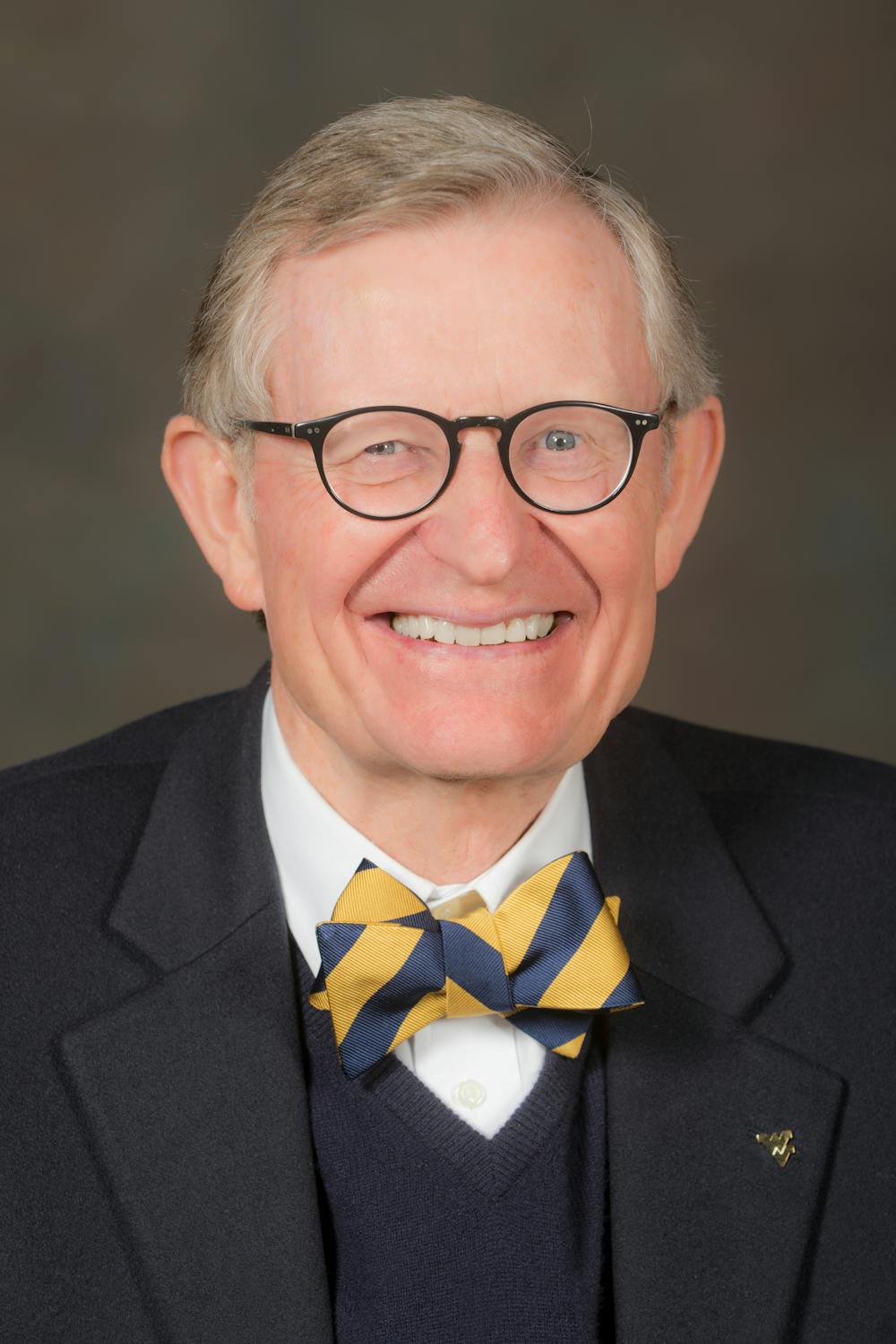
Gordon Gee, President West Virginia University

While Newark and West Virginia may seem very different, we actually share many economic and social challenges, and our universities share a similar commitment to overcoming them.

Gordon Gee, president of West Virginia University.
West Virginia University

Here, the urgent need for change stems from economic stagnation that has led to an outmigration of our best and brightest.

We have the nation’s lowest workforce participation rate, at 53 percent, while the national average is 63 percent. Our college attainment rate is also the nation’s lowest, with fewer than 20 percent of citizens age 25 and older holding a post-secondary degree.

Economic decline has in turn generated hopelessness and despair, fueling the opioid epidemic ravaging our state, which leads the nation in overdose deaths.

As one response, we helped create West Virginia Forward, an unprecedented collaboration with Marshall University and the state’s Department of Commerce, joining with business and government leaders to identify the state’s assets and pair them with economic trends. For example, we are helping develop the Appalachian Storage and Trading Hub to leverage the region’s abundant natural gas as a foundation for a job-rich petrochemical processing industry.

What kind of impact are your universities having? What meaningful difference are you making in the lives of everyday Newarkers and West Virginians?

Nancy Cantor

We also, like West Virginia University, are collaborating with local institutions to promote equitable growth in our city — growth that is fair and includes all Newarkers.

Faculty across Rutgers-Newark are applying their expertise to propose antidotes to gentrification and displacement. The university is hosting two initiatives designed to promote learning at all levels in the community. The Newark City of Learning Collaborative puts on “college knowledge” events at public libraries. Express Newark uses 50,000 square feet of a 1901 landmark downtown building to bring together residents, local artists and scholars to create — among other things — the story of today’s Newark through studio portrait photography.

All these initiatives in turn connect to the university’s financial aid program, which has helped us cultivate local talent and increase the number of native Newarkers on our campus by 59 percent since 2013.

Rutgers-Newark is among the 12 percent of universities anchored in urban America. Alongside other major anchor institutions such as businesses, City Hall and hospitals, we joined forces to launch in June 2017 Hire.Buy.Live.Newark. Together with Rutgers Biomedical and Health Sciences we aim to make 220 hires under this initiative: After only a year we are halfway there. And we’ve increased local procurement to 25 percent. These numbers show what is possible when anchors collaborate.

Gordon Gee

West Virginia’s economic woes did not develop overnight, but are, in many ways, the product of more than a century of absentee ownership of resources. We have exported our coal, our forests and, most damaging of all, our people.

We have also suffered from a lack of economic diversification, leaving us vulnerable to market swings.

West Virginia Forward is built upon a firm belief that higher education can and must do more.

Only six months into this initiative, the most observable impact is that the West Virginia Tourism Office has incorporated the findings from a McKinsey consulting report into its annual plan and launched a new, data-driven campaign. More than 20 West Virginia University deans, faculty and staff from three different colleges and units are assisting with branding, outreach to tourists and the design of pricing regimes for lodging and state parks. Now, with summer vacation season here, we await the impact of the resulting “Almost Heaven” campaign — and the giant billboards in nine cities of West Virginia’s neighboring states.

When you look at the national higher education landscape, how many other similar initiatives do you see? How much of a need is there to replicate what you do and what do you say to people who question whether these initiatives are worth the time, money and trouble?

Nancy Cantor

Our two universities are certainly not alone in doing this kind of work.

In only nine years, for example, the Anchor Institutions Task Force has attracted 700 individual members — from universities to health care organizations, cultural institutions and corporations — all of whom believe that “the great social problems of our time…will likely not be solved without the active, democratic, collaborative participation of anchor institutions.”

Within the academic world, as recently as this February, 31 metropolitan universities responded to a call to deploy their resources “to enhance the economic and social well-being of the communities they serve.” From San Diego and Minneapolis to Philadelphia and the Bronx, institutions of higher learning are partnering with local public schools, tackling local health disparities and helping to reverse the destructive marginalization of all but the top 1 percent of Americans.

Who, after all, will populate our colleges and universities as the U.S. undergoes a diversity explosion if we don’t intervene to reach the talented black and brown and poor students too often relegated to underperforming, segregated K-12 schools? How will we drive the innovation economy and reap the “diversity bonus” if unemployment continues to haunt the fastest-growing populations in our communities?

Gordon Gee

Having spent most of my career leading public research universities, I am pleased to see increased emphasis on engagement that stimulates regional and state economies.

Five years ago, the Association of Public and Land Grant Universities recognized 58 institutions as “Innovation and Economic Prosperity Universities” that are fostering strong partnerships with government and industry to support prosperity. Business Leaders for Michigan, for example, a private, nonprofit organization that brings together state businesses and universities has — since its launch in 2009 — helped with the creation of 250,000 jobs in the state.

“Expanding engagement” is at the heart of what land grant universities are committed to. To commit to community engagement helps to counter the erosion of public faith in higher education.

If each college and university works toward its own purpose, we can build a culture of collaboration, not competition, between institutions. Today’s problems are too big for any one person, department, university or sector to solve alone. We must expand our thinking about the ways business, government, higher education and other sectors can work together.

The ConversationThe stakes could not be higher.

Nancy Cantor, Chancellor, Rutgers University Newark and Gordon Gee, President, West Virginia University

This article was originally published on The Conversation.

Why Do You Have To Be Careful With TransEnterix Stock

0

TransEnterix

Why Do You Have To Be Careful With TransEnterix Stock – CWEB.com
TransEnterix, (TRXC) Inc., a medical device company, engages in the research, development, and sale of medical device robotics to enhance minimally invasive surgery.
According to recent studies Robotic assisted minimally invasive surgery does not appear to offer any clinical benefits over conventional laparoscopic techniques in terms of outcomes and complication rates but is associated with significantly higher costs, two new studies of cancers indicate.
TransEnterix surgical bot, Senhance, only does laparoscopic surgery.

The Senhance is an old surgical robot, approved in Europe in 2011, and only three have been sold by TransEnterix in Europe.

This report will likely have negative implications for TransEnterix financial top and bottom lines.

[youtube https://www.youtube.com/watch?v=9TXBP1t2rUc&w=560&h=315]

According to a recent wall street research:

It is difficult to establish if TransEnterix has efficiently used shareholders’ funds last year (Return on Equity greater than 20%) as it is loss-making.
It is difficult to establish if TransEnterix has efficiently used its assets last year compared to the US Medical Equipment industry average (Return on Assets) as it is loss-making.
It is difficult to establish if TransEnterix improved its use of capital last year versus 3 years ago (Return on Capital Employed) as it is currently loss-making.
There’s no way TransEnterix will build a business worthy of today’s nearly $500 million stock market valuation. We believe the company, which has accumulated over $333 million in losses, would be overpriced at a price-to-sales less than a fifth of the current 94 ratio.

CWEB Analysts have issued a Hold Rating for TransEnterix, (TRXC) Inc.

Read Full Article and Videos CWEB.com – Trending News, Blog, Shopping

Chart
TRXC data by YCharts

9 essential reads on the Supreme Court and gerrymandering

0

gerrymandering

9 essential reads on the Supreme Court and gerrymandering – CWEB.com

File 20180619 126534 zfu3yq.jpg?ixlib=rb 1.1
Controversial boundaries.
Pixabay, CC BY

Aviva Rutkin, The Conversation

On June 18, the U.S. Supreme Court kicked a closely watched case on gerrymandering back to the lower court.

Gerrymandering — where states are carved up into oddly shaped electoral districts favoring one political party over another — has ignited debates in a number of states, including North Carolina, Pennsylvania and Maryland.

Many observers had hoped that the decision on Gill v. Whitford would provide some clarity on whether this controversial practice is constitutional. To better understand what the fight’s all about, we turned to articles in our archive.

What is gerrymandering?

Gerrymandering is far from a new problem, explains Michel Balinski at École Polytechnique — Université Paris-Saclay, nor will this be the first time that the Supreme Court has considered it: “Practiced as a political art form for some two centuries, gerrymandering is now an exact science. Computer programs using vast data banks describing sociological, ethnic, economic, religious and political characteristics of the electorate determine districts — often of incredibly weird contours — that favor the party that drew the maps.”

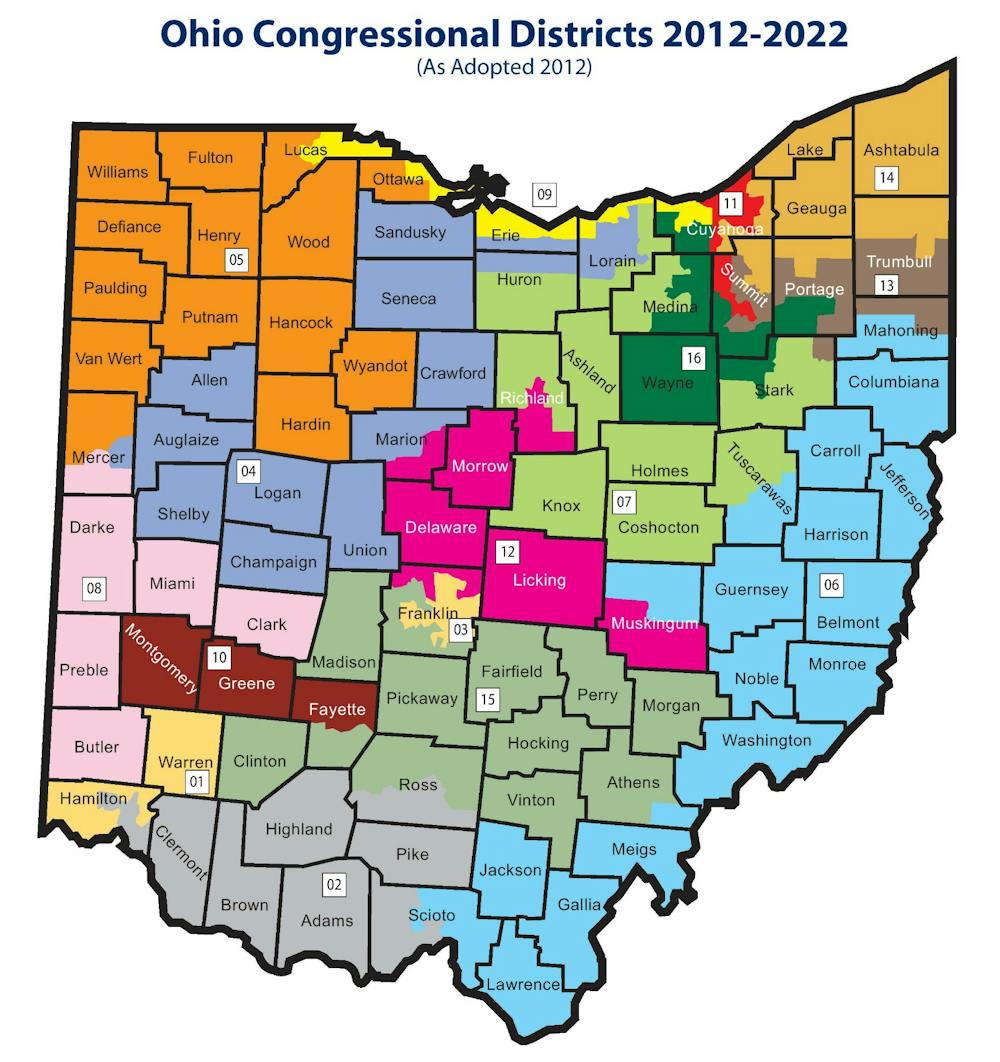
Ohio congressional districts.
Ohio Secretary of State

For an example of those weird contours, take a look at Ohio’s 9th District, nicknamed “the snake on the lake” for the way it stretches from Toledo to Cleveland.

“The representation of communities is made a mockery by maps that either splinter cities and counties or overwhelm them with voters ‘tacked’ into the district from distant rural areas,” writes Richard Gunther at The Ohio State University.

What’s the fight about?

The fight against gerrymandering was likely to rage on no matter what the judges in Gill v. Whitford decided, explains Jonathan Entin at Case Western Reserve University.

[youtube https://www.youtube.com/watch?v=9TXBP1t2rUc&w=560&h=315]

“The Constitution doesn’t say anything explicit about gerrymandering of any kind,” he says. “The basic argument against it says that partisan gerrymandering is inconsistent with basic concepts of self-government.”

Americans often seem proud of their democracy, notes Pippa Norris at Harvard University, but experts rank U.S. elections among the worst in all Western democracies. According to one analysis, the U.S. scores only 62 on a 100-point assessment of election integrity.

There are many issues with our electoral process — including problems with campaign finance and voter registration — but gerrymandering stands out as the worst, writes Norris. “[A] large part of the blame can be laid at the door of the degree of decentralization and partisanship in American electoral administration. Key decisions about the rules of the game are left to local and state officials with a major stake in the outcome.”

Thanks to gerrymandering, Democrats likely won’t win back the House in 2018 or 2020, predict experts at Strathclyde University, University of Richmond, University of California, Irvine and California Polytechnic State University.

What can be done?

Federal law dictates that congressional districts “distribute population evenly, be connected and be ‘compact,’” explains Kevin Knudson at the University of Florida.

Scholars have proposed a handful of ideas of how to redraw congressional districts more fairly. States might consider changing how votes are tabulated or appointing an independent commission to redraw the lines. Or, they could turn to new mathematical techniques and run simulations in search of the best map.

A group of mathematicians based at Tufts University is exploring ways to reinvent gerrymandering. “The authorities who control the lines — usually state legislatures, but sometimes nonpartisan commissions or judges — are practicing political geometry, whether they think of it that way or not,” write Moon Duchin and Peter Levine, who head up the project. “They’re carving up the population into pieces, and the shapes of those pieces matter.”

And it’s not as simple as separating the normal shapes from the weird-looking ones. A mathematical proof from Dustin G. Mixon at The Ohio State University suggests that voting districts sometimes need to be bizarrely shaped in order to be fair.

Not just politics

Gerrymandering is often discussed in the realm of politics. But Derek W. Black at the University of South Carolina explores a case in Alabama where school districts have been redrawn to create racially segregated schools. He notes that this seems to be an unfortunate pattern across the country: “In many areas, this racial isolation has occurred gradually over time, and is often written off as the result of demographic shifts and private preferences that are beyond a school district’s control.”

The ConversationThis is an updated version of a story that was originally published on June 25, 2017.

Aviva Rutkin, Big Data + Applied Mathematics Editor, The Conversation

This article was originally published on The Conversation.

Nationalism and piety dominate Turkey’s election

0

Z2AGPw (34)

Nationalism and piety dominate Turkey’s election – CWEB.com

File 20180621 137746 3k8dpr.jpg?ixlib=rb 1.1
Under a canopy of Turkish flags, supporters of Turkey’s President Recep Tayyip Erdogan’s ruling Justice and Development Party (AKP) attend an election rally in Gaziantep, eastern Turkey.
Presidency Press Service via AP, Pool

Resat Kasaba, University of Washington

Turkey goes to the polls to vote for president and parliament on Sunday.

As a scholar of the history and politics of the Middle East, I believe the most striking feature of the campaign is the ideological uniformity displayed by the main parties and their presidential candidates. With the exception of the pro-Kurdish People’s Democracy Party, candidates espouse strong sentiments of activist nationalism, Muslim piety or, sometimes, both.

This seems to resonate well with the majority of the Turkish electorate.

First as prime minister and then as president, President Recep Tayyip ErdoÄŸan and his Justice and Development Party have worked to recast Turkey in an increasingly nationalist and religious mold. Today, ErdoÄŸan successfully uses these two ideas to cement his bond with voters.

Turkey was regarded as an outpost of Western-type secularism during much of the 20th century. But Islam and Turkish nationalism were always present in the country, even if not as strongly displayed as they have been in recent years.

The growing focus on religion and nationalism is leading Turkey away from democracy and democratic participation, making it difficult for diverse ideas to be advanced and respected by all parties. That has been evident in the increased authoritarianism of ErdoÄŸan’s rule and the state of emergency he imposed after an attempted 2016 coup.

As Turkey becomes less liberal and more authoritarian, it contributes to the fracturing of western alliances, furthering instability in Europe and the Middle East.

Forcefully establishing an identity

Before World War I, the Ottoman Empire was home to a large number of Christian communities, Greeks and Armenians most prominent among them, and various ethnic groups.

But following the Ottomans’ destruction of the Armenian community in the early part of the 20th century and the expulsion of the Greeks, leaders of the new Turkish Republic devised policies to assimilate the country’s largest remaining ethnic minority group, the Kurds.

They believed that otherwise they would continue to lose territory and would not be able to hold on to their new country.

The Kurds, who are predominantly Muslim, resisted almost immediately and have been locked in an armed struggle with the Turkish state since the early days of the Republic in 1923.

The elimination of the largest non-Muslim groups, the Greeks and Armenians, meant that Islam became the de-facto identity for the overwhelming majority of the people who remained in Turkey.

Mustafa Kemal Atatürk, the founder and the first president of the Republic, initiated a radical policy of separating religion from politics. He created institutions and laws that were modeled after European counterparts, and severed ties with the country’s recent Islamic past, making Turkey the model country for successful westernization in the eyes of many observers.

But the reach and penetration of these policies beyond the country’s urban centers was limited.

For the more than 80 percent of the population who lived in rural areas, these reforms meant little. For them, their Muslim religion continued to be the most immediate way in which they identified themselves.

Power of religion, nationalism

This year — with the exception of the Kurdish party — the parties that are running for the parliament have competed with each other to showcase their nationalist and religious credentials.

Most of them have formed alliances to boost each other’s chances. But they have all rejected any form of cooperation with the pro-Kurdish People’s Democracy Party, HDP. None of these parties raised any serious objections when the HDP leadership and deputies were jailed almost two years ago. Government prosecutors have charged them with aiding Kurdish terrorism but a proper trial or sentencing has not taken place yet.

People wave a banner with a picture of Turkey’s President Erdogan, during a gathering of supporters in Istanbul on June 20, 2018.
AP Photo/Lefteris Pitarakis

As for Islam, none of the candidates are promising a return to the strict secularism of the early 20th century. Even Muharrem Ince, the presidential candidate of the Republican People’s Party that was founded by Ataturk, enthusiastically flaunts his religious beliefs in his rallies. In fact, his unexpected success in the polls is attributed, in part, to his embrace of Islam.

Eroding barrier between religion and politics

Center-right parties that have dominated Turkish politics and won all the elections in Turkey since the 1950s have always used a combination of Turkish nationalism and Islam to advance their chances.

But for most of the 20th century they had to be careful in how they used religion for political purposes.

Red lines separated religion and politics and were enforced by laws and by the ever-present military, which claimed to be the guardian of the secular order. Appeals to religion were carried out indirectly — for example, by showing up at Friday prayers.

[youtube https://www.youtube.com/watch?v=9TXBP1t2rUc&w=560&h=315]

There were, however, no limits to using nationalism in politics. With a history curriculum that excluded any reference to any aspect of the region’s multicultural past, generations grew up believing mythical theories of national origins of Turks and their superiority.

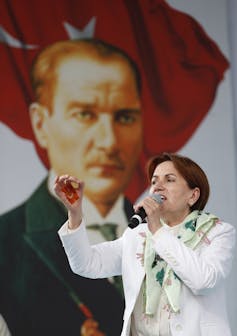
Backdropped by a picture of Atatürk, modern Turkey’s founder, Meral AkÅŸener, the presidential candidate of nationalist opposition IYI (Good) Party, talks during an election rally.
AP Photo/Lefteris Pitarakis

The lines that separated religion and politics in Turkey eroded steadily in the course of the 20th century. The political parties wanted to appeal to constituents keen on asserting their Islamic identity and practicing their religion without having to conceal their beliefs.

ErdoÄŸan pushes limits further

Under Erdogan’s leadership, Turkey’s education and government bureaucracy have been reformed to train and govern “a pious generation”. Following the attempted coup in 2016, the military has been defanged, becoming a bystander if not an enthusiastic supporter of this epochal transformation.

Today, I believe it is inconceivable for any political party to be successful in Turkey by advocating a staunchly secular line of policy.

Similarly, national unity is a non-negotiable plank in the election platforms of all the parties.

The armed conflict with the Kurds continues. The Turkish military has invaded and occupied a strip of land in northern Syria in recent months to fight against the Kurds there. But no candidate, other than HDP’s DemirtaÅŸ, has seriously questioned these policies.

None of the political parties or presidential contenders, with the exception of HDP, veer too far away from either Turkish nationalism or Muslim piety. So the short campaign for this snap election in Turkey has almost exclusively revolved around President ErdoÄŸan. He has become such a paramount figure that being for or against him has become the single most important marker for politicians.

The campaign hasn’t included a sustained discussion of Turkey’s economy or international relations, even though the country is facing serious challenges in both of these areas.

It is hard to know what difference electing one of the opposition candidates will make in these areas since we don’t really know where parties stand. We know, however, what staying with ErdoÄŸan will mean.

If ErdoÄŸan emerges as a victor with the newly enhanced powers of presidency, he is certain to steer Turkey further down the road of authoritarianism. This will have serious implications for the people of Turkey, the region and Europe. If he loses, there will likely be an opening that will allow for new visions to emerge.

The ConversationEven with a new party or president in power, it will not be easy to recreate the space for genuine democratic participation in Turkey. For a more inclusive politics to develop, the constraints of religious nationalism will have to be broken.

Resat Kasaba, Professor of International Studies, University of Washington

This article was originally published on The Conversation.
 

It’s time for a new approach to travel

0

travel1

It’s time for a new approach to travel – CWEB.com

File 20180617 85830 j44cg5.jpg?ixlib=rb 1.1
As Mark Twain once said, ‘Travel is fatal to prejudice, bigotry, and narrow-mindedness.’
Jake Simonds-Malamud, CC BY-SA

Randy Malamud, Georgia State University

When I overcame a flying phobia, I resolved to make up for lost time by visiting as much of the world as I could.

So in the course of a decade, I logged over 300,000 miles, flying everywhere from Buenos Aires to Dubai.

I knew intuitively that my travels would “make me a better person” and “broaden my horizon,” as the clichés have it. But I’ve come to believe that travel can, and should, be more than a hobby, luxury or form of leisure. It is a fundamental component of being a humanist.

At its core, humanism is about exploring and debating the vital ideas that make us who we are. We study music, film, art and literature to do just that. And while it’s important to explore these ideas in our own communities, people and places that are not like us have a role to play that’s just as crucial.

This is where travel comes in. It’s what sent me packing to see some of the places I have spent so long reading about. And it’s what compelled me to write “The Importance of Elsewhere: The Globalist Humanist Tourist,” in which I wanted to make a case for a new approach to travel.

The imperialist tourist

In academia, travel studies have long looked at the intersection between imperialism and tourism, describing how they flourish in tandem.

From the 16th to 19th centuries, European empires gobbled up territories around the world, planting their flags and building embassies, banks, hotels and roads. Imperialists traveled to collect cinnamon, silk, rubber and ivory, using them, upon returning home, for pleasure and profit.

The golden age of travel roughly coincided with that period. Not long after the military and commercial incursions began, tourists followed imperialists to these far-flung locales.

Both tourism and imperialism involved voyages of discovery, and both tended to leave the people who were “discovered” worse off than they had been before the encounters.

Globalism’s impact on the way we travel

Over the last century, globalism — a vast and daunting concept of transnational corporate and bureaucratic systems — has replaced imperialism as the dominant network of international relations.

Globalism can be overwhelming: It involves billions of people, trillions of dollars, innumerable inventories of goods, all ensconced in a technocratic vocabulary of geopolitics and multinationalism that’s anathema to those of us who approach the world on a more human scale.

It has also made travel much easier. There are more airplane routes, more ATMs on every corner and international cellphone service. You can travel elsewhere without ever leaving the comforting familiarities of home, with McDonald’s, Dunkin Donuts and Holiday Inns now dotting the globe.

But why bother traveling if you want familiar comforts?

I would argue that we need a new travel guide that acknowledges the sweeping interconnectedness of globalism, but balances this with a humanist mindset.

Because beneath the innocuous activities of visiting cathedrals, lounging on the beach and collecting souvenirs, travelers can still harbor selfish, exploitative desires and exhibit a sense of entitlement that resembles imperial incursions of yesteryear.

In a way, globalism has also made it easier to slip into the old imperialist impulse to come with power and leave with booty; to set up outposts of our own culture; and to take pictures denoting the strangeness of the places we visit, an enterprise that, for some, confirms the superiority of home.

The right way to be a tourist

Humanism, however, is proximate, intimate, local. Traveling as a humanist restores our identity and independence, and helps us resist the overwhelming forces of globalism.

There’s nothing wrong with going to see the Colosseum or the Taj Mahal. Sure, you can take all the same photos that have already been taken at all the usual tourist traps, or stand in long lines to see Shakespeare’s and Dante’s birthplaces (which are of dubious authenticity).

But don’t just do that. Sit around and watch people. Get lost. Give yourself over to the mood, the pace, the spirit of elsewhere. Obviously you will eat new and interesting foods, but think of other ways, too, of tasting and “ingesting” the culture of elsewhere, of adapting to different habits and styles. These are the things that will change you more than the view from the top of the Eiffel Tower.

[youtube https://www.youtube.com/watch?v=9TXBP1t2rUc&w=560&h=315]

Psychologists have found that the more countries you visit, the more trusting you’ll be — and that “those who visited places less similar to their homeland became more trusting than those who visited places more similar to their homeland.” Immersion in foreign places boosts creativity, and having more diverse experiences makes people’s minds more flexible.

With the products and conveniences of globalism touching most parts of the world, it simply takes more of a conscious effort to truly immerse yourself in something foreign.

My own empathy, creativity and flexibility have been immeasurably enhanced by such strange and fascinating destinations as a Monty Python conference in Lodz, Poland; a remoteness seminar near the North Pole; a boredom conference in Warsaw; Copenhagen’s queer film festival; Berlin’s deconstructed Nazi airport; a workshop in Baghdad on getting academics up to speed after Iraq’s destruction; and an encounter as an ecotourist with Tierra del Fuego’s penguins.

There’s an especially vital argument to make for travel in these fractious times of far-right ideologies and crumbling international alliances, burgeoning racism and xenophobia. The world seems as if it’s becoming less open.

A trip is the greatest chance you’ll ever have to learn about things you don’t experience at home, to meet people you wouldn’t otherwise encounter. You’ll probably find that, in many important ways, they are the same as you — which, in the end, is the point of doing all this.

The ConversationHumanists know that our copious insights and deliberations — about identity, emotions, ethics, conflict and existence — flourish best when the world is our oyster. They dissipate in the echo chamber of isolationism.

Randy Malamud, Regents’ Professor of English, Georgia State University

This article was originally published on The Conversation.

Sitting and diabetes in older adults: Does timing matter?

0

diabetes

Sitting and diabetes in older adults: Does timing matter? – CWEB.com

File 20180618 85830 8u7vj6.jpg?ixlib=rb 1.1
Sitting can do more than give you a headache. It is linked to diabetes and obesity.
Stockfour/Shutterstock.com

John Bellettiere, University of California San Diego; Andrea LaCroix, University of California San Diego, and Matthew Mclaughlin, University of Newcastle

Adults are sitting more than ever, and few pay attention to how they sit throughout the day.

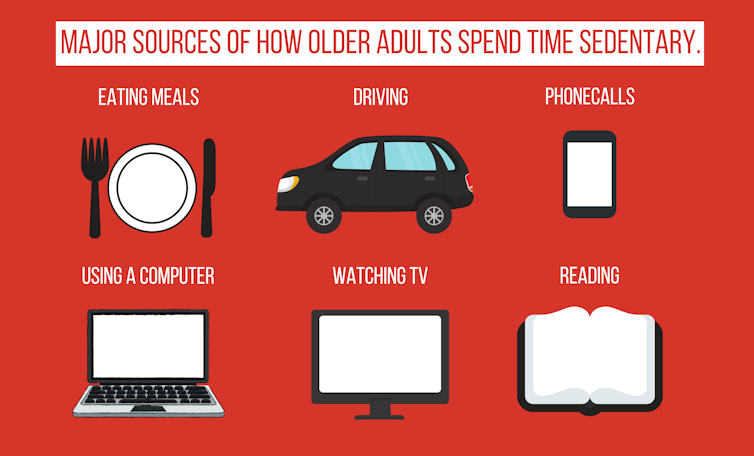
Take a moment to think about all the reasons we sit. First off, you’re probably sitting while reading this. Some of the most common sitting activities include eating meals; driving; talking on the phone; using a computer, television, or small device; and reading. Now take another moment to think about all the sitting done across your lifetime.

Older Americans spend a lot of time sitting.
Matthew Mclaughlin/Figshare, CC BY-SA

The fact is, the amount of time spent sitting has increased over time. And with innovations such as Alexa, delivered groceries, and pre-made meal services, we expect many older adults will sit longer, and will do it more often. As of today, the average older adult spends between 56 percent and 86 percent of their waking day sedentary. That’s a lot of sitting.

Our research team studies healthy aging and is interested in how sitting too much might contribute to heart disease and diabetes. Our recent study suggests that the way older adults accumulate their sitting time might be important for aging without diabetes.

What happens while sitting?

When you sit for long periods without getting up, the large weight-bearing muscles of the legs remain dormant. With no action, these muscles are unable to efficiently use the sugars and fats that float around in your blood – and in theory, this could lead to weight gain and metabolic diseases such as diabetes.

At the same time, reduced blood flow in your arteries leads to hostile conditions that promote injury to the blood vessel walls. Over a lifetime, this injury likely contributes to heart disease and to peripheral artery disease. Furthermore, when your leg muscles remain shut off for long periods, blood collects in your veins which leads to an increased risk for blood clots, or deep venous thrombosis. Standing up and moving around can stop these processes, but all too often, we just keep sitting.

Blood flow can become ‘turbulent,’ causing damage to arteries.
www.pexels.com

Sitting patterns

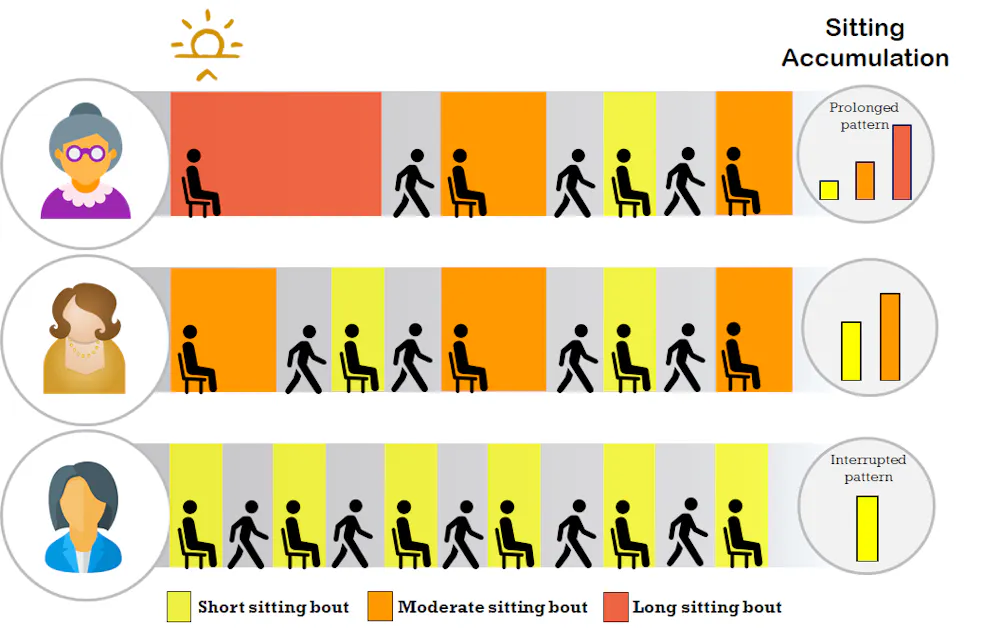
Sitting patterns describe how people sit throughout the day. Some people commonly sit for long periods at a time, rarely getting up. They are said to have prolonged sitting patterns. Others rarely sit still. They regularly get up after sitting for just short periods. These sitters are said to have interrupted sitting patterns. Where do you fit on the sitting pattern spectrum?

Sitting can be accumulated in different patterns.
John Bellettiere/figshare.com, CC BY-SA

Are sitting patterns important for metabolic health?

Emerging evidence suggests yes. From observational studies, we learned that adults with prolonged sitting patterns had larger waistlines, higher BMI, and in their blood had less good fats, more bad fats, and higher levels of sugar compared to adults with interrupted sitting patterns.

To test whether problems with fat and sugar metabolism were being caused by sitting patterns, researchers around the world conducted experiments. They brought adults into a laboratory at least two times each, having them sit continuously for about eight hours (an extreme prolonged pattern. On the second day, the participants were asked to get up every 20-30 minutes (a highly interrupted pattern). The interruptions lasted for two to five minutes and included standing still, light walking, simple resistance exercises or moderate-intensity walking, depending on the study.

[youtube https://www.youtube.com/watch?v=9TXBP1t2rUc&w=560&h=315]

When researchers synthesized evidence from most of the laboratory studies, the results were clear. On days with prolonged patterns, our bodies are not able to metabolize fats or sugar as well as they are on days with interrupted patterns. Blood pressure and fatigue were also higher on days with prolonged sitting compared to days with interrupted patterns.

These groundbreaking laboratory studies provided strong evidence that sitting patterns had an immediate effect on how the body processes fats and sugar, otherwise known as metabolism. This led to the idea that prolonged sitting patterns over a lifetime could contribute to metabolic diseases such as diabetes in later life. Since diabetes can take a long time to develop, this question cannot be feasibly tested in a laboratory. Instead, we turned to an observational study of the population to help answer the question.

Are sitting patterns related to diabetes?

We recruited over 6,000 women aged 65-99 from the Women’s Health Initiative and measured their sedentary patterns for seven days using research-grade activity monitors. We also had over 20 years of detailed health records, which included information on whether the women had ever been diagnosed by a physician with diabetes.

As expected, the group with the most prolonged sedentary patterns had the most women with diabetes. The group with the most interrupted patterns had the fewest women with diabetes.

We used advanced statistical procedures to account for differences in other factors such as dietary habits, physical activity, medication use, weight, age, alcohol and cigarette use, and overall health, giving us more confidence that the sitting patterns were in fact driving the findings. We should caution, however, that since we did not measure sitting patterns before the women were first diagnosed with diabetes, we do not know whether the sitting patterns contributed to diabetes or whether the diabetes changed their sitting patterns. We ran additional statistical tests to try to untangle that, which indicated that sitting patterns contributed to diabetes. However, additional studies specifically suited to answer the question of causation are needed.

While this was the first study of sedentary patterns and diabetes exclusively in older adults, our results were remarkably similar to recent findings in a younger cohort. Researchers from the Netherlands studied 2,500 adults ages 40-75 and found that prolonged sitting patterns were associated with Type 2 diabetes and with metabolic syndrome.

Conclusions and words of advice

Based on the findings from our study and those of the Dutch researchers, when viewed with the earlier epidemiologic data and findings from the laboratory experiments, it seems that sitting patterns may contribute to the growing international diabetes epidemic.

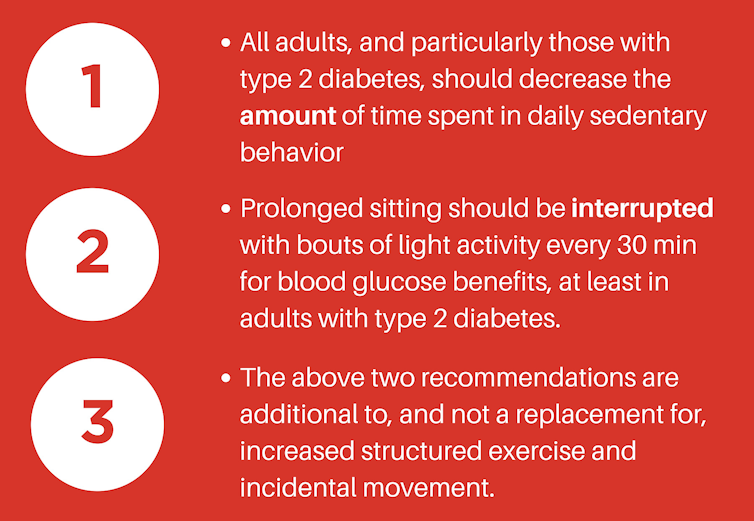
With that said, as with all science, these first few studies are only the beginning of the story. Much more work lies ahead. For the time being, there is a possibility that changing your sitting patterns might provide protection against diabetes, especially if long sitting bouts were always broken with light activity or even better, moderate-intensity activity, as recommended by the American Diabetes Association.

Recommendations from the American Diabetes Association.
Matthew Mclaughlin/figshare.com, CC BY-SA

The ConversationThe authors wish to sincerely thank Dr. Jonathan Unkart for his help with this story.
John Bellettiere, Postdoctoral Research Fellow, University of California San Diego; Andrea LaCroix, Professor of Epidemiology, University of California San Diego, and Matthew Mclaughlin, Ph.D. Student, University of Newcastle

This article was originally published on The Conversation.

Opioids don’t have to be addictive — the new versions will treat pain without triggering pleasure

0

opioide

Opioids don’t have to be addictive — the new versions will treat pain without triggering pleasure – CWEB.com

File 20180613 32313 rus66u.jpg?ixlib=rb 1.1
shutterstock.

Tao Che, University of North Carolina — Chapel Hill

The problem with opioids is that they kill pain — and people. In the past three years, more than 125,000 persons died from an opioid overdose — an average of 115 people per day — exceeding the number killed in car accidents and from gunshots during the same period.

America desperately needs safer analgesics. To create them, biochemists like myself are focusing not just on the opioids, but on opioid receptors. The opioids “dock” with these receptors in the brain and peripheral nervous system dulling pain but also causing deadly side effects.

My colleagues and I in Bryan Roth’s lab have recently solved the atomic structure of a morphine-like drug interacting with an opioid receptor, and now we are using this atomic snapshot to design new drugs that block pain but without the euphoria that leads to addiction.

What has caused the opioid epidemic?

In the U.S., more than one-third of the population experiences some form of acute or chronic pain; in older adults this number rises to 40 percent. The most common condition linked to chronic pain is chronic depression, which is a major cause of suicide.

[youtube https://www.youtube.com/watch?v=9TXBP1t2rUc&w=560&h=315]

To relieve severe pain, people go to their physician for powerful prescription painkillers, opioid drugs such as morphine, oxycodone and hydrocodone. Almost all the currently marketed opioid drugs exert their analgesic effects through a protein called the “mu opioid receptor” (MOR).

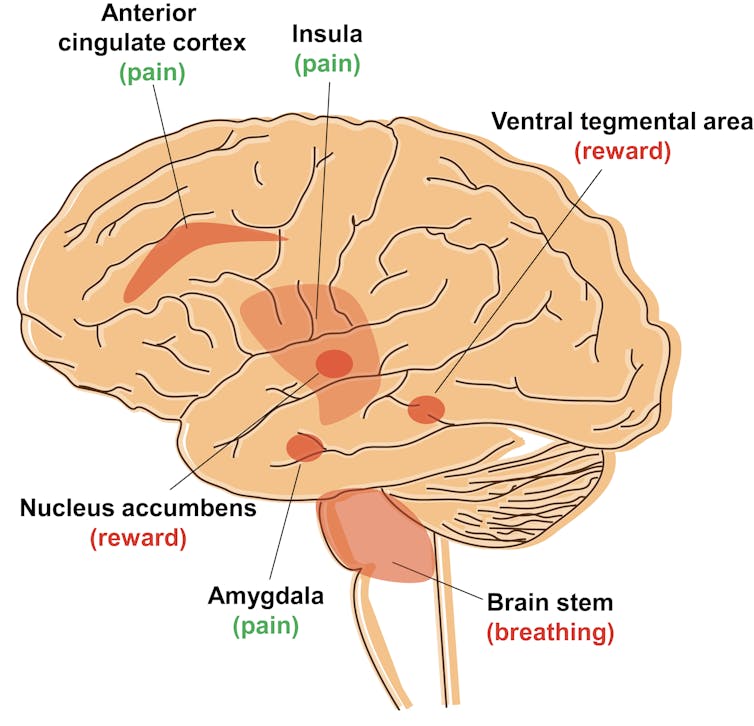
MORs are embedded in the surface membrane of brain cells, or neurons, and block pain signals when activated by a drug. However, many of the current opioids stimulate portions of the brain that lead to additional sensations of “rewarding” pleasure, or disrupt certain physiological activities. The former may lead to addiction, or the latter, death.

Which part of the brain is activated plays a vital role in controlling pain. For example, MORs are also present in the brain stem, a region that controls breathing. Activating these mu receptors, not only dulls pain but also slows breathing. Large doses stop breathing, causing death. Activating MORs in other parts of the brain, including the ventral tegmental area and the nucleus accumbens, block pain and trigger pleasure or reward, which makes them addictive. But so far there is no efficient way to turn these receptors “on” and “off” in specific areas.

Locations of the mu opioid receptor (MOR) in the brain. The red areas are locations where MOR is present and active. Labeled locations are only approximate.
Tao Che, CC BY-ND

But there is another approach because not all opioids are created equal. Some, such as morphine, bind to the receptor and activate two signaling pathways: one mediating pain cessation and the other producing side effects like respiratory depression. Other drugs favor one pathway more than the other, like only blocking pain — this is the one we want.

“Biased opioids” to kill pain

But MOR isn’t the only opioid receptor. There are two other closely related proteins called kappa and delta, or KOR and DOR respectively, that also alter pain perception but in slightly different ways. Yet, currently there are only a few opioid medications that target KOR, and none that target DOR. One reason is that the function of these receptors in the brain neurons remains unclear.

Recently KOR has been getting attention as extensive studies from different academic labs show that it blocks pain without triggering euphoria, which means it isn’t addictive. Another benefit is that it doesn’t slow respiration, which means that it isn’t lethal. But although it isn’t as dangerous as MOR, activating KOR does promote dysphoria, or unease, and sleepiness.

This work suggests it is possible to design a drug that only targets the pain pathway, without side effects. These kind of drugs are called “biased” opioids.

Discovering and designing drugs to target KOR

So far, there are two popular ways to discover new drugs. The first involves using existing commercially available libraries of compounds and testing them on cells or animals to find one that has the required characteristics. This hit-and-miss approach is straightforward but time-consuming, running anywhere from three months to two years to screen between 3,000 to 20,000 compounds.

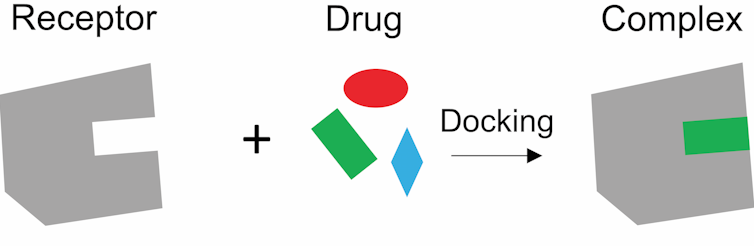
The other strategy is called “structure-based drug design.” With this approach, you first need a high-resolution photograph of the receptor — showing the arrangement of every atom in the molecule. Then, using a computer program, you can examine up to 35 million molecules from a virtual chemical library called ZINC 15 to find a molecule that will precisely interact — lock-and-key style — with the receptor. It is like having the precise dimensions of the International Space Station so that you can design a spacecraft that can fits perfectly in the docking site.

The receptor and drug are like a lock and key. The drug needs to fit the receptor perfectly to trigger a signal.
Tao Che, CC BY-ND

I’m a crystallographer, which means I specialize in taking atomic resolution photographs of proteins. I became interested in solving the structure of KOR — when the protein is in its active state bound to a drug.

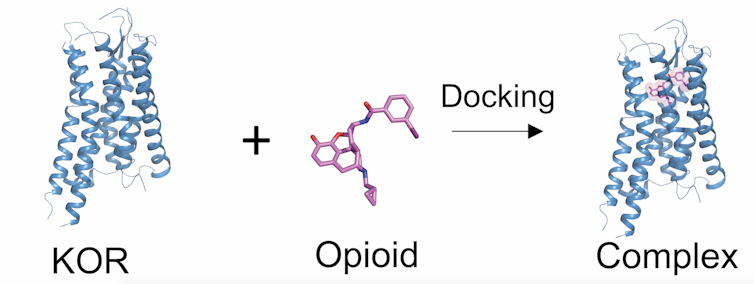
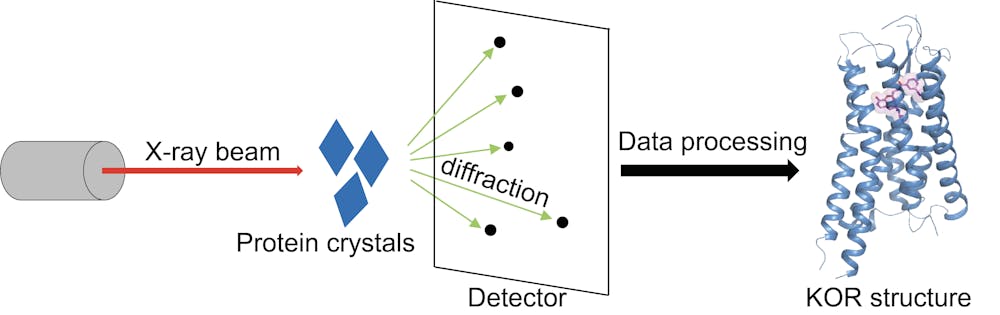
Structure is considered the gold standard for figuring out how a drug interacts with a receptor and produces a signal. To solve the KOR structure, I first manufactured the KOR protein to make KOR crystals, which consists of hundreds of millions of KOR molecules stacked in the same way, just like salt molecules in a salt crystal. Then I blasted the crystals with X-rays to generate an image of the receptor at atomic level. The key to these pictures was that I “froze” the KOR proteins in their active state to understand how these receptors interact with a drug.

X-ray crystallography. These action shots of KOR show how the receptor (blue) and drug (pink) fit together to trigger a signal that blocks pain.
Tao Che, CC BY-ND

With an action shot of KOR, we recognized what parts of the molecule are critical for blocking pain signals. We are now using this structural data to construct a “biased” molecule that only activates the pain-blocking parts of the protein without triggering side effects.

Now that we have an ultra high-resolution picture of the KOR receptor interacting with an opioid, we can now design a new, safer version that fits snugly in the receptor and only blocks pain.
Tao Che, CC BY-ND

Deciphering the structure of a protein is also valuable for creating a drug that interacts only with only one receptor. All the members of the opioid receptor family — MOR, KOR and DOR — look similar, like siblings. Therefore, these high-resolution photos are essential for designing drugs that will only recognize and target KOR.

Our structure is now used for virtual drug screening where the computational program randomly inserts millions of compounds into the structure and ranks each of them based on how well they fit. The better the score, the more likely that compound will yield a drug.

The exciting news is that researchers in the Roth lab have discovered several promising compounds based on the KOR structure that selectively binds and activates KOR, without cavorting with the more than 330 other related protein receptors.

The ConversationNow our challenge is to transform these molecules into safer drugs.

Tao Che, Postdoctoral Research Associate at Department of Pharmacology, University of North Carolina — Chapel Hill

This article was originally published on The Conversation.

Other similar articles regarding Opioids


Yoga isn’t timeless: it’s changing to meet contemporary needs – CWEB.com

0

woman-3175586_960_720

Yoga isn’t timeless: it’s changing to meet contemporary needs

File 20180619 126537 1uinky5.jpg?ixlib=rb 1.1
International Yoga Day in London 2017 in Trafalgar Square.
Anna Sunderland Engels., CC BY

Jeremy David Engels, Pennsylvania State University

On June 21, on International Yoga Day, people will take out their yoga mats and practice sun salutations or sit in meditation. Yoga may have originated in ancient India, but today is practiced all over the world.

In the United States, it was philosophers such as Ralph Waldo Emerson and Henry David Thoreau who first engaged with the philosophy of yoga in the 1830s. Yoga gained a wider American audience only in the late 1800s.

Today, part of yoga’s appeal is that it continues to be seen as a mystical, ancient tradition. However, as I’ve discovered in my research, the practice of yoga has gone through some profound shifts. Here are four.

1. Yoga for health and happiness

It was a Hindu reformer, Swami Vivekananda, who first introduced yoga to a larger audience. Vivekananda originally came to the United States to seek funds to relieve poverty in India. Several electrifying addresses he delivered at the World’s Parliament of Religions, the world’s first global interfaith dialogue held in 1893 in Chicago, brought him instant fame. He then traveled around the U.S. for the next several years, giving lectures and teaching yoga.

Vivekananda revived the tradition of an ancient Indian sage, Patanjali, that had been almost forgotten. Patanjali likely lived in India somewhere between the first century B.C. or the fourth century A.D. He claimed that the goal of yoga was isolation from existence and freedom from the bonds of mortal life.

According to Patanjali, to overcome suffering, individuals needed to renounce the very comforts and attachments that seem to make life worth living for many today. As the journalist Michelle Goldberg, author of “The Goddess Pose,” puts it, Patanjali’s yoga “is a tool of self-obliteration rather than self-actualization.”

No one today is likely to see yoga as a way to renounce their existence. Most people are drawn to yoga to find happiness, health and compassion in everyday life.

2. Value of physical exercise

Most people today associate yoga closely with physical exercise and postures, known as asanas, designed to strengthen and stretch the body. There is more to yoga, however, than the physical. Yoga also encompasses devotion, contemplation and meditation. In fact, the primary focus on the body would surprise both Patanjali and Vivekananda, who prioritized mental over physical exercise.

Patanjali treated the body with disdain, believing it to be a prison. He was emphatic that we are not our bodies, and that any attachment to our bodies is an impediment to yoga. Vivekananda echoed these thoughts. He treated asanas with scorn. Vivekananda argued that an obsessive focus on the body distracts from the true practice of yoga: meditation.

Asanas, or exercise poses, are central to today’s practice of yoga.
Anna Sunderland Engels, CC BY

In contrast, contemporary practitioners embrace asana as central to yoga. Contemporary yogis recognize that the mind, and the soul, is embodied. By “getting smart in their yoga,” contemporary yogis attend to their bodies, and also to their emotions, because the health of the body impacts the ability to see clearly and act deliberately.

3. Focusing on the self

A central practice of yoga is self-study, known in Sanskrit as “svadhyaya.” In the tradition of Patanjali, this means “the reading of sacred scriptures.

[youtube https://www.youtube.com/watch?v=9TXBP1t2rUc&w=560&h=315]

Today, svadhyaya has come to mean the study of oneself. People often take up the practice of yoga to lead happier, less stressed and more compassionate lives.
Yoga involves, as I argue in my book “The Art of Gratitude,” paying attention to one’s habits. Only by first noticing one’s habitual patterns does it become possible to change them.

Sacred texts, broadly understood, can help this practice of self-study, as they encourage reflection on deep and difficult questions that do not have easy answers. For today’s practitioners, these questions include: What is the purpose of life? How can I live an ethical life? And, what would truly make me happy?

Ultimately, self-study resides at the heart of a healthy yoga practice. It allows yogis to recognize their deep connection to others and the world around them. This recognition of interdependence and interbeing is central to today’s yoga.

4. Ethics of a yoga guru

In ancient practice, the relationship between a guru and a student was crucial. Today, the guru-student model is going through a shift. Yogis no longer train for years in their guru’s home, as was the practice in ancient India. Yogis instead practice in studios, in parks, at fitness centers, or at home on their own.

Still, many contemporary yoga teachers claim the title of “guru.”

However, some practitioners of yoga are calling for an end to the guru model, given that it comes with an inherent power, which opens the door to abuse. There are many examples of such abuse, with a more recent one being the case of Bikram Choudhury, the 73-year-old founder of Bikram yoga, who fled the country to avoid an arrest warrant in California in 2017 after being accused of sexual assault.

In the wake of the #MeToo movement in the United States and India, many yoga practitioners have initiated important conversations about the ethics of being a yoga teacher. At the heart of these conversations is how yoga teachers must, above all else, treat their students, who are often deeply vulnerable, with dignity and respect.

Ancient, but not timeless

International Yoga Day in London’s Trafalgar Square, 2017.
Anna Sunderland Engels., CC BY

Indeed, there is great power, and great mystique, in just how old yoga is.

But as a professor of communication, I observe that one of the most common errors people make in daily conversation is to appeal to antiquity — what scholars call the “argumentum ad antiquitatem” fallacy — which says that something is good simply because it is old, and because it has always been done this way.

The ConversationYoga is ancient, but it is not timeless. By stopping for a moment to consider yoga’s past, we can recognize the crucial role that all of us can and must play in shaping its future.

Jeremy David Engels, Sherwin Early Career Professor in the Rock Ethics Institute, and Associate Professor of Communication Arts and Sciences, Pennsylvania State University

This article was originally published on The Conversation.

Why you should eat popcorn with chopsticks — and other psychological tricks to make life more enjoyable

0

popcorn-1554137_960_720

Why you should eat popcorn with chopsticks — and other psychological tricks to make life more enjoyable – CWEB.com

File 20180613 32334 1diiyoy.jpg?ixlib=rb 1.1
Give it a try during your next movie night.
Betsy Weber/flickr, CC BY-SA

Robert W. Smith, The Ohio State University and Ed O’Brien, University of Chicago

It happens fast. You crack open a bottle of your favorite drink and put it to your lips. The delicious flavor is nearly overwhelming. But a minute later, you’re barely noticing the taste as you drink it.

Or you buy a new car and think it will make you smile every time you drive it for years. But a month later, that sensation is gone. Now it’s just a car.

This satiation, known as hedonic adaptation, occurs for nearly everything that makes us happy. Look around and think of how much you initially enjoyed the things that surround you. Then think about how much you enjoy them today.

Wouldn’t it be great to get some of that initial enjoyment back?

In a series of studies soon to be published in Personality and Social Psychology Bulletin, we found that consuming things in unconventional ways enhances enjoyment of them.

This is where chopsticks come in.

Some restaurants allow customers to eat food in bed.
Monkey Business Images/Shutterstock.com

The art of paying attention

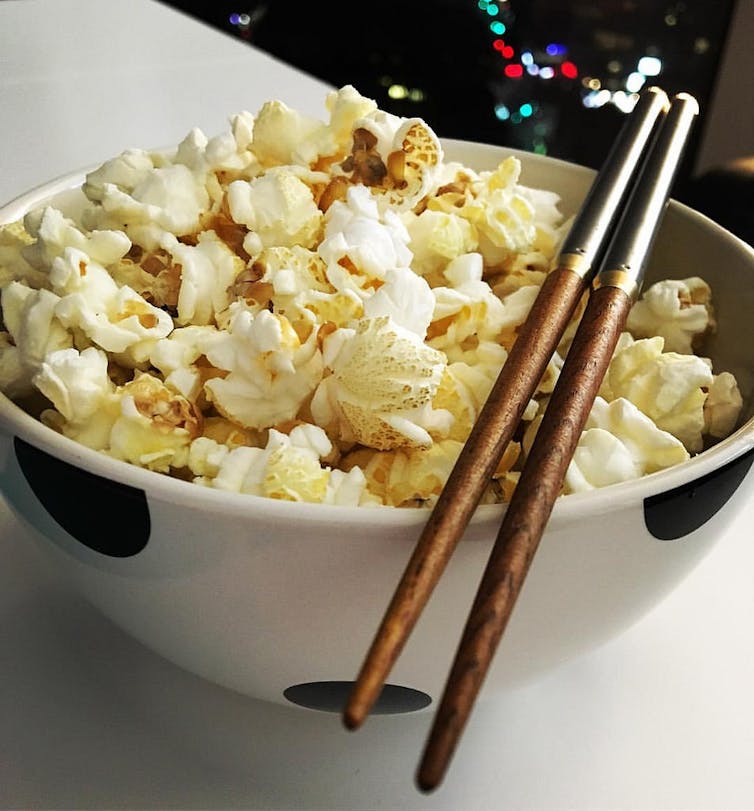
In one study, we asked 68 participants to eat some popcorn. While half were told to eat the normal way, one kernel at a time, the rest used chopsticks. We found that those who ate with chopsticks enjoyed the popcorn a lot more than the others, even though both groups were told to eat at the same slow pace.

This is because of something well-known to psychologists: When something seems new, people pay more attention to it. And when people pay more attention to something enjoyable, they tend to enjoy it more.

This is why many people seek so much variety in what they consume. We buy something and use it for a while until it becomes familiar and mundane, then we buy something else thinking it will make us happy. Unfortunately, this replacement is costly, and, in cases such as houses and spouses, sometimes a very extreme option in response to unavoidable familiarity.

Our research suggests another option: Instead of replacing something once you get sick of it, try consuming it or interacting with it in unconventional ways.

Drinking water out of a wine or martini glass could be a way to make it more enjoyable.
Satheesh Nair/Shutterstock.com

Make each sip count

In another experiment, we studied 300 people as they consumed water.

First, we asked participants to come up with their own unconventional ways to consume water. Their responses ranged from drinking out of a martini glass or travel mug to lapping it up like a cat. One even suggested drinking water out of a shipping envelope.

They were then told to take five sips of water and rate their enjoyment after each drink. A third did so in the normal way, another third sipped using one of their own randomly chosen unconventional methods over and over and the rest used a different unconventional method for each sip.

We found that people who drank water in a different way every time enjoyed their water the most — with even bigger boosts toward the end of the taste test. In other words, their enjoyment did not decline over time. While everyone else enjoyed the water less for each sip, those who drank it in different ways did not show this usual pattern of declining enjoyment.

This presents a rare solution to the nearly universal phenomenon of satiation, or the declining enjoyment that comes with familiarity. As long as you can find new and interesting ways to interact with something, you may never grow tired of it.

Some restaurants try to spice things up by having diners eat in the dark or blindfolded.
iofoto/Shutterstock.com

Business opportunities

This idea isn’t entirely novel, of course. Many companies are already taking advantage of this concept to provide more enjoyable experiences for customers.

[youtube https://www.youtube.com/watch?v=9TXBP1t2rUc&w=560&h=315]

Restaurants exist where diners eat while lying in beds, while hovering in the sky and off of naked models. There is even a restaurant where diners eat naked.

The Reddit page WeWantPlates presents a rich catalog of the many creative and confusing ways that restaurants serve their customers food, from nachos in a sink to ravioli on a washing line.

While there is no limit to the different ways to present the same old thing, at some point the novelty usually wears off. Our research suggests this is a missed opportunity for businesses to offer more variety in how a single food is consumed.

For example, when people eat a few slices of pizza at a restaurant, they typically consume them all in the same way. It’s a problem if people enjoy their last slice less because of satiation, because our memory for experiences is shaped heavily by what happened at the end.

Rather than turning off all the lights to make dining more enjoyable, as in the dark-dining trend, pizza parlors could encourage their customers to eat each slice in a different way, such as normally, folded in half, backwards, with a fork and knife, with chopsticks or while blindfolded. If they did, we believe they would likely find that their customers enjoy their last slice as much as the first.

The ConversationThe bottom line is that variety is the spice of life, not just in what we do but also how we do it. Knowing this can help both businesses and customers maximize enjoyment.


Robert W. Smith, Assistant Professor of Marketing, The Ohio State University and Ed O’Brien, Assistant Professor of Behavioral Science, University of Chicago

This article was originally published on The Conversation.