

By CWEB Health Desk
May 11, 2026
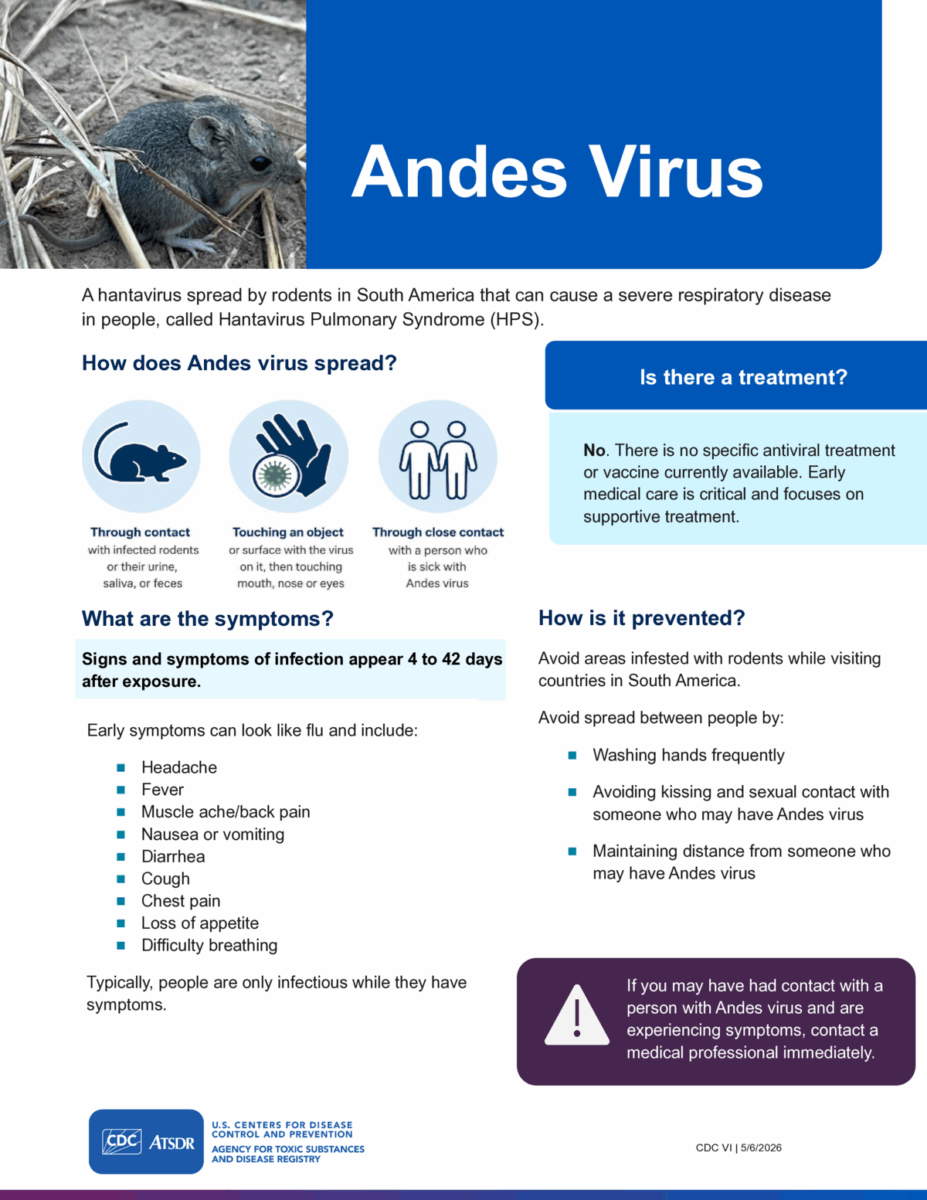
Many travelers and members of the general public have expressed growing concern following a recent hantavirus outbreak aboard a cruise ship. While the virus is typically transmitted through rodent droppings, urine, and saliva—often affecting people who clean contaminated areas—the outbreak on the MV Hondius has raised questions due to apparent human-to-human transmission.
CWEB health analysts explain that direct human transmission remains rare and generally requires extremely close contact with an infected person. The Andes virus (ANDV), a rare strain of hantavirus, has been linked to the MV Hondius outbreak in Argentina, where six cases and three deaths have been reported as of May 8, 2026.
What Are the Symptoms of Hantavirus Infection?
Hantavirus symptoms often resemble those of the flu and appear 1 to 8 weeks after exposure. Early signs include:
-
Fever
-
Fatigue
-
Severe muscle aches, particularly in the back and thighs
-
Headache
-
Gastrointestinal issues
As the infection progresses, more serious symptoms may develop, including:
-
Shortness of breath
-
Persistent coughing
-
Low blood pressure
Respiratory symptoms require urgent medical attention, as delayed diagnosis can lead to respiratory failure.
How Dangerous Is Hantavirus?
The fatality rate for hantavirus ranges from 1% to 15%. Individuals over age 70 face a higher risk of severe outcomes. The April 2026 outbreak on the MV Hondius has drawn international attention due to the rare confirmation of person-to-person spread of the Andes virus strain.
Do Clothes Need to Be Discarded After Hantavirus Exposure?
No. Ordinary clothing does not need to be thrown away. Standard laundry detergent effectively disinfects the virus, and clothes can be safely washed and reused.
Are There Any Hantavirus Cases in the US?
To date, no hantavirus cases linked to the recent outbreak have been reported in the United States. The U.S. Centers for Disease Control and Prevention (CDC) is actively monitoring the situation. Many American passengers disembarked from the MV Hondius before the outbreak was identified. The CDC has notified state health departments and is working closely with them to monitor the health of any returning passengers.
Do House Mice Carry Hantavirus?
While hantavirus is most commonly carried by wild rodents—such as deer mice in the U.S.—homeowners should still take precautions if they find mouse droppings. Even if hantavirus risk is low in typical residential settings, rodent droppings can trigger allergies, asthma, and other infections. Proper cleaning with disinfectants and ventilation is always recommended.
Bottom Line for Travelers and the General Public
The risk of hantavirus infection for the general public remains very low, especially outside of known outbreak zones like the MV Hondius voyage. Human-to-human transmission is rare and has only been documented with the Andes virus strain under close-contact conditions. For now, U.S. health officials advise awareness, not alarm.
CWEB will continue to monitor developments and provide updates as more information becomes available.
