
Post a Free Blog

Submit A Press Release

At CWEB, we are always looking to expand our network of strategic investors and partners. If you're interested in exploring investment opportunities or discussing potential partnerships and serious inquiries. Contact: jacque@cweb.com

Generic selectors
Exact matches only
Search in title
Search in content
Post Type Selectors
Filter by Categories
Action
Animation
Anime
ATP Tour (ATP)
Auto Racing
Baseball
Basketball
Boxing
Breaking News
Business
Business
Business Newsletter
Call of Duty (CALLOFDUTY)
Canadian Football League (CFL)
Car
Celebrity
Champions Tour (CHAMP)
Comedy
CONCACAF
Counter Strike Global Offensive (CSGO)
Crime
Dark Comedy
Defense of the Ancients (DOTA)
Documentary and Foreign
Drama
eSports
European Tour (EPGA)
Fashion
FIFA
FIFA Women’s World Cup (WWC)
FIFA World Cup (FIFA)
Fighting
Football
Formula 1 (F1)
Fortnite
Golf
Health
Hockey
Horror
IndyCar Series (INDY)
International Friendly (FRIENDLY)
Kids & Family
League of Legends (LOL)
LPGA
Madden
Major League Baseball (MLB)
Mixed Martial Arts (MMA)
MLS
Movie and Music
Movie Trailers
Music
Mystery
NASCAR Cup Series (NAS)
National Basketball Association (NBA)
National Football League (NFL)
National Hockey League (NHL)
National Women's Soccer (NWSL)
NBA Development League (NBAGL)
NBA2K
NCAA Baseball (NCAABBL)
NCAA Basketball (NCAAB)
NCAA Football (NCAAF)
NCAA Hockey (NCAAH)
Olympic Mens (OLYHKYM)
Other
Other Sports
Overwatch
PGA
Politics
Premier League (PREM)
Romance
Sci-Fi
Science
Soccer
Sports
Sports
Technology
Tennis
Thriller
Truck Series (TRUCK)
True Crime
Ultimate Fighting Championship (UFC)
US
Valorant
Western
Women’s National Basketball Association (WNBA)
Women’s NCAA Basketball (WNCAAB)
World
World Cup Qualifier (WORLDCUP)
WTA Tour (WTA)
Xfinity (XFT)
XFL
0
Home Blog Page 13301

Many Republican mayors are advancing climate-friendly policies without saying so

0

Jerry_Brown,_Ségolène_Royal,_Jay_Inslee_et_Peter_Shumlin

Many Republican mayors are advancing climate-friendly policies without saying so   – CWEB.com
File 20180524 117628 1gvs28h.jpg?ixlib=rb 1.1
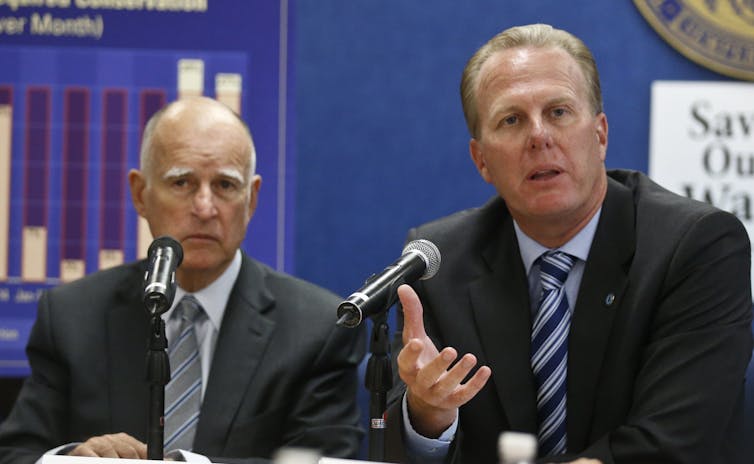
San Diego Mayor Kevin Faulconer, right, and California Governor Jerry Brown, left, discuss drought and water restrictions on August 11, 2015. Faulconer has championed renewable energy, water recycling and other climate-friendly policies.
AP Photo/Lenny Ignelzi

Nicolas Gunkel, Boston University

Leadership in addressing climate change in the United States has shifted away from Washington, D.C. Cities across the country are organizing, networking and sharing resources to reduce their greenhouse gas emissions and tackle related challenges ranging from air pollution to heat island effects.

But group photos at climate change summits typically feature big-city Democratic mayors rubbing shoulders. Republicans are rarer, with a few notable exceptions, such as Kevin Faulconer of San Diego and James Brainard of Carmel, Indiana.

Faulconer co-chairs the Sierra Club’s Mayors for 100 Percent Clean Energy Initiative, which rallies mayors around a shared commitment to power their cities entirely with clean and renewable energy. Brainard is a longtime champion of the issue within the U.S. Conference of Mayors and the Climate Mayors network.

In our research at the Boston University Initiative on Cities, we found that large-city Republican mayors shy away from climate network memberships and their associated framing of the problem. But in many cases they advocate locally for policies that help advance climate goals for other reasons, such as fiscal responsibility and public health. In short, the United States is making progress on this issue in some surprising places.

Miami, Florida Republican Mayor Tomás Regalado urged voters to support a $400 million bond in November 2017. About half of the money will be used to protect the city from sea level rise and flooding.

Climate network members are mainly Democrats

In our initiative’s recent report, “Cities Joining Ranks,” we systematically reviewed which U.S. cities belong to 10 prominent city climate networks. These networks, often founded by mayors themselves, provide platforms to exchange information, advocate for urban priorities and strengthen city goverments’ technical capacities.

The networks we assessed included Climate Mayors; We Are Still In, which represents organizations that continue to support action to meet the targets in the Paris climate agreement; and ICLEI USA.

We found a clear partisan divide between Republican and Democrat mayors. On average, Republican-led cities with more than 75,000 residents belong to less than one climate network. In contrast, cities with Democratic mayors belonged to an average of four networks. Among the 100 largest U.S. cities, of which 29 have Republican mayors and 63 have Democrats, Democrat-led cities are more than four times more likely to belong to at least one climate network.

This split has implications for city-level climate action. Joining these networks sends a very public signal to constituents about the importance of safeguarding the environment, transitioning to cleaner forms of energy and addressing climate change. Some networks require cities to plan for or implement specific greenhouse gas reduction targets and report on their progress, which means that mayors can be held accountable.

Constituents in Republican-led cities support climate policies

Cities can also reduce their carbon footprints and stay under the radar – a strategy that is popular with Republican mayors. Taking the findings of the “Cities Joining Ranks” report as a starting point, I explored support for climate policies in Republican-led cities and the level of ambition and transparency in their climate plans.

To tackle these questions, I cross-referenced Republican-led cities with data from the Yale Climate Opinion maps, which provide insight into county-level support for four climate policies:

  • Regulating carbon dioxide as a pollutant
  • Imposing strict carbon dioxide emission limits on existing coal-fired power plants
  • Funding research into renewable energy sources
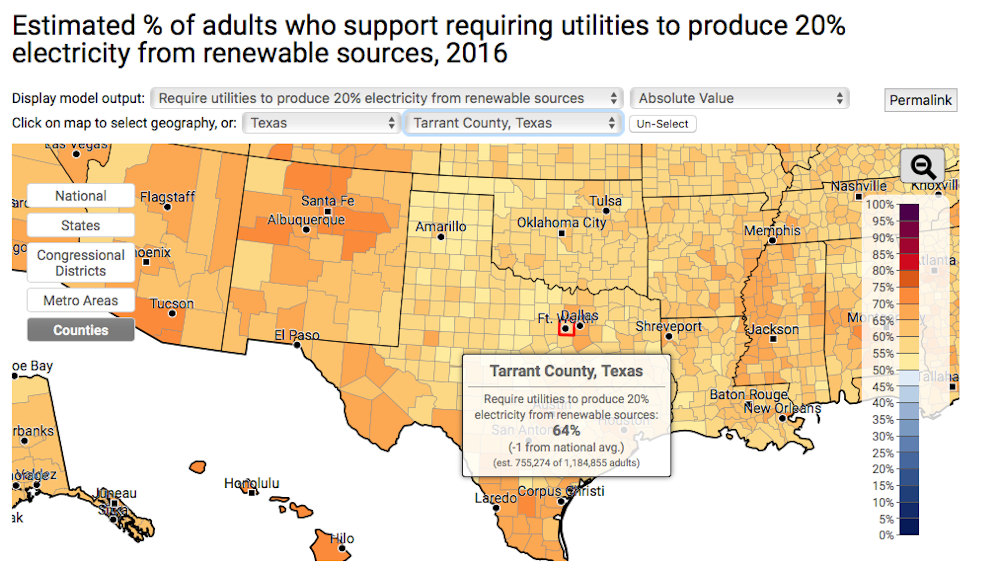
  • Requiring utilities to produce 20 percent of their electricity from renewable sources

In all of the 10 largest U.S. cities that have Republican mayors and also voted Republican in the 2008 presidential election, county-level polling data showed majority support for all four climate policies. Examples included Jacksonville, Florida, and Fort Worth, Texas. None of these cities participated in any of the 10 climate networks that we reviewed in our report.
Yale Program on Climate Change Communication, CC BY-ND

This finding suggests that popular support exists for action on climate change, and that residents of these cities who advocate acting could lobby their elected officials to join climate networks. Indeed, we have found that one of the top three reasons mayors join city policy networks is because it signals their priorities. A mayor of a medium-sized West Coast city told us: “Your constituents are expecting you to represent them, so we are trying politically to be their voice.”
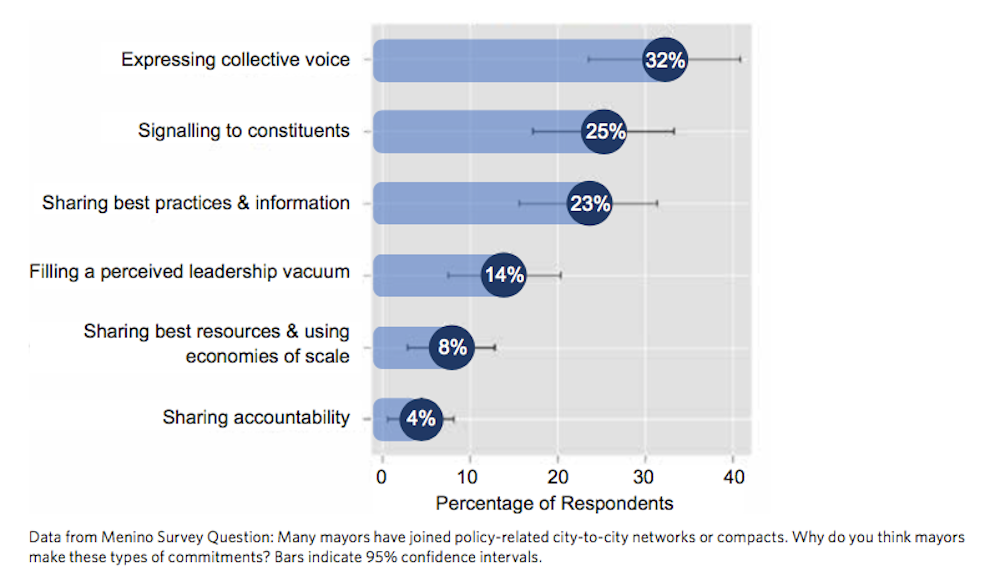
Mayors join networks to amplify their message, signal priorities to constituents and share information.
BU Initiative on Cities, CC BY-ND

Climate-friendly strategies, but few emissions targets

Next I reviewed planning documents from the 29 largest U.S. cities that are led by Republican mayors. Among this group, 15 have developed or are developing concrete goals that guide their efforts to improve local environmental quality. Many of these actions reduce cities’ carbon footprints, although they are not primarily framed that way.

Rather, these cities most frequently cast targets for achieving energy savings and curbing local air pollution as part of their master plans. Some package them as part of dedicated sustainability strategies.

These agendas often evoke images of disrupted ecosystems that need to be conserved, or that endanger human health and quality of life. Some also spotlight cost savings from designing infrastructure to cope with more extreme weather events.

In contrast, only seven cities in this group had developed quantitative greenhouse gas reduction targets. Except for Miami, all of them are in California, which requires its cities to align their greenhouse gas reduction targets with state plans. From planning documents it appears that none of the six Californian cities goes far beyond minimum mandated emission reductions set by the state for 2020.
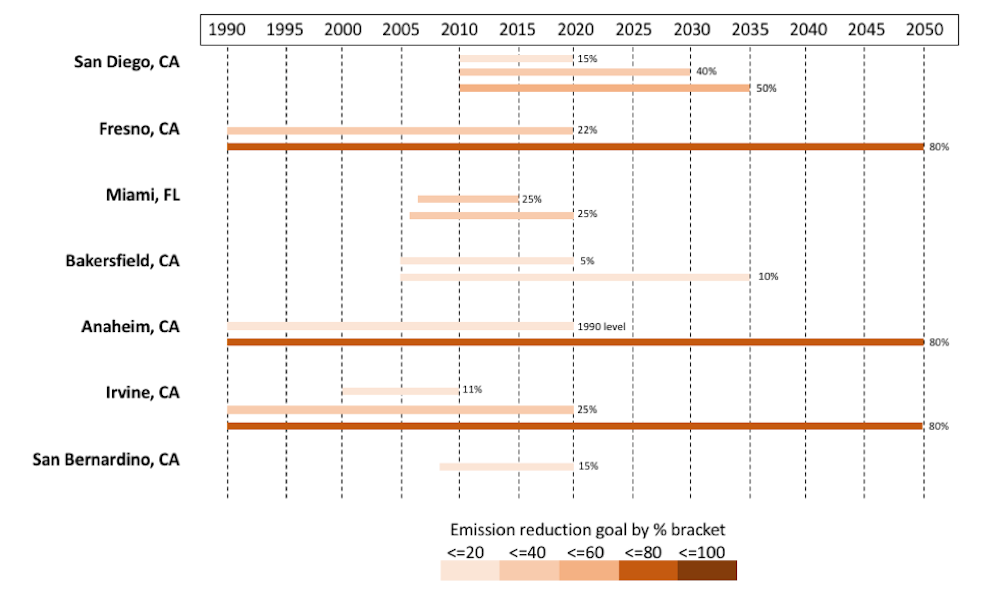
Greenhouse gas reductions goals, with baselines, for the seven largest Republican-led cities.
Nicolas Gunkel, CC BY-ND

Watch what they do, not what they say

The real measure of Republican mayors taking action on climate change is not the number of networks they join but the policy steps they take, often quietly, at home. While few Republican mayors may attend the next round of sub-national climate summits, many have set out policy agendas that mitigate climate change, without calling a lot of attention to it — much like a number of rural U.S. communities. Focusing narrowly on policy labels and public commitments by mayors fails to capture the various forms of local climate action, especially in GOP-led cities.

Carmel, Indiana Mayor James Brainard has suggested that some of his less-outspoken counterparts may fear a backlash from conservative opinion-makers. “There is a lot of Republicans out there that think like I do. They have been intimidated, to some extent, by the Tea Party and the conservative talk show hosts,” Brainard has said.

The ConversationIndeed, studies show that the news environment has become increasingly polarized around accepting or denying climate science. Avoiding explicit mention of climate change is enabling a sizable number of big-city GOP mayors to pursue policies that advance climate goals.

[youtube https://www.youtube.com/watch?v=9TXBP1t2rUc&w=560&h=315]

Nicolas Gunkel, Research Fellow at Boston University Initiative on Cities, Boston University

This article was originally published on The Conversation.

George H. W. Bush has sepsis – why is it so dangerous?

0

georgewhbush

George H. W. Bush has sepsis – why is it so dangerous? – CWEB.com

File 20180426 175035 1fidwsu.jpg?ixlib=rb 1.1
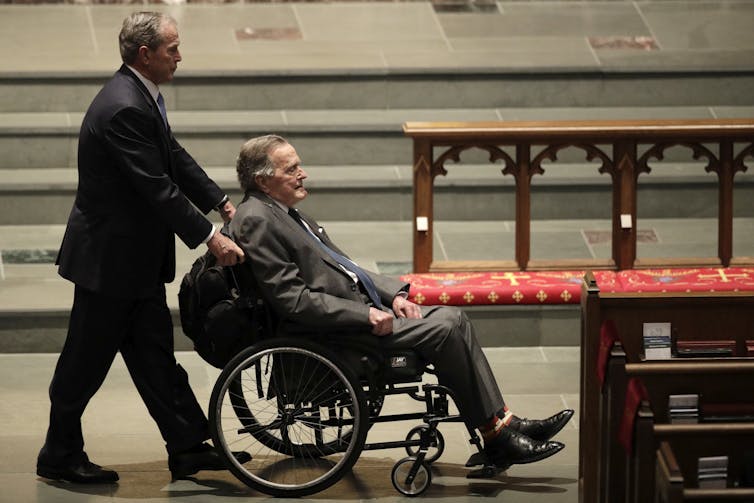
Former Presidents George W. Bush and George H.W. Bush attend Barbara Bush’s funeral service.
AP Photo/David J. Phillip

Hallie Prescott, University of Michigan and Theodore Iwashyna, University of Michigan

Former president George H.W. Bush was hospitalized April 21 with sepsis, a life-threatening condition caused by complications of the body fighting back against an infection. The former fighter pilot was released from an intensive care unit at a Houston hospital on April 25.

Between 1 in 8 and 1 in 4 patients with sepsis will die during hospitalization. Sepsis contributes to one-third to one-half of all in-hospital deaths.

Sepsis, sometimes inaccurately referred to as blood poisoning, is sparked by your body’s reaction to infection.

When you get an infection, your body fights back. When this process works the way it is supposed to, your body quickly takes care of the infection, and you get better.

However, the body’s response to infection sometimes results in collateral damage. This is known as sepsis. The collateral damage can impair kidney, brain, heart or other organ functions.

Sepsis can result from any type of infection. Most commonly, it starts as pneumonia, a urinary tract or intra-abdominal infection such as appendicitis. Most often it starts at home.

Once a person is diagnosed with sepsis, he or she will be treated with antibiotics, IV fluids and support for failing organs, such as dialysis or mechanical ventilation. This usually means a person needs to be hospitalized, often in an intensive care unit, as was the 41st president. Sometimes the source of the infection must be removed, as with appendicitis or an infected medical device.

Many conditions can mimic sepsis, including severe allergic reactions, bleeding, heart attacks, blood clots and medication overdoses. Sepsis requires particular prompt treatments, so getting the diagnosis right matters.

Back so soon?
Hospital corridor via www.shutterstock.com.

The revolving door of sepsis care

As recently as a decade ago, doctors believed that sepsis patients were out of the woods if they could just survive to hospital discharge. Unfortunately, that isn’t the case for many patients. Rather, patients commonly experience weakness, fatigue confusion, cloudy thinking, anxiety or depression. Collectively, these common symptoms after sepsis are known as post-intensive care syndrome (PICS).

In addition to new disabling symptoms, patients are also vulnerable to further health setbacks after sepsis. As many as 40 percent of sepsis patients go back into the hospital within just three months of heading home, creating a “revolving door” that gets costlier and riskier each time, as patients get weaker with each hospital stay.

Post-intensive care syndrome and rehospitalization mean that we have dramatically underestimated how much sepsis care costs. On top of the US$5.5 billion we now spend on initial hospitalization for sepsis, we must add the costs of rehospitalizations, nursing home and professional in-home care, and unpaid care provided by devoted spouses and families at home.

Raising public awareness increases the likelihood that patients will get to the hospital quickly when they are developing sepsis. This in turn allows prompt treatment, which lowers the risk of long-term problems. Doctors and policymakers are also working to improve the care of sepsis once patients get to the hospital.

The ConversationThe high number of repeat hospitalizations after sepsis, however, suggests another opportunity for improving care. Common reasons for rehospitalization are recurrent infection or sepsis; flares of heart, lung or kidney disease; and aspiration (swallowing food into the lungs).

[youtube https://www.youtube.com/watch?v=9TXBP1t2rUc&w=560&h=315]

Hallie Prescott, Assistant Professor in Internal Medicine, University of Michigan and Theodore Iwashyna, Associate Professor, University of Michigan

This article was originally published on The Conversation.
Famous Olive Oil Company Sued for 7 Million Over False Extra Virgin Olive Oil Claim

0

olive-oil-968657_960_720-640x480

By: Leslie Cohen
Famous Olive Oil Company Sued for 7 Million Over False Extra Virgin Olive Oil Claim – CWEB.com

Every day millions of consumers purchase extra virgin olive oil in supermarkets that are imported from Italy. Bertolli Olive oil has agreed to settle a lawsuit to pay 7 million dollars to customers who purchased certain Bertolli items.   The products were found to inappropriately marketed as “Imported from Italy” and/or “Extra Virgin.

  • ¨ Bertolli Extra Virgin Olive Oil: May 23, 2010, and April 16, 2018
  • ¨ Bertolli Extra Light Olive Oil: May 23, 2010, and December 31, 2015
  • ¨ Bertolli Classico Olive Oil: May 23, 2010, and December 31, 2015

Deoleo will pay $7,000,000.00 into a settlement fund.

The class action case called Koller v. Deoleo USA, Inc., Case No. 3:14-cv-02400-RS (United States District Court for the Northern District of California). This class action settlement will completely resolve the lawsuit against Deoleo USA, Inc. which produces and distributes the product.

”The suit alleges that the olive oil was not 100 percent sourced from Italy, most of the oil  was extracted in countries other than Italy, from olives grown in those countries. The lawsuit also alleges that, with respect to the olive oil labeled “Extra Virgin,” Deoleo’s procurement, bottling, and distribution practices did not adequately ensure that the oil would meet the “extra virgin” standard through  the date of retail sale or the “best by” date on the bottles.”

The lawsuit challenges the alleged misrepresentations on behalf of the Plaintiffs and consumers who bought the Products “Deoleo removed the phrase “Imported from Italy “from all products imported into the United States, and it began bottling its extra virgin olive oil in dark glass bottles. Deoleo has agreed not to use the phrases “Imported from Italy,” “Made in Italy,”” from listed documents in   https://oliveoilsettlement.com/documents/Long%20Form%20Notice.pdf

YOUR LEGAL RIGHTS AND OPTIONS IN THIS SETTLEMENT DEADLINE SUBMIT A CLAIM FORM The only way to receive payment under the Settlement for your purchases. 30 Days After Final Approval EXCLUDE YOURSELF Get out of the lawsuit and the settlement. This is the only option that allows you to ever bring or join another lawsuit that raises the same legal claims released by this settlement. You will receive no payment. July 12, 2018 OBJECT Write to the Court about why you do not like the settlement, the amount of attorneys’ fees and expenses, or the payment to the Plaintiffs. July 12, 2018, GO TO A HEARING Speak in Court about the settlement. (If you object to any aspect of the settlement, you must submit a written objection by the Objection Deadline.) August 9, 2018, DO NOTHING You will receive no payment and have no right to sue later for the claims released by the settlement.

bertolli oil lawsuit_cweb

To file a claim please visit this link Bertolli Olive Claim

Why do people risk their lives for the perfect selfie?

0

selfie

Why do people risk their lives for the perfect selfie? – CWEB.com

Image 20160323 28209 1txlo79.jpg?ixlib=rb 1.1
Some selfies are more dangerous than others…
‘Selfie’ via www.shutterstock.com

Michael Weigold, University of Florida

Earlier this month, an Indian man was killed while trying to take a selfie next to a wounded bear. It’s actually the third selfie-related death in India since December: On two separate occasions, elephants ended up taking the lives of people trying to snap images with the mammals.

A news report about the bear attack.

Animals don’t pose the only danger to selfie seekers. Heights have also resulted in fatalities. A Polish tourist in Seville, Spain fell off a bridge and died attempting to take a selfie. And a Cessna pilot lost control of his plane — killing himself and his passengers — while trying to take a selfie in 2014.

In 2015, Russian authorities even launched a campaign warning that “A cool selfie could cost you your life.”

The reason? Police estimated nearly 100 Russians had died or suffered injuries from attempting to take “daredevil” selfies, or photos of themselves in dangerous situations. Examples included a woman wounded by a gunshot (she survived), two men blown up holding grenades (they did not), and people taking pics on top of moving trains.

People who frequently post selfies are often targets for accusations of narcissism and tastelessness.

But what’s really going on here? What is it about the self-portrait that’s so resonant as a form of communication? And why, psychologically, might someone feel so compelled to snap the perfect selfie that they’d risk their life, or the lives of others?

While there are no definitive answers, as a psychologist I find these questions — and this unique 21st-century phenomenon — worth exploring further.

A brief history of the selfie

Robert Cornelius, an early American photographer, has been credited with taking the first selfie: in 1839, Cornelius, using one of the earliest cameras, set up his camera and ran into the shot.

The broader availability of point-and-shoot cameras in the 20th century led to more self-portraits, with many using the (still) popular method of snapping a photograph in front of a mirror.

Selfie technology took a giant leap forward with the invention of the camera phone. Then, of course, there was the introduction of the selfie stick. For a brief moment the stick was celebrated: Time named it one of the 25 best inventions of 2014. But critics quickly dubbed it the Naricisstick and the sticks are now banned in many museums and parks, including Walt Disney Resort.

Despite the criticism directed at selfies, their popularity is only growing.

Conclusive numbers seem lacking, with estimates of daily selfie posts ranging from one million to as high as 93 million on Android devices alone.

Whatever the true number, a Pew survey from 2014 suggests the selfie craze skews young. While 55 percent of millennials reported sharing a selfie on a social site, only 33 percent of the silent generation (those born between 1920 and 1945) even knew what a selfie was.

A British report from 2016 also suggests younger women are more active participants in selfie-taking, spending up to five hours a week on self-portraits. The biggest reason for doing so? Looking good. But other reasons included making others jealous and making cheating partners regret their infidelities.

Confidence booster or instrument of narcissism?

Some do see selfies as a positive development.

Psychology professor Pamela Rutledge believes they celebrate “regular people.” And UCLA psychologist Andrea Letamendi believes that selfies “allow young adults to express their mood states and share important experiences.”

Some have argued that selfies can boost confidence by showing others how “awesome” you are, and can preserve important memories.

Still, there are plenty of negative associations with taking selfies. While selfies are sometimes lauded as a means for empowerment, one European study found that time spent looking at social media selfies is associated with negative body image thoughts among young women.

Apart from injuries, fatalities and tastelessness, one big issue with selfies appears to be their function as either a cause or consequence of narcissism.

Peter Gray, writing for Psychology Today, describes narcissism as “an inflated view of the self, coupled with a relative indifference to others.”

Narcissists tend to overrate their talents and respond with anger to criticism. They are also more likely to bully and less likely to help others. According to Gray, surveys of college students show the trait is far more prevalent today than even as recently as 30 years ago.

Do selfies and narcissism correlate? Psychologist Gwendolyn Seidman suggests that there’s a link. She cites two studies that examined the prevalence of Facebook selfies in a sample of over 1,000 people.

Men in the sample who posted a greater number of selfies were more likely to show evidence of narcissism. Among female respondents, the number of selfie posts was associated only with a subdimension of narcissism called “admiration demand,” defined as “feeling entitled to special status or privileges and feeling superior to others.”

Bottom line: selfies and narcissism appear to be linked.

How we stack up against others

Selfies seem to be this generation’s preferred mode of self-expression.

Psychologists who study the self-concept have suggested that our self-image and how we project it is filtered through two criteria: believability (how credible are the claims I make about myself) and beneficiality (how attractive, talented and desirable are the claims I make about myself).

In this sense, the selfie is the perfect medium: it’s an easy way to offer proof of an exciting life, extraordinary talent and ability, unique experiences, personal beauty and attractiveness.

As a psychologist, I find it important not only to ask why people post selfies, but also to ask why anyone bothers looking at them.

Evidence suggests that people simply like viewing faces. Selfies attract more attention and more comments than any other photos, and our friends and peers reinforce selfie-taking by doling out “likes” and other forms of approval on social media.

One explanation for why people are so drawn to looking at selfies could be a psychological framework called social comparison theory.

The theory’s originator, Leon Festinger, proposed that people have an innate drive to evaluate themselves in comparison with others. This is done to improve how we feel about ourselves (self-enhancement), evaluate ourselves (self-evaluation), prove we really are the way we think we are (self-verification) and become better than we are (self-improvement).

It’s a list that suggests a range of motives that appear quite positive. But reality, unfortunately, is not so upbeat. Those most likely to post selfies appear to have lower self-esteem than those who don’t.

In sum, selfies draw attention, which seems like a good thing. But so do car accidents.

The approval that comes from “likes” and positive comments on social media is rewarding — particularly for the lonely, isolated or insecure.

However, the evidence, on balance (combined with people and animals dying!), suggests there is little to celebrate about the craze.

The ConversationThis is an updated version of an article originally published on March 24, 2016.

[youtube https://www.youtube.com/watch?v=9TXBP1t2rUc&w=560&h=315]

Michael Weigold, Professor of Advertising, University of Florida

This article was originally published on The Conversation.

Why kids younger than 12 don’t need OTC cough and cold remedies

0

coldmedicine

Why kids younger than 12 don’t need OTC cough and cold remedies – CWEB.com

Image 20161115 31123 1kzoqq4.jpg?ixlib=rb 1.1
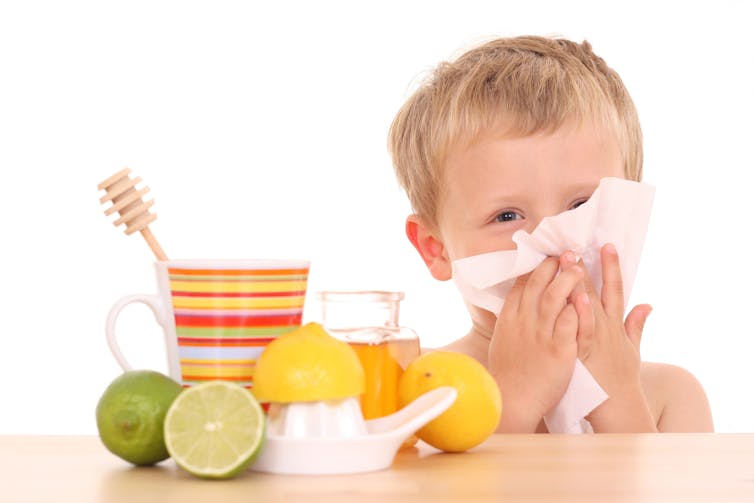
Little boy with a cold.
From www.shutterstock.com

Edward Bell, Drake University

The common cold season is here, and if you have children, you will likely feel their suffering from these annoying upper respiratory tract viral infections. Children experience more colds, about six to 10 annually, than adults. With each cold producing symptoms of nasal congestion, runny nose, cough and mild fever lasting up to seven to 10 days, it may seem that children are nearly continuously sick.

Parents certainly want their ill children to feel better, and they, naturally, want to help. A frequent solution is over-the-counter (OTC) drugs, which are heavily advertised to treat many maladies, including colds. A stroll down your local pharmacy OTC drug aisle will highlight the numerous OTC drug products available for adults and children.

It is tempting to buy one or more of these products to help your child. However, for children younger than 12 years of age, it is best not to use commonly advertised OTC cough and cold drug products. These products lack supportive clinical study efficacy and safety data, an issue I’ve studied as a professor of pharmacy practice.

Children are not just small adults

When treating children with OTC or prescription drugs, it is important to understand that young children differ significantly from the adult population with respect to drug efficacy and adverse effects.

Over the past 30 years, we have learned much more about pediatric pharmacology and drug action and behavior, known as pharmacokinetics, and differences compared to adults. Prior to this, and even today to some extent, health care professionals assumed that drugs functioned and behaved similarly in children as in adults.

Child pretending to be an adult.
From www.shutterstock.com

Based on this assumption, health practitioners often only reduced the amount of a drug to a child based on a proportion of the child’s body weight to an adult. For example, a provider would prescribe 50 percent of an adult drug dose for a child with 50 percent body weight of an adult. The efficacy of OTC cough and cold product active ingredient, as demonstrated in adult studies, was assumed to be similar in children.

However, we have learned, and are continuing to learn, that this strategy is not accurate and can be dangerous. Most drugs are not specifically studied and evaluated in children prior to their labeling by the FDA and availability to the public.

A safe and effective drug dose and dose schedule (how often a drug dose is given) is derived from these formal studies and evaluations. But without these formal studies, pediatric-specific drug pharmacology is not accurately evaluated and determined. In addition, a physician can legally prescribe any drug for a child, even if there aren’t data supporting its efficacy and safety in children.

OTC drugs regulated differently than Rx drugs

FDA regulation of OTC drug products differs from prescription drug regulation. Active ingredients in OTC drug products are evaluated and approved by therapeutic category, such as the cough and cold therapeutic category. In a major undertaking begun in 1972, the FDA has been reviewing OTC drug product categories for safety and efficacy, and it continues to do so.

Pediatric OTC cough and cold products have seen significant regulatory changes in recent years. In 2007, several health care experts petitioned the FDA to carefully review pediatric efficacy and safety data of OTC cough and cold products, requesting that these products be specifically labeled not for use in children younger than six years of age.

In 2008, the FDA recommended that OTC cough and cold products not be given to children younger than two years old. The trade group representing OTC drug product manufacturers, the Consumer Healthcare Products Association, additionally announced that these products would be labeled “not for use” in children younger than four years old. The FDA agreed, and this remains the current status of pediatric age labeling for OTC cough and cold products.

In addition, reviews of the medical literature indicates that OTC drug ingredients are actually ineffective in reducing cold symptoms in children. OTC cough and cold products can be dangerous to use as well, with more than 100 deaths of infants and young children described in published reports where these products were the sole cause or important contributive causes.

Although several doses of pediatric OTC cough/cold products are unlikely to be toxic, these reports have described scenarios where the products were used inappropriately, by administration of doses too large, doses given too frequently, measurement of liquid doses inaccurately (too much) or administration of similar active ingredient drugs given from numerous OTC products resulting in accumulative large doses.

These mistakes were easily made by parents, considering the difficulty in accurately measuring out small liquid doses and a desire for the drugs to help (more is better).

A word of caution regarding codeine

Recent studies and recommendations have significantly altered our use of another drug historically used to treat cough in children — codeine. It is an opioid, and it is still available over the counter in some cough medicines in some states. It is available in all states as prescription products.

We have learned in recent years that codeine is metabolized differently from subject to subject. Codeine alone has very little useful pharmacologic activity, but the liver chemically alters it into its active form, morphine, and another chemical. Morphine is dangerous, as it suppresses breathing. It must be used cautiously even in adults.

For many years, codeine has been used for treating pain and cough in children and adults. Recent evaluations, however, have determined that its clinical efficacy for these uses is inferior to other available drugs. We have learned that the amount of morphine produced from codeine liver metabolism can vary widely from person to person, a result of genetic differences.

Some individuals may convert codeine to a lot of morphine, while others may convert codeine to much less morphine. Evidence has accumulated over the past 10 years demonstrating that codeine can produce a significant decrease in breathing in some infants and children.

More than 20 cases of fatal respiratory depression have been documented in infants and children. In 2016, the American Academy of Pediatrics published a warning on the dangers of administering codeine to infants and children, recommending that its use for all purposes in children, including cough and pain, be limited or stopped.

Try these remedies instead

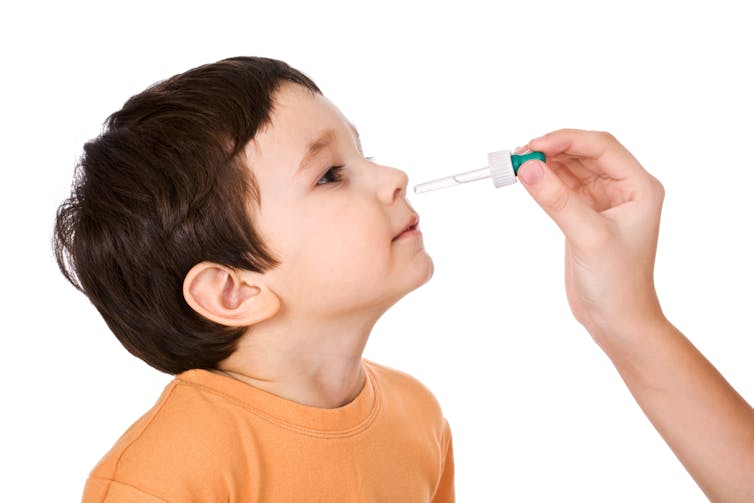
Nasal drops.
From www.shutterstock.com

When your child next suffers from a cold, instead of reaching for an OTC cough and cold product, use an OTC nasal saline drop or spray product to help with nasal congestion. You can also run a cold air humidifier in his or her room at night to additionally help loosen nasal congestion. Acetaminophen or ibuprofen can be given as needed for fever.

If your child is coughing enough to be uncomfortable or to prevent nighttime sleep, try giving honey, so long as he or she is one or older. Honey has been recently shown by several clinical studies to be an effective cough suppressant, and is likely to be much safer than codeine and OTC cough and cold products.

[youtube https://www.youtube.com/watch?v=9TXBP1t2rUc&w=560&h=315]

The ConversationThese therapies have been endorsed by the American Academy of Pediatrics. When using these treatments in infants and young children, it is always wise to speak with your child’s pediatrician first, as several more serious illnesses may initially produce symptoms similar to those of a common cold.

Edward Bell, Professor of Pharmacy Practice, Drake University

This article was originally published on The Conversation.

The forgotten history of Memorial Day

0

Memorial-Day_Blog-Graphic

The forgotten history of Memorial Day – CWEB.com

File 20180524 51091 3z8wr9.jpg?ixlib=rb 1.1
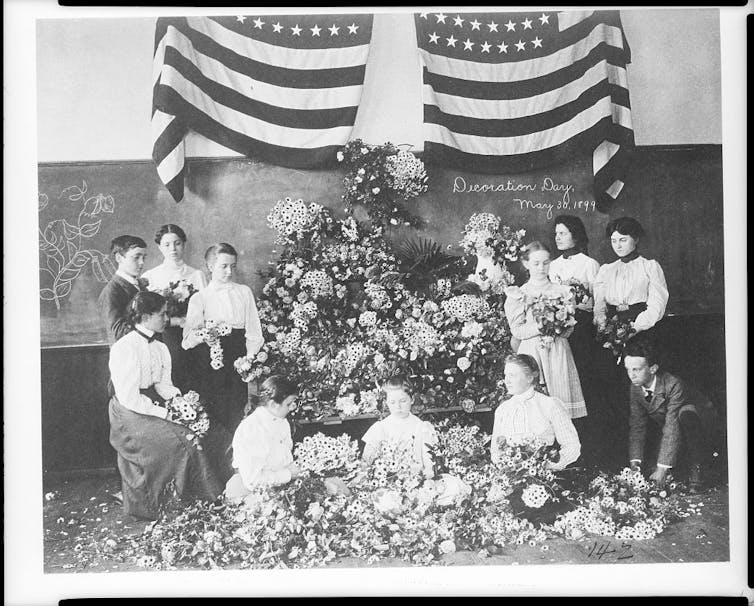
Preparing to decorate graves, May 1899.
Library of Congress

Richard Gardiner, Columbus State University

In the years following the bitter Civil War, a former Union general took a holiday originated by former Confederates and helped spread it across the entire country.

The holiday was Memorial Day, and this year’s commemoration on May 28 marks the 150th anniversary of its official nationwide observance. The annual commemoration was born in the former Confederate States in 1866 and adopted by the United States in 1868. It is a holiday in which the nation honors its military dead.

Gen. John A. Logan, who headed the largest Union veterans’ fraternity at that time, the Grand Army of the Republic, is usually credited as being the originator of the holiday.

Yet when General Logan established the holiday, he acknowledged its genesis among the Union’s former enemies, saying, “It was not too late for the Union men of the nation to follow the example of the people of the South.”

I’m a scholar who has written — with co-author Daniel Bellware — a history of Memorial Day. Cities and towns across America have for more than a century claimed to be the holiday’s birthplace, but we have sifted through the myths and half-truths and uncovered the authentic story of how this holiday came into being.

Generous acts bore fruit

During 1866, the first year of this annual observance in the South, a feature of the holiday emerged that made awareness, admiration and eventually imitation of it spread quickly to the North.

During the inaugural Memorial Day observances which were conceived in Columbus, Georgia, many Southern participants — especially women — decorated graves of Confederate soldiers as well as, unexpectedly, those of their former enemies who fought for the Union.

Civil War Union Gen. John A. Logan.
Library of Congress Glass negatives

Shortly after those first Memorial Day observances all across the South, newspaper coverage in the North was highly favorable to the ex-Confederates.

“The action of the ladies on this occasion, in burying whatever animosities or ill-feeling may have been engendered in the late war towards those who fought against them, is worthy of all praise and commendation,” wrote one paper.

On May 9, 1866, the Cleveland Daily Leader lauded the Southern women during their first Memorial Day.

“The act was as beautiful as it was unselfish, and will be appreciated in the North.”

The New York Commercial Advertiser, recognizing the magnanimous deeds of the women of Columbus, Georgia, echoed the sentiment. “Let this incident, touching and beautiful as it is, impart to our Washington authorities a lesson in conciliation.”

Power of a poem

To be sure, this sentiment was not unanimous. There were many in both parts of the U.S. who had no interest in conciliation.

But as a result of one of these news reports, Francis Miles Finch, a Northern judge, academic and poet, wrote a poem titled “The Blue and the Gray.” Finch’s poem quickly became part of the American literary canon. He explained what inspired him to write it:

“It struck me that the South was holding out a friendly hand, and that it was our duty, not only as conquerors, but as men and their fellow citizens of the nation, to grasp it.”

Finch’s poem seemed to extend a full pardon to the South: “They banish our anger forever when they laurel the graves of our dead” was one of the lines.

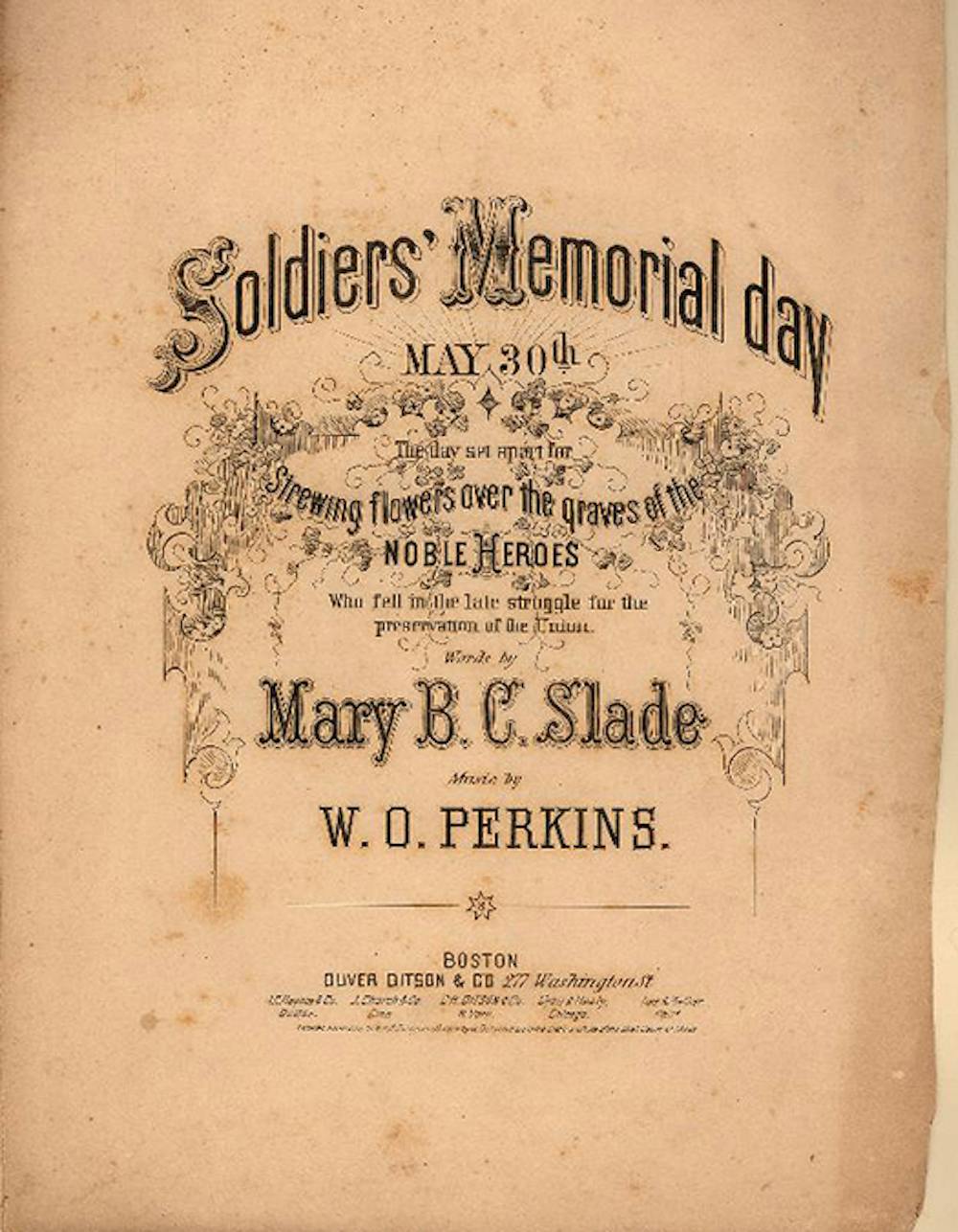
Not just poems: Sheet music written to commemorate Memorial Day in 1870.
Library of Congress

Almost immediately, the poem circulated across America in books, magazines and newspapers. By the end of the 19th century, school children everywhere were required to memorize Finch’s poem. The ubiquitous publication of Finch’s rhyme meant that by the end of 1867, the southern Memorial Day holiday was a familiar phenomenon throughout the entire, and recently reunited, country.

General Logan was aware of the forgiving sentiments of people like Finch. When Logan’s order establishing Memorial Day was published in various newspapers in May 1868, Finch’s poem was sometimes appended to the order.

‘The blue and the grey’

It was not long before Northerners decided that they would not only adopt the Southern custom of Memorial Day, but also the Southern custom of “burying the hatchet.” A group of Union veterans explained their intentions in a letter to the Philadelphia Evening Telegraph on May 28, 1869:

“Wishing to bury forever the harsh feelings engendered by the war, Post 19 has decided not to pass by the graves of the Confederates sleeping in our lines, but divide each year between the blue and the grey the first floral offerings of a common country. We have no powerless foes. Post 19 thinks of the Southern dead only as brave men.”

Other reports of reciprocal magnanimity circulated in the North, including the gesture of a 10-year-old who made a wreath of flowers and sent it to the overseer of the holiday, Colonel Leaming, in Lafayette, Indiana, with the following note attached, published in The New Hampshire Patriot on July 15, 1868:

“Will you please put this wreath upon some rebel soldier’s grave? My dear papa is buried at Andersonville, (Georgia) and perhaps some little girl will be kind enough to put a few flowers upon his grave.”

President Abraham Lincoln’s wish that there be “malice toward none” and “charity for all” was visible in the magnanimous actions of participants on both sides, who extended an olive branch during the Memorial Day observances in those first three years.

The ConversationAlthough not known by many today, the early evolution of the Memorial Day holiday was a manifestation of Lincoln’s hope for reconciliation between North and South.

[youtube https://www.youtube.com/watch?v=9TXBP1t2rUc&w=560&h=315]

Richard Gardiner, Associate Professor of History Education, Columbus State University

This article was originally published on The Conversation.

Homeless vets with families: An untold part of veterans’ struggles

0

homelessvets

Homeless vets with families: An untold part of veterans’ struggles – CWEB.com

File 20170524 31366 1kovn4b.jpg?ixlib=rb 1.1
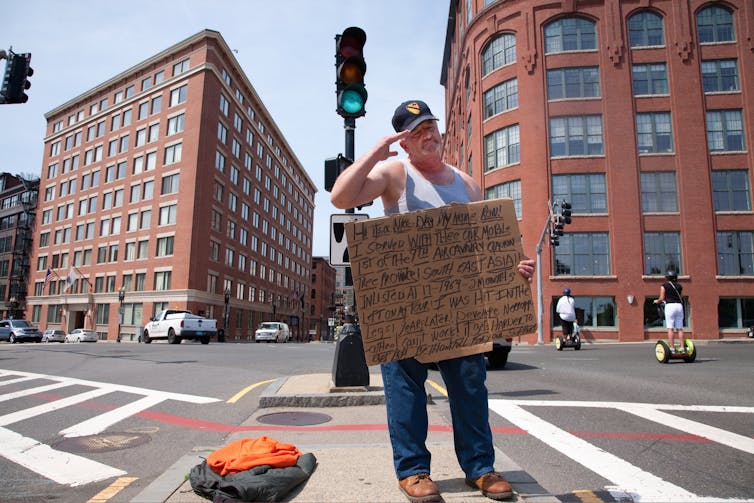
A homeless Vietnam vet begs for money on a Boston street in 2012.
Joseph Sohm/Shutterstock.com

Roya Ijadi-Maghsoodi, University of California, Los Angeles

In 2010, the Obama administration announced the ambitious goal of ending homelessness among veterans. Over the last year, the number of veterans who are homeless dropped 30 percent in Los Angeles County. Nationwide, veteran homelessness fell by almost 50 percent since 2009.

Yet statistics are only part of the story. What is missing from federal and state statistics, the media and the minds of many Americans, is the story of homeless veteran families.

Through my work as a researcher and physician caring for women and homeless veterans, I see these families. I hear about their struggles to find housing in safe neighborhoods instead of Skid Row, where their children are exposed to violence and drug use.

Overlooking veterans with families

Families are often missed when volunteers head out to count homeless individuals. Veterans with families often stay with friends, known as “doubling up.” Or, forced to fragment, parents send kids to stay with family while they go to a shelter.

Plus, some females who are homeless and the head of their household don’t identify as veterans. They may not be eligible for Veterans Affairs (VA) benefits, or are unclear about available services. Some may not seek care at the VA due to mistrust, harassment or past military sexual trauma.

Providers, policymakers and the public need to understand that homelessness among the families of men and women who have served our nation may be invisible. But it is significant.

Limited studies point to higher rates of veteran family homelessness than expected from the counts. Nineteen percent of families served by Supportive Services for Veteran Familiesin the FY 2015 had at least one child. A study of veterans receiving VA homeless services by Tsai and colleagues showed that nine percent of literally homeless male veterans — those living on the streets or uninhabitable locations — and 18 percent of unstably housed male veterans had children in their custody. A striking 30 percent of literally homeless female veterans, as well as 45 percent of unstably housed female veterans, had children in their custody.

Causes of homelessness

What contributes to homelessness among veteran families?

First, homelessness among women veterans is rising. Eleven percent of military personnel who served in Operation Iraqi Freedom/Operation Enduring Freedom (OIF/OEF) were women, the largest number involved in combat operations in U.S. history.

Women veterans are more likely to be mothers and mothers at a younger age than civilians, and more likely to receive lower income than male veterans.

They face high rates of trauma, especially military sexual trauma, a known risk for homelessness.

And, strikingly, women veterans are up to four times more likely to be homeless than civilian women.

A homeless family living in a shelter on Skid Row decides where to go for dinner.
AP Photo/Jae C. Hong

Male veterans returning from OIF/OEF tend to be younger and may have young families. As of 2010, 49 percent of deployed service members had children. They also have a higher prevalence of PTSD, compared to veterans of other wars. This is thought to be associated with an increased risk for homelessness.

To make matters worse, our country is in the grips of an affordable housing crisis. In California, we have only 21 homes available for every 100 extremely low-income households. And every day, families face discrimination searching for housing due to their race or ethnicity, being a veteran or using a voucher.

What homeless veteran families need

These families are at high risk. Decades of research show that children in homeless families are at risk for physical and mental health problems, academic delay and of becoming homeless themselves as adults — creating a second generation of homelessness. Many homeless veteran families are resilient, but face additional stressors of reintegrating into civilian society and coping with parents who may have PTSD and traumatic brain injuries.

Our team has been conducting interviews to understand the needs of veteran families who are homeless. We also formed a work group of recently homeless veteran parents.

We are finding that, although veterans are often satisfied with their own health and mental health services at the VA, many parents feel alone when it comes to their family.

Many veterans are overwhelmed by PTSD and depression, as well as the search to find housing and a job. They worry about the toll on their family. Yet they find few resources for their family within the VA, such as family therapy, and need help finding needed health and mental health care for their spouse and children in the community.

Parents need more help connecting to resources for their families in the community, clearer information about the social services available to veteran families and more emotional support as parents.

Moving forward

This U.S. Navy veteran poses for a picture in the home of a relative his family has been living with since being evicted from their own home.
AP Photo/Steven Senne

We need to change the conversation when we talk about homeless veterans. We need to talk about homeless veteran families.

These families are in our communities, the children are attending public schools, their parents are trying to work multiple jobs or attend college and many receive care in our VA and community clinics.

Within the VA, we need to consider the whole family and provide more connection to the community to help families succeed. At the VA Greater Los Angeles Healthcare System West Los Angeles Medical Center, a new family wellness center will open as a collaborative effort between UCLA and the VA. The center will serve as a hub to strengthen veteran families, through services such as family and couple resilience programs, parenting skills workshops and connection to community services. More efforts are needed to engage families who may need it most.

Beyond the VA, we need enhanced understanding and empathy for veteran families with homelessness within the community. This involves greater understanding of the needs of these children in schools. We should also find ways to help veteran families dealing with PTSD integrate into the community after being homeless.

And most of all, we need to increase access to affordable housing in safe neighborhoods for these families.

The ConversationThe recent wars may seem over for many Americans, but they are far from over for our homeless veteran families. We owe it to them to do better.


[youtube https://www.youtube.com/watch?v=9TXBP1t2rUc&w=560&h=315]

Roya Ijadi-Maghsoodi, Assistant Professor of Psychiatry and Biobehavioral Sciences/Investigator at the VA Greater Los Angeles HSR&D Center for the Study of Healthcare Innovation, Implementation & Policy, University of California, Los Angeles

This article was originally published on The Conversation.

Can CVS Health Buy BioPharmX Corporation?

0

U.S.-stocks-ignoring-logic

Can CVS Health Buy BioPharmX Corporation? – CWEB.com

  • Corporate health-care deal value surged 37 percent last year, according to a new report  from consulting firm Bain & Company.
  • The number of health-care mergers and acquisitions rose 16 percent.
  • CVS Health’s planned acquisition of health insurer Aetna was the largest corporate deal of 2017 at $69 billion.

The health-care shopping spree isn’t likely to stop anytime soon.

Corporate deal value surged to $332 billion last year, up 27 percent from $261 billion in 2016, though still below the peak of $432 billion in 2015, according to a  new report  from consulting firm Bain & Company.

What does make BioPharmX unique?

  1. Financial Health: Does it have a healthy balance sheet?
  2. Management:Have insiders been ramping up their shares to take advantage of the market’s sentiment for BPMX’s future outlook?
  3. Other High-Growth Alternatives: BPMX is a high-growth stock you could be holding?

Walgreens  was also reportedly considering acquiring the part of drug distributor  AmerisourceBergen  that it doesn’t already own earlier this year, though  talks  have cooled.  Walmart  and health insurer  Humana  are having  early-stage talks  about strengthening their existing partnership, people familiar with the matter told CNBC.

BioPharmX Corporation  (BPMX) products are sold in CVS Health Pharmacy (NYSE:CVS),

Walgreens, Drugstore.com, GNC (NYSE:GNC), The Vitamin Shoppe, Harris Teeter and many more.

BioPharmX added 3,025 GNC store locations supplying Violet ® iodine, raising its
U.S. retail footprint to more than 7,500 stores. Availability of Violet iodine at GNC is expected to begin in
mid-December. GNC is a leading global specialty retailer of health and wellness products and is devoted to helping its
customers improve the quality of their lives. We believe the addition of GNC stores will accelerate VI2OLET revenue growth in the coming quarters.

Institutional investors currently hold major shares in  BioPharmX Corporation(BPMX) stock. Majority of the recent share have been purchased by Vanguard Investment firm on 5-13-2018

Owner Name Date Shared Held Change (Shares) Change (%) Value (in 1,000s)
VIVO CAPITAL, LLC 05/13/2018 16,128,515 2,328,571 16.87 3,306
FRANKLIN RESOURCES INC 05/13/2018 9,749,615 0 0.00 1,999
VANGUARD GROUP INC 05/13/2018 5,498,918 3,541,971 181.00 1,127
GEODE CAPITAL MANAGEMENT, LLC 03/31/2018 671,686 347,719 107.33 138
VIRTU FINANCIAL LLC 03/31/2018 426,837 426,837 New 88
BARCLAYS PLC 03/31/2018 362,900 362,900 New 74
SUSQUEHANNA INTERNATIONAL GROUP, LLP 03/31/2018 181,335 181,335 New 37
CITADEL ADVISORS LLC 03/31/2018 146,859 146,859 New 30
MCF ADVISORS LLC 03/31/2018 105,629 105,629 New 22
JANE STREET GROUP, LLC 03/31/2018 96,941 96,941 New 20
TWO SIGMA SECURITIES, LLC 03/31/2018 93,390 47,105 101.77 19
NORTHERN TRUST CORP 03/31/2018 92,518 0 0.00 19
UBS GROUP AG 03/31/2018 70,367 36,614 108.48 14
LADENBURG THALMANN FINANCIAL SERVICES INC. 03/31/2018 64,200 0 0.00 13
CREDIT SUISSE AG/ 03/31/2018 50,000 50,000 New 10
HOLDERS SHARES
Increased Positions 17 7,708,826
Held Positions 7 15,447,095
Total Institutional Shares 27 33,878,519

 Institutional Ownership

Institutions own approximately 19.42% of BioPharmX’ shares. Among active positions in the latest quarter, 7 holders increased their positions by a total of 10.8 million shares. This means there is a net increase in ownership of 9.61 million shares, which may suggest that institutions feel bullish about the stock.

 Cash as of March 9, 2018

  • Pro-forma cash of $14.2 million
    • $8.6 million as of January 31, 2018
    • $6.7 million in proceeds from warrant exercises after the end of the quarter

 Reverse Split

The company let an already approved reverse split expire.

“Regarding the expired reverse stock split, the company and its shareholders did not feel such an action would be in the best interest of the shareholders once the company was able to bring the company back into compliance with the NYSE American’s continued listing standards. The company is optimistic that it will be in compliance for continued listing standards regarding its share price by the June deadline.”


Institutional ownership trends suggest that the stock is cheap and the insider trading data indicates that insiders are bullish. Technical indicators also suggest that  BioPharmX Corporation  (BPMX)  , is undervalued.  

A potential Buy is very possible for  BioPharmX Corporation by a major Drug chain like CVS or Walgreens Pharmacy.

CWEB Analysts have Reiterate a Buy Rating for  BioPharmX Corporation  (BPMX)    and a Price Target of $7 within 12 months.

[youtube https://www.youtube.com/watch?v=9TXBP1t2rUc&w=560&h=315]


A healthy diet isn’t always possible for low-income Americans, even when they get SNAP benefits

0

unhealthyfood

A healthy diet isn’t always possible for low-income Americans, even when they get SNAP benefits – CWEB.com

File 20180522 51127 gszd9.jpg?ixlib=rb 1.1
Everyone needs to eat their veggies.
wavebreakmedia/Shutterstock.com

Lindsey Haynes-Maslow, North Carolina State University

While researching how hard it is for low-income Americans to eat healthy on tight budgets, I’ve often found a mismatch between what people want to eat and the diet they can afford to follow. This made me wonder what eating right costs and how much of this tab gets covered by the largest federal nutrition program, commonly known as SNAP or food stamps.

To find out, I teamed up with Kranti Mulik, an agricultural economist.

MyPlate and SNAP

We based our nutrition assumptions on MyPlate, the federal government’s dietary guidelines, which account for differences according to age and gender. The guidelines spell out what you should eat from five food groups: fruits, vegetables, grains, dairy and protein — including meat, beans, eggs, tofu and other soy-based products, nuts and seeds.

SNAP benefits also vary, based on household income and how many eligible people live in a given household.

These modest benefits, which average about US$1.40 per meal, reduce the number of people who would otherwise go hungry at the end of each month by nearly 30 percent, according to Urban Institute economist Caroline Ratcliffe.

Meal accounting

Conversations around healthy eating often leave out cooking time. But to estimate the monthly shortfall for people living in economic hardship who get SNAP benefits, we took into account not just grocery prices and SNAP benefits but the effort eating home-prepared meals requires.

This includes traveling to stores and shopping for ingredients, as well as prepping, cooking and serving meals and cleaning up afterwards. To estimate this value, economists have used the average U.S. hourly wage rate, multiplying it by the time it takes to prepare meals. They find that labor is worth 40 percent of what Americans spend on food that they eat at home.

For people who rely on SNAP benefits, the labor costs can be daunting. They may not live close to supermarkets or any stores that sell produce. They might not own cars and lack access to transit, and they might lack the basic cooking equipment needed to prepare meals.

The government does not officially bill SNAP as covering everything that beneficiaries spend on food — that’s why the word supplemental is part of the program’s name. In 2016, however, it estimated that Americans could afford to feed a family of four a healthy diet for as little as $588 a month — less than the $649 that a family of four can get at most in SNAP benefits. Remember, this amount excludes the labor of preparing meals.

We calculate that it would take about $1,100 per month, including labor, to keep food on this hypothetical family’s table. According to our calculations, SNAP covers about half — between 43 and 60 percent — of what following a MyPlate diet costs after taking into account the labor required for meal preparation.

For households that purchase only fresh produce, grains, dairy and meat, this shortfall is much bigger than for those buying canned, frozen fruits and vegetables. Serving a meal of freshly steamed broccoli, whole-wheat pasta and roast chicken costs more than heating up canned diced tomatoes and red beans to eat with white rice.

Besides, many breadwinners who have to stretch their food dollars work multiple jobs or have other constraints on their time. For them, every hour spent on meal preparation can amount to an hour’s worth of pay lost.

$600 more per month

Based on our model, we found that a family of four with two adults and two teens or tweens would need to spend more than $600 per month in addition to their SNAP benefits, if they ate only fresh produce, grains, meat and dairy.

That same household would need to spend almost $500 more than the maximum SNAP benefits if they ate a vegetarian diet with a mix of fresh, frozen and canned fruits and vegetables — and derived their protein from tofu and other soy-based products, beans, eggs, nuts and seeds.

[youtube https://www.youtube.com/watch?v=9TXBP1t2rUc&w=560&h=315]

The ConversationEven excluding the labor it takes to put food on the table, that family would need to spend at least $200 monthly on top of its members’ SNAP benefits to consume a healthy diet.
Lindsey Haynes-Maslow, Assistant Professor of Agriculture and Human Sciences, North Carolina State University

This article was originally published on The Conversation.

Diet soda may be hurting your diet

0

coke1

Diet soda may be hurting your diet – CWEB.com

File 20180510 34027 134a0es.jpg?ixlib=rb 1.1
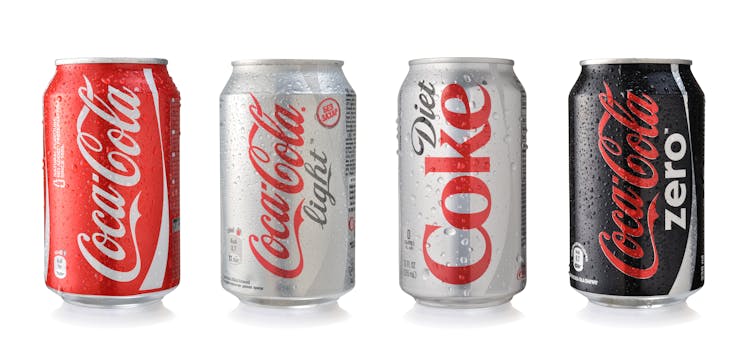
Coca-Cola is the world’s most popular carbonated soft drink. The original is made with sugar, but the others contain artificial sweeteners that are now linked to a rise in obesity and diabetes.
By Chones/shutterstock.com

Eunice Zhang, University of Michigan

Artificial sweeteners are everywhere, but the jury is still out on whether these chemicals are harmless. Also called non-nutritive sweeteners, these can be synthetic — such as saccharin and aspartame — or naturally derived, such as steviol, which comes from the Stevia plant. To date, the U.S. Food and Drug Administration has approved six types of artificial and two types of natural non-nutritive sweeteners for use in food.

That’s been great news for those working hard to curb their sugar consumption. Aspartame, for example, is found in more than 6,000 foods worldwide, and about 5,000-5,500 tons are consumed every year in the United States alone.

The American Diabetes Association — the most well-respected professional group focusing on diabetes — officially recommends diet soda as an alternative to sugar-sweetened beverages. To date, seven U.S. municipalities have imposed a sugary beverage tax to discourage consumption.

However, recent medical studies suggest that policymakers eager to implement a soda tax may also want to include diet drinks because these sweeteners may be contributing to chronic diabetes and cardiovascular diseases as well.

Why are these sweeteners calorie-free?

The key to these virtually calorie-free sweeteners is that they are not broken down during digestion into natural sugars like glucose, fructose and galactose, which are then either used for energy or converted into fat.

Non-nutritive sweeteners have different byproducts that are not converted into calories. Aspartame, for example, undergoes a different metabolic process that doesn’t yield simple sugars. Others such as saccharin and sucralose are not broken down at all, but instead are absorbed directly into the bloodstream and excreted in the urine.

Theoretically, these sweeteners should be a “better” choice than sugar for diabetics. Glucose stimulates release of insulin, a hormone that regulates blood sugar levels. Type 2 diabetes occurs when the body no longer responds as well to insulin as it should, leading to higher levels of glucose in the blood that damages the nerves, kidneys, blood vessels and heart. Since non-nutritive sweeteners aren’t actually sugar, they should sidestep this problem.

Artificial sweeteners, your brain and your microbiome

However, there is growing evidence over the last decade that these sweeteners can alter healthy metabolic processes in other ways, specifically in the gut.

Long-term use of these sweeteners has been associated with a higher risk of Type 2 diabetes. Sweeteners, such as saccharin, have been shown to change the type and function of the gut microbiome, the community of microorganisms that live in the intestine. Aspartame decreases the activity of a gut enzyme that is normally protective against Type 2 diabetes. Furthermore, this response may be exacerbated by the “mismatch” between the body perceiving something as tasting sweet and the expected associated calories. The greater the discrepancy between the sweetness and actual caloric content, the greater the metabolic dysregulation.

Sweeteners have also been shown to change brain activity associated with eating sweet foods. A functional MRI exam, which studies brain activity by measuring blood flow, has shown that sucralose, compared to regular sugar, decreases activity in the amygdala, a part of the brain involved with taste perception and the experience of eating.

Another study revealed that longer-term and higher diet soda consumption are linked to lower activity in the brain’s “caudate head,” a region that mediates the reward pathway and is necessary for generating a feeling of satisfaction. Researchers have hypothesized that this decreased activity could lead a diet soda drinker to compensate for the lack of pleasure they now derive from the food by increasing their consumption of all foods, not just soda.

Together these cellular and brain studies may explain why people who consume sweeteners still have a higher risk of obesity than individuals who don’t consume these products.

As this debate on the pros and cons of these sugar substitutes rages on, we must view these behavioral studies with a grain of salt (or sugar) because many diet soda drinkers — or any health-conscious individual who consumes zero-calorie sweeteners — already has the risk factors for obesity, diabetes, hypertension or heart disease. Those who are already overweight or obese may turn toward low-calorie drinks, making it look as though the diet sodas are causing their weight gain.

This same group may also be less likely to moderate their consumption. For example, those people may think that having a diet soda multiple times a week is much healthier than drinking one case of soda with sugar.

These findings signal that consumers and health practitioners all need to check our assumptions about the health benefits of these products. Sweeteners are everywhere, from beverages to salad dressing, from cookies to yogurt, and we must recognize that there is no guarantee that these chemicals won’t increase the burden of metabolic diseases in the future.

As a physician of internal medicine specializing in general prevention and public health, I would like to be able to tell my patients what the true risks and benefits are if they drink diet soda instead of water.

The ConversationLegislators considering soda taxes to encourage better dietary habits perhaps should think about including foods with non-nutritive sweeteners. Of course, there is an argument to be made for being realistic and pursuing the lesser of two evils. But even if the negative consequences of sugar substitutes doesn’t sway our tax policy — for now — at least the medical community should be honest with the public about what they stand to lose or gain, consuming these foods.

[youtube https://www.youtube.com/watch?v=9TXBP1t2rUc&w=560&h=315]

Eunice Zhang, Clinical Fellow of Preventive Medicine, University of Michigan

This article was originally published on The Conversation.