

Key Points:
- OpenAI has recruited seasoned Salesforce and Slack executive Denise Dresser to spearhead its global revenue operations.
- The high-profile hiring occurs as the AI leader faces unprecedented financial burn rates and trillion-dollar future commitments.
- This strategic move signals a critical push to monetize its enterprise and consumer products more effectively to secure its long-term viability.
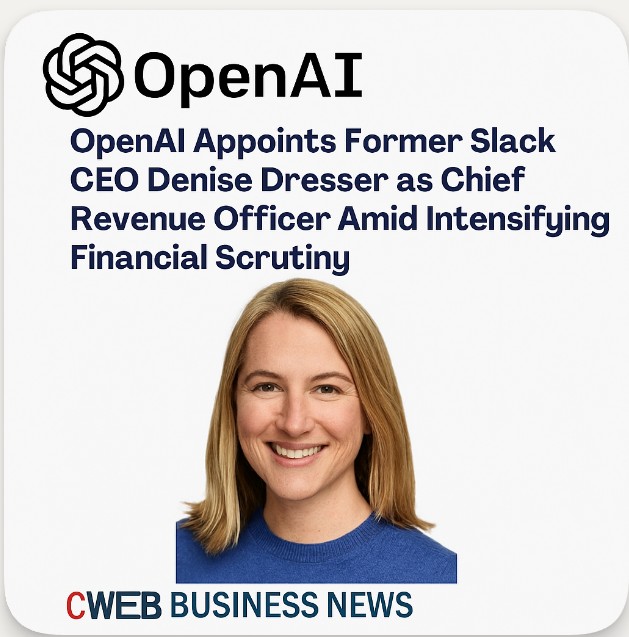
OpenAI has made a major strategic hire, bringing on former Slack Chief Executive Officer Denise Dresser as its new Chief Revenue Officer. The announcement positions the veteran Salesforce executive to direct all global revenue strategy, encompassing enterprise sales and customer success initiatives. This leadership appointment underscores a pivotal moment for the artificial intelligence pioneer as it seeks to build a sustainable commercial framework around its groundbreaking technologies.
Denise Dresser brings extensive experience from over a decade at Salesforce and her tenure leading Slack, which Salesforce acquired for over $27 billion. Her expertise in scaling enterprise software platforms and driving customer adoption is seen as a direct response to OpenAI’s urgent need to fortify its business operations. The recruitment is a clear signal that OpenAI is prioritizing seasoned corporate leadership to navigate its next growth phase.

The hiring comes amid revealing financial disclosures showing OpenAI in a period of significant monetary outflow. While the company generated approximately $4.3 billion in revenue in the first half of 2025, it simultaneously burned through $2.5 billion, primarily due to massive model development costs and expenses for running ChatGPT. Forecasts project steepening losses, with operating costs potentially reaching $74 billion next year, representing a substantial portion of expected revenue.
Financial pressures are mounting considerably, with reports indicating OpenAI’s burn rate vastly outpaces key competitors. Furthermore, CEO Sam Altman has disclosed the company faces up to $1.4 trillion in computational and infrastructure commitments over the next eight years. This staggering figure has prompted intense scrutiny from investors and analysts questioning the fundamental scalability of its current business model against such immense capital demands.
By installing a proven revenue leader like Dresser, OpenAI aims to directly address these sustainability challenges. The move is interpreted as an effort to instill rigorous monetization strategy and enterprise-grade sales discipline. The AI industry is watching closely to see if this blend of visionary AI development and seasoned commercial execution can bridge the gap between OpenAI’s astronomical ambitions and the practical realities of corporate finance, setting a precedent for the entire generative AI sector.
