

Key Highlights:
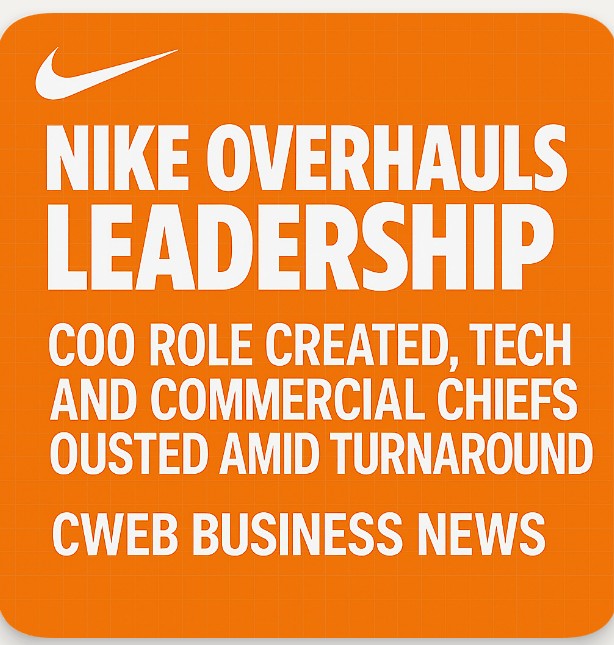
- Nike eliminates its Chief Technology Officer and Chief Commercial Officer positions in a major executive reshuffle.
- The sportswear giant is consolidating power under a new Chief Operating Officer and its Chief Financial Officer.
- This marks the latest strategic shift under CEO John Donahoe as the company seeks to streamline operations and reignite growth.
In a sweeping leadership reorganization, Nike Inc. has abolished two of its most prominent C-suite roles and unveiled a new operational structure. The positions of Chief Technology Officer and Chief Commercial Officer have been eliminated, resulting in the departure of CTO Muge Dogan and Chief Commercial Officer Craig Williams. This decisive move forms the core of a broader executive overhaul designed to simplify the company’s command chain and place critical functions under seasoned veterans.

To fill the void, Nike is elevating Chief Supply Chain Officer Venky Alagirisamy to the newly created role of Chief Operating Officer. A two-decade Nike veteran, Alagirisamy will now assume oversight of the technology teams alongside his existing supply chain duties. Simultaneously, global sales and direct-to-consumer operations will now report directly to Chief Financial Officer Matt Friend. This consolidation underscores a strategy to tightly integrate technology, supply, and commerce with financial and operational performance.
This restructuring represents the latest and most significant personnel shift under CEO John Donahoe’s ongoing transformation agenda. Since taking leadership, Donahoe has initiated a series of high-level changes, including the appointment of a new Nike brand president and a reorganization focused on key sports rather than traditional consumer categories. The leadership team, declared complete just months ago, has now been reshaped once more, signaling an urgent drive for efficiency and agility.

The executive exits extend beyond the C-suite. Nike has also seen the departure of vice presidents leading AI and virtual studio initiatives, and confirmed a small round of corporate layoffs in September.
These changes occur against a backdrop of modest growth, with the company reporting a 1% revenue increase last quarter. Donahoe frames these tough decisions as “tangible progress” in Nike’s multi-year turnaround plan, aiming to streamline decision-making and sharpen its competitive edge in the global athletic apparel market.
