

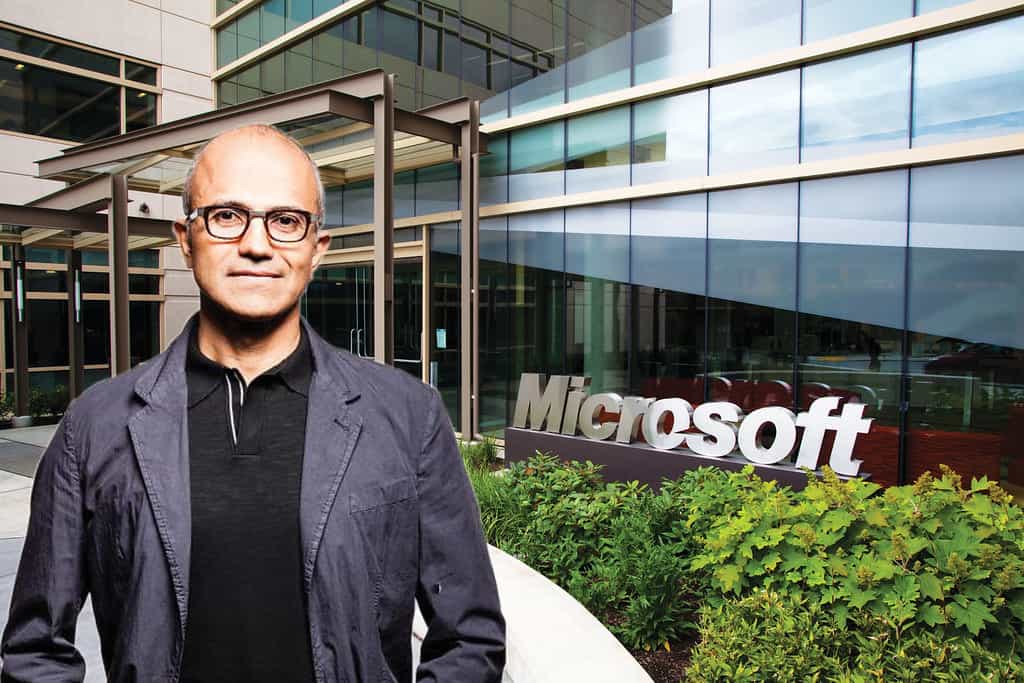
Microsoft is ending its year-long hiring freeze with a new AI-centric approach to workforce expansion. CEO Satya Nadella is leveraging a restructured leadership team to sharpen the company’s competitive edge in the generative AI market. Despite strong early gains from its OpenAI partnership, Microsoft now faces intensifying competition, pushing a strategy where productivity gains, not just headcount, define growth.
After a period of significant workforce reductions and flat headcount maintenance, Microsoft has announced it will resume hiring for key roles. However, CEO Satya Nadella emphasized that this new phase of growth will be fundamentally different from previous expansions.
In comments to investors, Nadella outlined a vision where every new employee will be equipped with advanced artificial intelligence tools, effectively acting as a force multiplier for productivity. This shift reflects a broader corporate strategy where AI integration is not merely an added feature but the core enabler of work.
This hiring pivot follows a substantial internal reorganization aimed at accelerating Microsoft’s agility in the fast-moving AI sector. Nadella has recently overhauled the senior leadership team, appointing high-profile figures such as former Meta engineering executive Jay Parikh and elevating seasoned leaders like commercial chief Judson Althoff and LinkedIn CEO Ryan Roslansky.

According to current and former executives, these moves are designed to streamline innovation, particularly in building Microsoft’s proprietary AI models, enhancing coding tools, and improving enterprise applications amidst rising competition.
Microsoft’s early advantage in AI was largely fueled by its multi-billion-dollar partnership with OpenAI, which granted exclusive access to cutting-edge models and data center contracts. However, following a restructuring of that alliance in late 2023, Microsoft’s exclusivity will phase out over the coming years.
This change comes as rivals gain ground: Google’s Gemini and OpenAI’s ChatGPT both report user bases significantly larger than Microsoft’s Copilot, which currently boasts 150 million monthly active users. Meanwhile, emerging startups like Anthropic and Replit are capturing market share in AI-powered development tools, increasing pressure on Microsoft to innovate independently.
Financially, Microsoft remains a top pick among analysts covering the AI sector. Morgan Stanley recently reaffirmed the company as its leading large-cap software stock, highlighting sustained demand across cloud and AI services and predicting robust operating margin growth.
With a $650 price target and Buy rating, analysts point to Microsoft’s strategic investments and scalable AI offerings as key drivers for future performance. As the company enters this new hiring cycle, its success will hinge not on the number of employees added, but on how effectively it harnesses AI to amplify their impact—setting a new precedent for the tech industry at large.
