
, finished with classic Tzatziki yogurt cucumber sauce.)
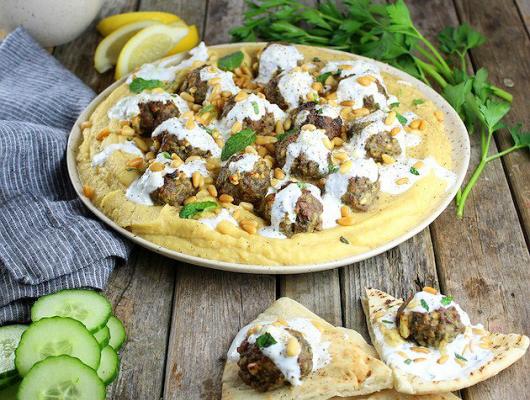
Lamb Meatballs With Fava & Tzatziki. Lamb with feta, garlic, cilantro, mint & cumin, balanced by a warm smooth fava (bean puree), finished with classic Tzatziki yogurt cucumber sauce.
Ingredients
For The Tzatziki:
2 cups Greek yogurt
2 garlic cloves, minced
½ peeled and finely chopped English cucumber (If seeds are large remove them.)
1 teaspoon mint, finely chopped
¼ cup finely chopped dill
1 lemon, juiced
1 tablespoon olive oil
½ teaspoon salt
Dash of pepper
For The Fava:
One 16 ounce bag yellow split peas
3 shallots, peeled and quartered
5 garlic cloves, smashed and peeled
1 bay leaf
¼ teaspoon Cayenne pepper
3 tablespoons fresh lemon juice
½ cup olive oil plus more to drizzle when serving
2 ½ teaspoons salt
½ teaspoon pepper
For The Meatballs:
16 ounces ground lamb
1 egg
1 small onion, grated
4 garlic cloves, minced
Zest from half a lemon
3 ½ ounces feta cheese, crumbled (reserve another 5-6 ounces of fresh feta to serve with the finished product)
1 tablespoon ground cumin
¼ teaspoon allspice
3 tablespoons fresh cilantro
2 tablespoons fresh mint, finely chopped
½ teaspoon salt
½ teaspoon pepper
Cucumber, sliced
Tomatoes, sliced
Preparation
1. For The Tzatziki:
2. In a bowl stir together the yogurt, garlic, cucumber, mint, dill, lemon, oil, salt, and pepper.
3. Combine the mixture well.
4. Tzatziki should be made and chilled at least an hour before serving, and may be made a day in advance. Keep covered and chilled.
5. For The Fava:
6. Rinse the peas with plenty of cold water, then put in a medium saucepan and add enough cold water to cover them.
7. Add the shallots, garlic, and bay leaves then bring to a boil. If any white foam rises to the surface, skim it off with a spoon and discard.
8. Reduce heat to a simmer and cook for 35-40 minutes, stirring occasionally and adding more water if needed.
9. Remove the bay leaf and transfer the peas into a food processor. If there’s a lot of cooking liquid, drain it and reserve.
10. Add half the quantity of olive oil, the lemon juice, salt and chili powder and pulse until smooth. If the mixture is too dry keep adding the olive oil until you have the right consistency. You can also use some of the reserved cooking liquid instead of olive oil.
11. If you are storing the fava, cover the surface with a generous amount of olive oil otherwise it will dry out and crack.
12. For The Meatballs:
13. Preheat oven to 400 and line a cookie sheet with parchment paper
14. In a large mixing bowl, thoroughly combine all ingredients except the cucumber, tomato, reserved feta, and pita bread.
15. Spray hands with cooking spray to make handling the meatballs easier. Use a 1 ½ inch scoop to ensure each meatball is the same size, and roll them by hand to give them a nice round shape before placing them evenly on the cookie sheet.
16. Bake for 18 to 20 minutes.
17. Serve the meatballs on a bed of Fava with pita, sliced feta, cucumbers, tomatoes, and lemons, accompanied by the Tzatziki.
18. Recipe Notes: I suggest making the Tzaziki the day prior if possible. This allows the flavors to marry and also saves some prep time the day of the meal.
19. This cook time assumes that you prep and bake the meatballs while the Fava is cooking.
Credit: Foodista