

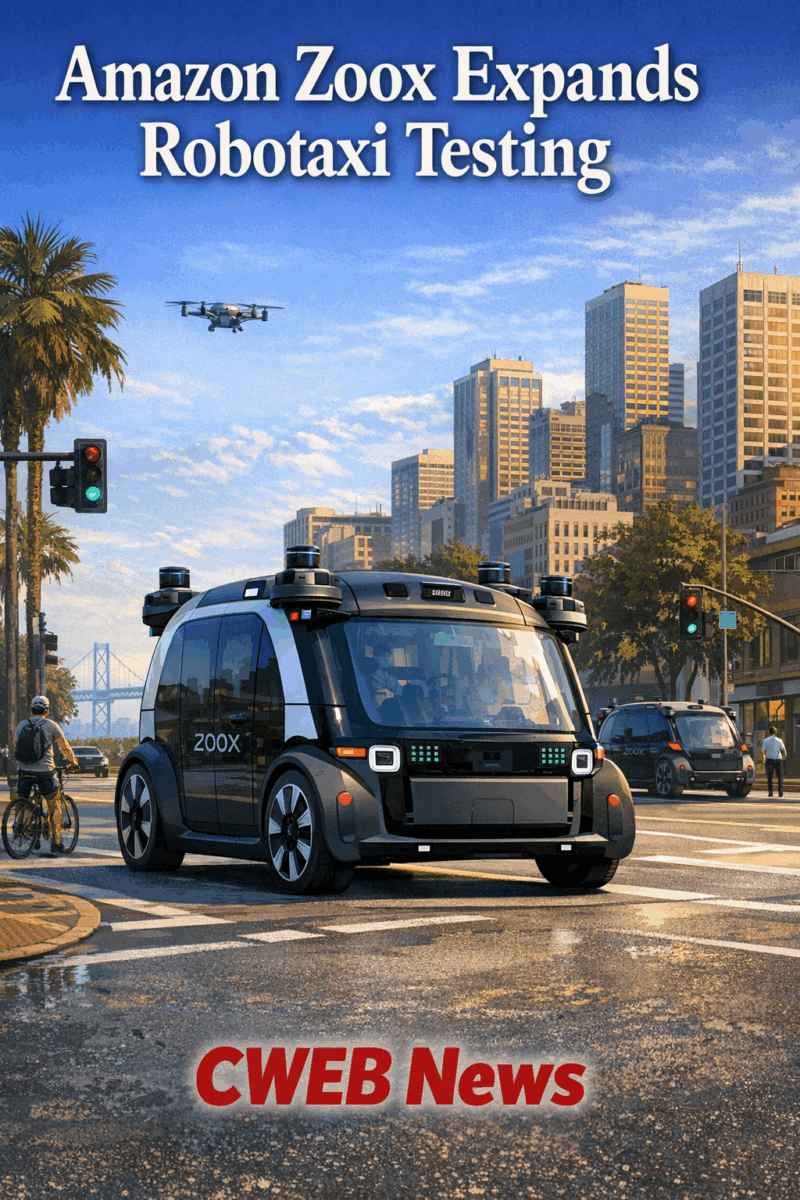
Three key takeaways from this development: Amazon’s Zoox is broadening its autonomous vehicle testing program to Dallas and Phoenix, marking a strategic expansion to 10 US markets. The company will deploy human-driven mapping vehicles in these new cities before advancing to fully autonomous operations.
This move intensifies competition in the robotaxi sector where Alphabet’s Waymo currently leads with hundreds of thousands of weekly paid rides.
In a significant escalation of the autonomous vehicle arms race, Amazon’s self-driving unit Zoox has announced the expansion of its testing program to Dallas and Phoenix, bringing its operational footprint to ten major US markets.
The Monday morning announcement represents the company’s most ambitious geographic push since the e-commerce giant acquired the startup for $1.3 billion in 2020. Zoox will initially deploy retrofitted Toyota Highlander SUVs equipped with its comprehensive sensor suite in both cities, though these vehicles will operate with human safety drivers to conduct mapping operations before any driverless testing commences.
The selection of these Texas and Arizona metropolitan areas appears strategic, as their expansive street networks and diverse weather patterns present ideal conditions for stress-testing the company’s autonomous technology.
The competitive landscape in the autonomous vehicle sector continues to heat up as traditional automakers and tech giants vie for position in what many analysts predict will be a transformative transportation market.
Alphabet’s Waymo currently maintains the strongest position stateside, operating in six locations following its January entry into Miami and completing an impressive 450,000 paid rides weekly as of early 2026. The Google subsidiary has announced ambitious expansion plans for this year that include Dallas, Denver, Detroit, Houston, Las Vegas, Orlando, San Antonio, San Diego, Washington, and Nashville, while simultaneously conducting tests in New York, Chicago, Charlotte, Boston, Tokyo, and London.
Meanwhile, Tesla has adopted a more measured approach to its robotaxi ambitions, having launched services in Austin and the San Francisco Bay Area during mid-2025. The electric vehicle manufacturer continues to rely on human safety drivers for most of its robotaxi fleet, with only a limited number of unsupervised vehicles operating in Austin.
This conservative rollout strategy stands in stark contrast to Zoox’s aggressive geographic expansion, which now encompasses testing and operational activities across Las Vegas, San Francisco, Seattle, Austin, Miami, Los Angeles, Atlanta, Washington DC, and its newly announced Dallas and Phoenix locations. Zoox reported that its fleet has accumulated over one million autonomous miles while serving more than 300,000 riders since Amazon’s acquisition, demonstrating steady progress in the company’s development timeline.
