

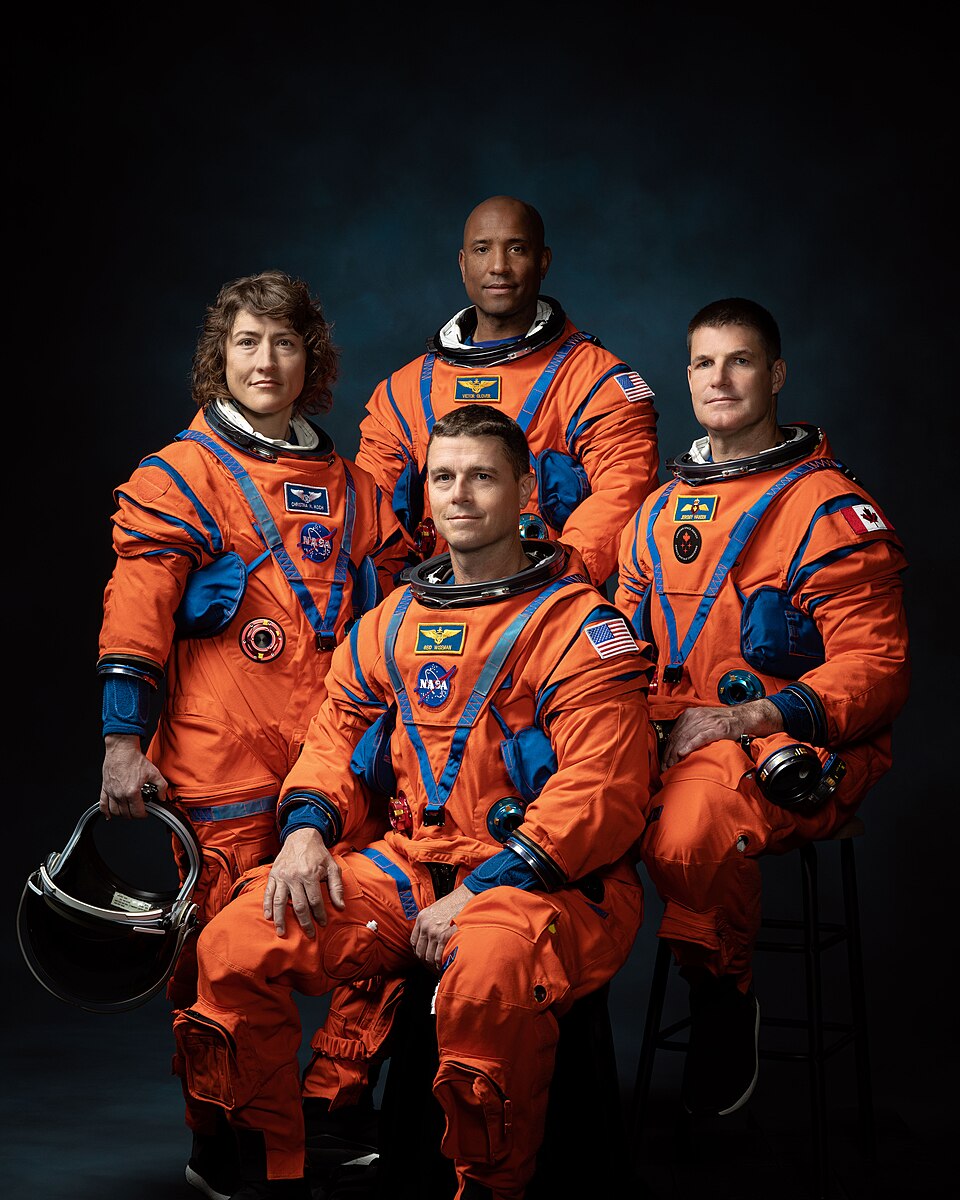
WASHINGTON, D.C. – In an extraordinary feat of human endeavour, the astronauts of NASA’s Artemis II mission have shattered the farthest distance record in human spaceflight. In a moment of profound national pride, President Donald J. Trump conveyed his congratulations directly to the crew from the Oval Office, in a live exchange beamed from the heavens.
“Your mission paves the way for America’s triumphant return to the lunar surface in the very near future,” President Trump declared, lauding the crew for their courage and for reasserting American pre-eminence among the stars. The call, described by aides as deeply moving, underscored the President’s unwavering commitment to space leadership—a hallmark of his previous administration and a clarion call for the nation’s next giant leap.
A Triumph Decades in the Making
NASA has successfully launched Artemis II, marking America’s first crewed lunar mission in over half a century. The Orion spacecraft, resplendent against the black velvet of the cosmos, is now circumnavigating the Moon. On board are four distinguished astronauts: Commander Reid Wiseman, Pilot Victor Glover, and Mission Specialist Christina Koch of NASA, alongside Mission Specialist Jeremy Hansen of the Canadian Space Agency.
In a poignant image released by NASA, the four crew members are depicted gazing through a porthole as Earth recedes into an ever-diminishing azure marble. The photograph has captivated internet enthusiasts and spacefarers alike, who have offered lyrical commentaries on the fragile beauty of our shared planetary home.
WATCH IN FULL 🇺🇸 https://t.co/NBEzoT1uwR pic.twitter.com/V2e1pY4wlv
— The White House (@WhiteHouse) April 7, 2026
The Farthest Reaches
Artemis II has already inscribed its name in the annals of exploration as the first human mission to venture beyond low Earth orbit since Apollo 17’s triumphant lunar landing in 1972. The mission, lasting ten days, will see the astronauts loop around the far side of the Moon on the sixth day, before beginning their voyage home on the tenth. While they will not enter lunar orbit nor attempt a surface landing, their trajectory represents a vital stepping stone—a meticulous dress rehearsal for the ambitious Artemis programme, which aspires to establish a permanent base near the Moon’s south pole by the early 2030s.
A Flawless Ascent
After more than fifty years, NASA’s Space Launch System (SLS)—the most powerful rocket ever built—and the Orion spacecraft lifted off from the Kennedy Space Centre in Florida at 6:35 PM EDT on 1 April. Within fifty minutes of the test flight, the SLS’s upper stage had successfully inserted Orion into an elliptical orbit around Earth. A subsequent burn propelled the spacecraft into a high-Earth orbit, after which Orion separated gracefully from the final stage, now flying free and self-reliant—a solitary chariot bound for the Moon.
Global Acclaim
The United States, alongside international partners, eagerly anticipates the scientific data and telemetry to be gathered by the crew. This mission constitutes the foundational milestone of the Artemis project, promising not only to return Americans to the lunar surface but to inaugurate a sustained era of discovery.
President Trump concluded his call with characteristic fervour: “America is once again leading the world—not as a participant, but as a champion. Godspeed to our astronauts, and God bless the United States.”
🇺🇸 HISTORIC. UNPRECEDENTED. TRIUMPHANT.
